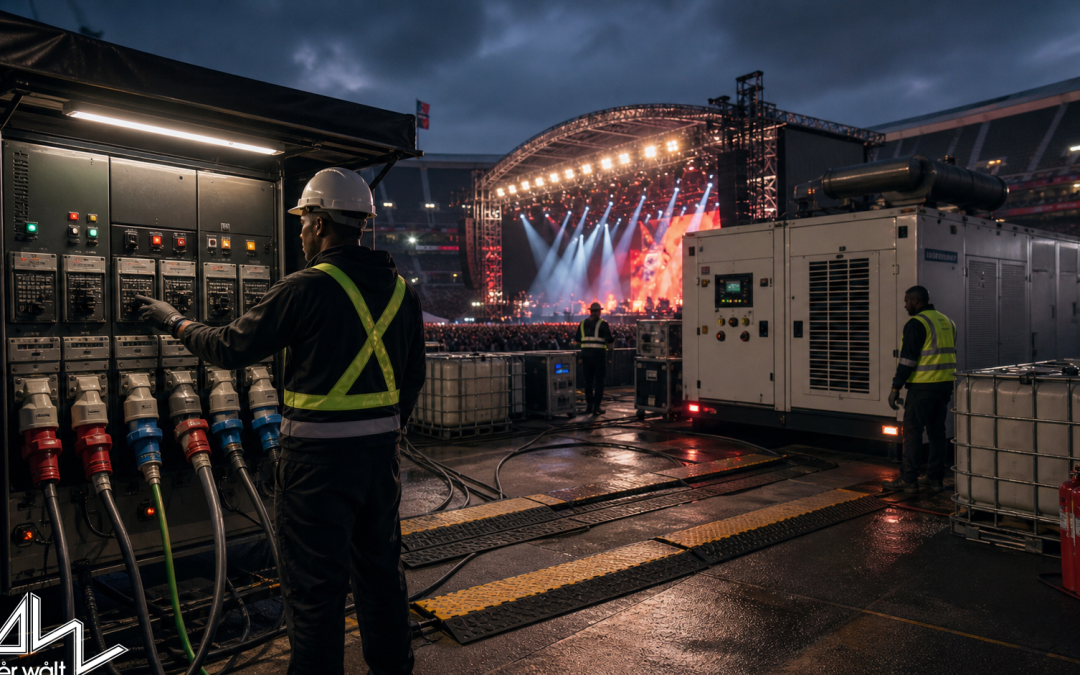
Power planning for large-scale live events in South Africa: A practical guide
A practical, field-tested guide for event teams planning electrical power in South Africa. Learn sizing, sourcing, safety, and operations to keep large activations running smoothly under SA conditions.
Power planning for large-scale South African events hinges on three concrete steps: accurate load sizing, reliable supply sourcing (grid and generator options), and strict safety and distribution controls. This guide shows how to implement them in practice.
Understanding the SA power landscape for events
South Africa’s energy environment blends grid power, municipal supply, and independent power sources. Most large venues rely on a mix of Eskom-provided electricity, back-up generators, and on-site battery or UPS systems for critical systems. Rugby matches, concerts, and immersive activations often require complex power distribution, frequent power pulls, and rapid changes in load as scenes switch or audience lighting ramps up. Planning must reflect local realities: potential grid interruptions, weather impacts on fuel, transport constraints for diesel, and the need for compliant, safe electrical installations.
Key terms you’ll encounter include:
- Load: the total electrical demand of all equipment at peak operation, usually measured in watts (W) or volt-amperes (VA).
- Distribution board: a central component that routes power to individual circuits; helps manage safety and fault isolation.
- Transfer switch: a device that moves power source between grid supply and a backup generator with a controlled, safe sequence.
- UPS (uninterruptible power supply): a device that provides short-term power for critical gear during transitions or brief outages.
- Diversity factor: an electrical engineering concept that accounts for the fact not all equipment runs at full load simultaneously; it informs more accurate sizing.
The three-phase approach to power planning
1) Sizing and load calculations
Accurate sizing starts with a comprehensive load list. Identify every device that will draw power during the peak period—stage lighting, audio-visual systems, rigging, HVAC for enclosed spaces, catering equipment, and emergency lighting. Capture each item’s running wattage or amp draw, and include start-up surges for motors such as pumps, fans, or grand-stage machinery.
Practical tips:
- Compile equipment lists early and verify with suppliers to ensure current draw figures are accurate.
- Apply a practical cushion above the calculated peak (for example, 15–30% depending on risk appetite and the complexity of the load). This helps cover unforeseen spikes and equipment aging.
- Consider load diversity. Not every device runs at full power at the same time. Use a conservative diversity factor when possible and validate with an electrical engineer or experienced technician.
- Identify critical loads that must stay energized during outages (e.g., control systems, safety alarms, essential lighting) and plan a separate, dedicated circuit for them.
2) Sourcing and distribution
After sizing, decide how to source power and how to distribute it safely. The two primary routes are the grid (on-site) supply and backup generation. In many South African events, a hybrid approach reduces risk and cost.
Key considerations:
- Grid power: Confirm feasibility with the venue or municipal authority, including connection points, cabling routes, and permit requirements. Understand local power quality, peak timing, and the likelihood of outages.
- Backup generators: Size generators to meet calculated peak loads with a safety margin. Plan fuel logistics, refueling procedures, and storage—keep fuel away from ignition sources and install spill containment. Ensure exhaust management and proper clearance for noise-sensitive venues.
- Distribution: Use weatherproof, robust distribution boards and cable runs. All cables should be rated for outdoor use, with correct gauge to minimize voltage drop and heat buildup.
- Transfer switches (automatic or manual) and redundancy: An automatic transfer switch (ATS) switches sources without manual intervention, reducing downtime. For critical loads, consider a second, independent power path to avoid single points of failure.
- Power quality: Stabilize voltage and manage harmonic loads from LEDs, AV, and dimmers. Consider uninterruptible power supply (UPS) for the most critical circuits to bridge short outages during transitions.
3) Safety, compliance, and operations
SA health and safety requirements intersect with electrical work at events. In practice, you must plan for safe installation, ongoing operation, and rapid response to issues. Establish clear roles, training, and procedures well before doors open.
Practical guidance:
: Confirm any electrical work permits, street or venue closure approvals, and local noise or permit restrictions. Align with venue management on egress routes for supply lines and service corridors. : Protect cables from physically damaging foot traffic and weather. Use cable ramps and weatherproof conduits; label circuits clearly for quick fault isolation. : Store diesel on secure, well-ventilated rack areas with spill containment, fire extinguishers nearby, and no ignition sources near fuel. Plan refueling in designated zones with trained crew. : Generators generate heat and fumes; ensure adequate ventilation, exhaust clearance, and noise controls to protect staff and audience experience. : Integrate power failure workflows into broader emergency plans. Train staff on switching to backup power and on communicating with attendees during outages.
Practical steps and a 2-week power planning checklist
- Confirm event scope and peak load estimates with show engineers and production leads.
- Create a detailed equipment inventory with running watts, starting currents, and relevance to critical systems.
- Draft a power plan: grid-first if feasible; specify generator sizing, ATS/MTS configuration, and redundancy levels.
- Engage qualified electrical contractors or engineers to review load calculations and distribution design.
- Develop a distribution plan with cable routes, protection devices, and clear labeling for all circuits.
- Plan fueling logistics, storage, and fire safety for generators; ensure spill containment and ventilation guidelines are in place.
- Secure all permits, coordinate with venue management, and align road closures or access restrictions if needed.
- Schedule a walk-through with production and electrical teams to validate outlet locations, cable paths, and safety perimeters.
- Test power pathways in a controlled run-through before opening doors; rehearse fault procedures and generator switching.
- Draft a contingency plan addressing potential outages, including UPS coverage for critical gear and staged power ramp-ups.
Common mistakes and risk considerations
- Underestimating peak demand or motor start-up surges, leading to voltage drops or tripped breakers.
- Overlooking cable rating, weather exposure, or improper grounding, which increases risk of shocks and faults.
- Inadequate fuel planning or storage, creating downtime risk or safety hazards.
- Ignoring noise, emissions, and ventilation constraints for generator sets near audience spaces.
- Failing to plan for downtime during transfer between power sources, causing unexpected outages of critical systems.
- Skipping professional electrical review or ignoring local permit requirements, exposing the project to compliance issues.
FAQ
How do I determine the right generator size for my event?
Start with a complete load list, account for peak demand, add a safety margin, and verify with a qualified electrical engineer. Do not rely on rough estimates alone.
What is the difference between an ATS and a manual transfer switch?
An ATS automatically switches the power source to a backup generator when grid power fails; a manual transfer switch requires manual intervention to switch sources. Both help avoid back-feed and improve safety.
Should I use UPS for all equipment?
UPS is most practical for critical gear (controls, safety systems, essential lighting). For non-critical loads, a well-sized generator with stable distribution is typically sufficient.
How can weather affect generator performance in SA?
Heat, dust, and humidity can reduce generator efficiency and fuel stability. Plan for cooling, ventilation, filtration, and sheltered, ventilated placement to maintain performance and safety.
What safety practices are essential on SA event sites?
Use outdoor-rated cables, protect all live connections, maintain clear cable routes, store fuel safely, and train staff on electrical fault response and emergency procedures.
What regulatory considerations should I know for SA events?
Coordinate with the venue and local authorities for permits, road closures, and noise regulations; ensure electrical work complies with recognized safety practices and supplier qualifications.
Sources
- Eskom – Load shedding and power planning — Eskom
- Electrical safety – OSHA — U.S. Department of Labor
- Electrical safety at work – HSE — UK Health and Safety Executive
- NFPA 70 – National Electrical Code — National Fire Protection Association
- IEC – International Electrotechnical Commission — International standards body
Take action with DERWALT
If you’re planning a large-scale activation, talk to DERWALT about end-to-end power strategy, production planning, and on-site electrical management. Our team partners with brands and agencies to design safe, reliable, and scalable power solutions that align with your activation goals and South African context.
Recent Comments