Weather-Proofing Outdoor Experiential Activations in South Africa: Practical Planning
A practical guide for brands and event teams planning outdoor activations in South Africa. Learn to assess weather risk, set triggers, and deploy on-site mitigations that protect audiences, staff and assets.
The fastest way to weather-proof an outdoor activation is to embed a formal weather contingency plan into the project brief: a documented risk assessment, predefined trigger thresholds, and ready-to-activate mitigation options. This plan should be aligned with procurement, scheduling, and safety processes from day one.
Why weather planning matters for SA outdoor activations
South Africa’s climate is diverse and seasonally driven. Summer heat in Gauteng and the interior can push temperatures well above comfortable levels, while coastal areas experience strong winds and sudden rain showers. Unplanned weather can disrupt experience continuity, compromise safety, damage equipment, and erode brand trust. Building weather resilience into your activation helps you meet guest expectations, stay compliant with safety guidelines, and protect your investment.
Industry guidance from safety and sustainability bodies emphasises proactive planning, clear risk governance, and flexible operations. Standards for event sustainability and safety encourage organizations to formalize risk management around weather as a core component of production planning. For broader reference, international practice highlights the value of documented contingency planning and rehearsals to reduce on-site decisions under pressure.
Key components of a weather contingency plan
A robust plan comprises people, processes and on-the-ground assets. The following components should be defined early and revisited as conditions change:
- Triggers and thresholds: Define specific weather conditions that trigger actions (e.g., rain intensity, wind speed, temperature). Clearly identify who activates each action and who approves postponement or evacuation.
- Risk governance: Appoint a weather lead, maintain a real-time communication channel, and ensure all partners understand escalation paths.
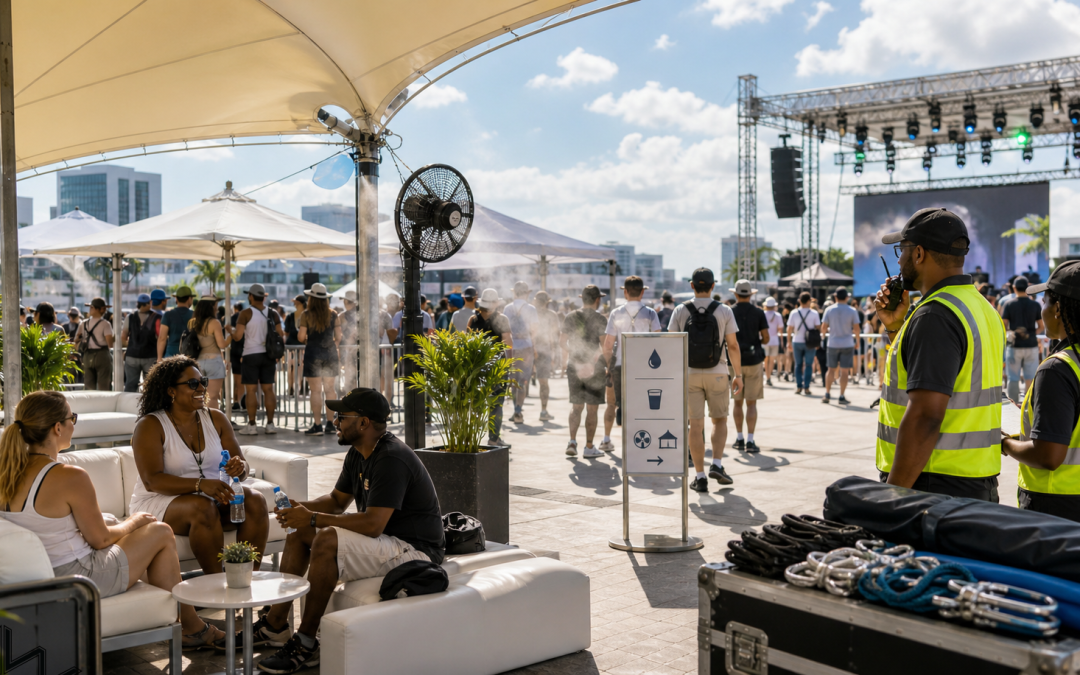
- Protection of people: Shelters, shade, hydration, cooling zones, and crowd-flow adjustments to reduce heat exposure and fatigue.
- Protection of assets: Weather-resistant stage elements, protective coverings, wind bracing, and secure rigging checks.
- Logistics and scheduling: Pre-arranged alternative timelines, backup venues or indoor options, and a plan to shift performances or programming with minimal disruption.
- Supply chain coordination: Pre-negotiate terms with rental houses, power providers, and AV suppliers for rapid replanning or rapid procurement of shelter, canopies, or fans.
- Safety, compliance and insurance: Confirm permits for structures, crowd protection measures, and insurance coverage that accounts for weather-related contingencies.
- Communication: A single-source briefing for clients, agencies, production teams and on-site staff with cardinal rules and triggers.
Step-by-step practical guide to implement a weather plan
- Conduct an initial weather risk assessment: Use historical climate data and local forecasts for your venue. Identify the top three weather risks (e.g., heat, rain, wind) and their likelihood.
- Define actionable triggers: Examples include “wind > 25 km/h” or “rain forecast > 60% within 6 hours.” Assign owners for each trigger and specify required actions (e.g., slow-down, pause, evacuate, move indoors).
- Pre-negotiate adaptive design options: Plan for modular shelter, shade structures, misting or cooling zones, and removable stage elements that can be deployed or retracted quickly.
- Develop a flexible schedule: Build a weather-responsive schedule with buffer windows and alternative performance slots to minimize downtime and preserve audience experience.
- Prepare an on-site weather kit: Include tarps, ballast weights, spare canopies, extra hydration, portable fans or misting devices, and quick-release rigging hardware with safety lanyards.
- Run a weather rehearsal: Simulate contingencies with the team, test communication flows, and verify that safety briefings, crowd-control measures, and power continuity work as planned.
Budgeting for weather contingencies
Include a dedicated weather contingency line in the event budget. This should cover sheltering, equipment protection, scheduling flexibility, and rapid procurement to adapt to weather shifts. Tailor the size of the contingency to the event’s scale, risk profile, and venue constraints. Document approval thresholds so that reallocation decisions can be made quickly by the authorized lead.
Partner procurement teams early to secure weather-ready resources. Consider scalable shelter systems, portable cooling solutions, wind-rated rigging components, and contingency power options. A clear budget framework reduces last-minute cost spikes and helps protect the overall activation ROI.
Legal, safety and regulatory considerations
Weather-related planning intersects with safety standards, permitting, and insurance. Ensure that any temporary structures comply with local regulations and that your insurance covers weather-related disruptions, property damage, and public liability. In South Africa, align with event safety norms and local municipal requirements for large gatherings, especially for crowd movement, emergency egress, and on-site medical services.
Operational tips for the on-site team
On the ground, stay calm and decisive. Maintain open channels with all partners so decisions are informed by current conditions rather than forecasts alone. Use a single source of truth for weather updates and action triggers, and rehearse the communication protocol under varying conditions to avoid confusion during real incidents.
Protect audiences first—provide shaded areas, hydration stations, clearly marked shelter routes, and announcements guiding safe behavior. Protect staff and vendors by ensuring easy access to shelter, rest areas, and PPE as required by the conditions.
Common mistakes and considerations
- Failing to define triggers or ownership for weather actions, leading to delayed responses.
- Underestimating the impact of wind on canopy and rigging safety.
- Overlooking audience comfort—heat, sun exposure, and accessibility can degrade the experience quickly.
- Neglecting pre-event rehearsals for weather contingencies, which increases confusion on the day.
FAQ
What weather thresholds should trigger a postponement or evacuation?
Thresholds should be defined per venue and activity but typically include wind speed, heavy rainfall, lightning risk, and extreme temperatures, with clear escalation steps and designated decision-makers.
How far in advance should a weather contingency plan be prepared?
As early as the project brief stage. A written plan should be part of the event strategy before vendor contracts are signed and should be revisited during rehearsals and final venue confirmations.
What are practical on-site mitigations for heat and sun?
Provide shaded zones, misting or cooling stations, free water, sunscreen, and fan-based cooling. Re-route queues and seating to benefit from shade, and use stage or screen visuals to remind attendees to hydrate.
What permits or approvals relate to weather structures?
Temporary structures, tents and rigging may require permits from local authorities or venue management, plus inspections from safety professionals. Verify with your venue and municipal authorities early.
Who should own the weather plan in a multi-agency activation?
Appoint a weather lead within the core production team, with clearly defined responsibilities across the agency, client and production partners to ensure fast decision-making.
Sources
- South African Weather Service — South Africa
- ISO 20121: Event Sustainability Management Systems — International Organization for Standardization
- Event Safety Alliance — Global event safety guidelines
- IAEE — International Association of Exhibitions and Events
Ready to weather-proof your activation? Contact DERWALT
If you’re planning an outdoor activation in South Africa and want a partner who can integrate weather contingency planning with end-to-end production, talk to DERWALT about strategy, production management and on-site safety solutions. We help brands design resilient experiences from concept through execution.
Recent Comments