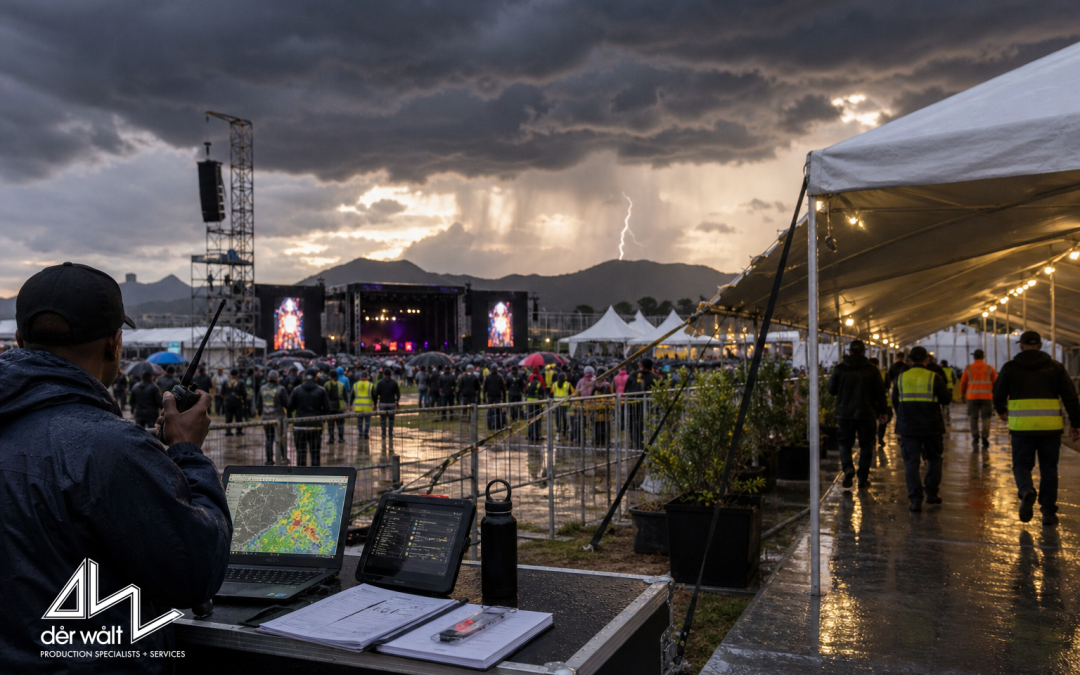
Weather-Proofing Outdoor Activations in South Africa: A Practical Guide
A practical guide for SA brands, agencies and venues to plan, monitor and execute outdoor experiential activations with robust weather contingency. Learn risk assessment, lightning and heat safety, shelter strategies and budget guidance.
The bottom line: embed weather risk management from project kick-off with a formal risk assessment, a lightning and rain contingency plan, and clear decision rights for delaying, relocating or evacuating a site.
1) Start with a weather risk profile
Before any plan is drawn, identify how weather could affect your activation. A simple risk profile helps teams decide where to invest contingency effort. Consider:
- Location and season: coastal cities, inland plains and high-veld climates bring different wind, rain and heat patterns.
- Event duration and layout: longer events increase exposure to changing conditions; large crowds demand more sheltered space.
- Stage and electrical risk: wet weather or lightning can impact rigging, power and audience safety.
- Forecast reliability windows: how far ahead you can rely on SA weather forecasts and local alerts.
Actionable outcome: a one-page weather risk brief shared across production, safety, venue and client teams, with defined trigger points to switch plans.
2) SA context: weather patterns, safety norms and permissions
South Africa experiences varied weather. The summer thunderstorm season (roughly November through February) can bring sudden rain, strong gusts and lightning. In major cities, storm timing is often afternoon or evening, creating peak risk during load-in and crowds gathering patterns. Work with local authorities, venue safety officers and weather services to align contingency timing with permits and insurance requirements. Have a plan for sheltering attendees, secure cordons and safe egress if lightning or heavy rain arrives.
Practical note: local weather service updates and official safety guidelines should inform your decision thresholds. Use these resources to calibrate forecast reliability, wind thresholds for canopies and the acceptable duration of rain delays.
3) Design contingency into the production plan
Contingency is most effective when built into design, not slapped on at the end. Consider these elements for outdoor activations in SA:
Shelter and protection
- Canopies and marquees with appropriate wind ratings to withstand gusts typical of SA storms.
- Covered VIP and media zones, queue shelters, and protected equipment bays for rain and sun.
- Waterproof casing for critical electrical gear and secure, non-slip walkways for safety.
Power, lighting and technical resilience
- Weatherproof electrical enclosures, cable ducts and drip loops to avoid water ingress.
- Portable, weather-protected power distribution and backup options (generators or batteries) with surge protection.
- Lighting and AV gear chosen for IP ratings and heat tolerance; plan for rapid shutdown and reboot if conditions worsen.
Audience flow and safety zones
- Shaded or cooled comfort areas to prevent heat strain, with easy access to water and first-aid.
- Clearly marked shelter routes and emergency exits that stay accessible during adverse weather.
- Temporary barriers and queuing that can be reconfigured quickly if crowd movement becomes dangerous in wind or rain.
Stage, rigging and transport considerations
- Secure rigging plans that account for local wind loads; have a live monitoring plan for gusts and rain.
- Robust stage flooring and non-slip surfaces; inspect truss connections and fall-protection measures.
- Weather-aware transport plan for crew and equipment, including contingency pickup/drop-off routes.
Hydration, comfort and safety messaging
- On-site hydration stations, shade, misting fans or cooling zones during heat peaks.
- Clear, multilingual safety messaging and audible alerts for weather changes.
- Accessibility considerations for attendees who may be more vulnerable to heat or rain.
4) Monitoring, decision-making and communications
Continuous monitoring is essential. Build a weather operations function that can act quickly when conditions change:
- Assign a weather lead who tracks SAWS alerts and local forecasts, with a daily briefing for all teams.
- Use a weather alert threshold matrix that links forecast conditions to decisions (delay, relocate, shelter, or cancel).
- Establish a clear incident command structure for weather-related decisions, including a go/no-go point for show operations.
- Communicate decisions in real time to staff, contractors and audiences via PA, screens and mobile apps when available.
5) Budgeting, timelines and procurement
Weather contingency must be funded and scheduled explicitly. Practical steps include:
- Include a contingency line item for weather-related disruptions (delay costs, additional shelter, and backup power).
- Build lead times for weatherproofing equipment and shelter rentals into procurement timelines.
- Pre-arrange options with local suppliers for rapid deployment of additional canopies, heaters or cooling devices.
- Test weather contingency scenarios during rehearsals or dry runs to validate timing and resource needs.
6) Common mistakes and best practices
- Assuming good forecasts mean no risk: even accurate forecasts can be wrong in dynamic South African weather. Prepare for surprises.
- Underpricing contingency costs: weather delays can affect staffing, transport and venue permits; ensure budgets reflect potential downtime.
- Lack of clear decision rights: everyone needs a defined authority to pause or postpone; delay decisions can cascade into safety issues.
- Over-reliance on digital alerts without on-site monitoring: combine apps with a human weather lead on site.
FAQ
What is the best way to start weather planning for an SA outdoor activation?
Begin with a formal weather risk assessment, identify critical moments (load-in, set changes, show time) and assign a weather lead to coordinate contingency actions with safety and production teams.
How should lightning risk be managed for outdoor events in South Africa?
Follow a robust lightning safety plan: monitor alerts, pause activities when lightning is observed within a risky distance, shelter attendees, and resume only after official clearance and a safe period per local guidelines.
What shelter options work best for SA climates?
Use wind-rated canopies, covered gathering spaces and sheltered walkways. Ensure all shelter structures have proper anchoring and non-slip surfaces.
How do I budget for weather contingencies?
Create a dedicated contingency line for weather-related disruptions and shelter needs; align procurement timelines with potential delays and maintain flexible staffing options.
What role does DERWALT play in weather-ready activations?
DERWALT can help with end-to-end event strategy, production management, logistics, shelter design, safety planning and on-site coordination to deliver weather-resilient experiences.
Sources
- South African Weather Service (SAWS) — South Africa
- Extreme Heat and Health — CDC
- Lightning Safety — National Weather Service
- Event Safety Guidance — UK Government
- Heat Exposure — OSHA — U.S. Department of Labor
Call to action
Partner with DERWALT to design and deliver weather-resilient experiential activations. Our end-to-end capabilities cover strategy, production management, logistics, content creation and on-site execution to keep audiences engaged, safely and on-brand—whatever the forecast.
Recent Comments