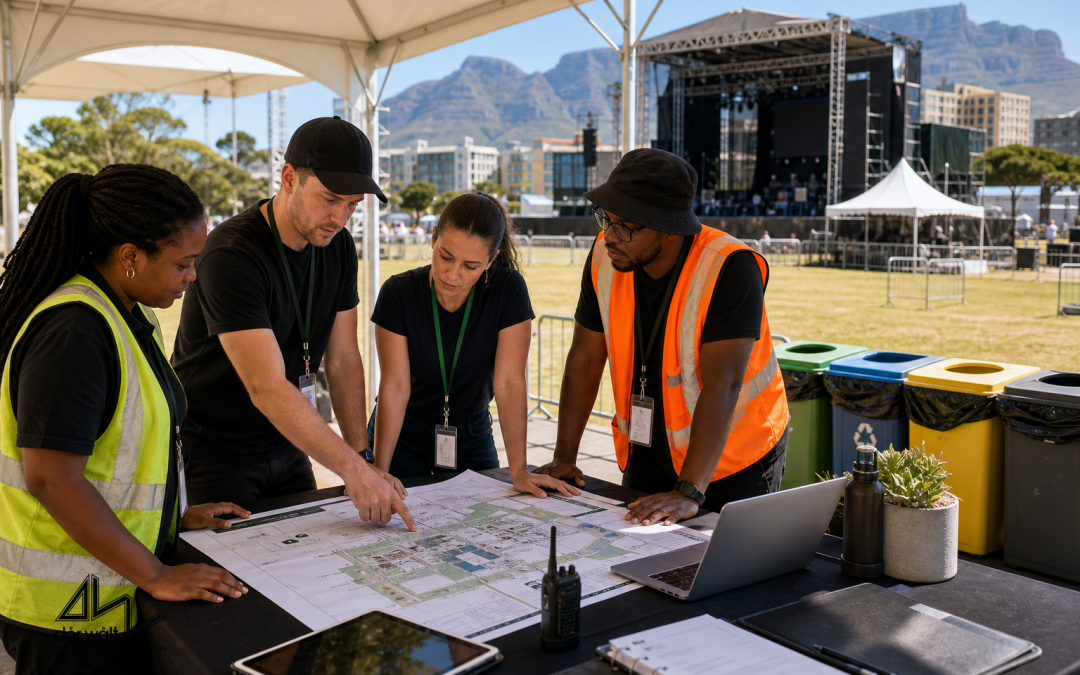
How to Plan Safe, Sustainable Large-Scale Events in South Africa
This guide helps brands and agencies deliver high-impact activations in South Africa with a safety-first approach, robust logistics, and clearly defined sustainability goals. Learn practical steps, local considerations, and how to collaborate with SA suppliers for large live experiences.
Primary search intent: planning a safe, sustainable large-scale event in South Africa. Quick answer: start with a risk-based safety framework, embed sustainability from day one, and align procurement with local rules and trusted SA suppliers.
Context: what makes large events in South Africa unique
South Africa presents a dynamic, sometimes challenging environment for big activations. Urban venues, diverse transport networks, and local by-laws shape how you design access, security, and crowd flow. Weather can be volatile across regions, so contingency planning for heat, rain, and wind is essential. Labour, procurement and transformation requirements (often referred to as B-BBEE considerations) influence supplier selection and contractual terms. Because regulations differ by city and municipality, early engagement with local authorities and venue teams is crucial.
Adopt a safety-first, sustainability-forward framework
A structured framework keeps safety and sustainability from becoming afterthoughts. Start with three integrated plans: a Safety Management Plan (SMP), an Emergency Response Plan (ERP), and a Sustainability Plan (SP). Align these with a recognised standard to ensure governance and auditability.
What is ISO 20121?
ISO 20121 is the international standard for sustainable events management. It guides organisations to plan and run events with lower environmental impact, stronger stakeholder engagement, and clearer governance.
Practical steps for SA activations
- Governance and ownership: appoint a safety lead, a sustainability lead, and a production lead. Establish a single point of contact for the client and venue to streamline decisions.
- Integrated risk and sustainability assessment: combine hazard identification (slips, trips, falls, crowd crush) with environmental impacts (waste, energy, water). Update the assessment as site details evolve.
- Site-specific safety planning: develop a Safety, Security and Health (SSH) plan with clear evacuation routes, muster points, communications trees, and multilingual signage where needed.
- Local supplier engagement: prioritise South African-based vendors for staging, power, AV, transport, catering and waste services. Local procurement reduces lead times, supports compliance with labour laws, and simplifies permit applications.
- Weather and climate readiness: consult the South African Weather Service for forecasts and risk alerts. Plan for heat mitigation (shelter, hydration), rain protection, and wind constraints on structures and rigging.
- Permitting and permissions: identify required permits early (road closures, noise control, liquor licensing where applicable). Permit timelines vary by municipality; start conversations well in advance.
- Logistics and traffic management: craft a Traffic Management Plan (TMP) and pedestrian flow plan that minimizes bottlenecks and protects vulnerable groups. Coordinate with authorities, event security, and public transport operators.
- On-site safety and crowd management: design controlled access points, queuing zones, barriers, wayfinding, first-aid posts, and reliable public-address systems for emergency communications.
- Sustainability in practice: implement a comprehensive waste strategy (segregation, recycling, composting where feasible), energy-efficient equipment, water conservation, and carbon footprint measurement where possible.
- Budgeting and timelines: incorporate contingency (typically 5–15%, depending on complexity and approvals) and lock milestones to align production activities with permit processing and site readiness.
Production management and venue coordination: turning plans into reality
Production management in SA requires disciplined cross-functional coordination. Create a single, shared master plan that links safety, logistics, and sustainability tasks to concrete timelines. Regular on-site rehearsals and run-of-show reviews help catch gaps before doors open. When working with venues, document responsibilities clearly—who owns access points, who handles power redundancy, and who validates final load-in and load-out against plan. In practice, maintain open channels with the venue operations team, local authorities, and key suppliers to navigate last-minute changes quickly.
Sourcing, procurement, and compliance in the SA context
Local procurement matters beyond cost. It supports regulatory compliance, aligns with labour standards, and can improve service continuity. Build supplier shortlists that include:
- Stage, rigging, and AV services
- Power and generator management with fuel and emissions considerations
- Waste, recycling, and cleaning services
- Catering and hydration with environmental and health standards
- Transport and crowd management services
Contractually, require safety certificates, site-specific risk assessments, and proof of insurance from all suppliers. Where possible, request green or sustainability commitments, such as waste diversion targets or energy-efficient equipment.
Measurement, data, and learning from each activation
Capturing data helps teams improve future activations and demonstrate accountability. Track:
- Incident and near-miss reporting with response times
- Waste diversion rates and total waste generated
- Energy consumption and power reliability
- Crowd flow efficiency and dwell time at key zones
- Visitor satisfaction and accessibility feedback
Translate these metrics into post-event reports that inform layout decisions, supplier selections, and sustainability strategies for the next activation.
Common mistakes and how to avoid them
- Underestimating permit lead times: build in a buffer and schedule early stakeholder meetings to avoid last-minute constraints.
- Isolated safety planning: integrate safety with all operational aspects rather than treating it as a separate checklist.
- Overlooking accessibility: plan for inclusive design—clear signage, accessible viewing areas, and staff trained to assist guests with varying needs.
- Neglecting sustainability in the rush to stage: embed recycling, waste reduction, and energy efficiency into every vendor contract from the start.
FAQ
What permits are typically required for large events in South Africa?
Permits vary by city and venue but commonly include road closures, noise by-laws, health and safety clearances, and liquor licensing if applicable. Start the process early with the local municipality and venue.
How can I measure safety and sustainability impact during and after an event?
Use KPIs such as incident rate, response time, waste diversion, energy use, water savings, and guest satisfaction to assess performance and guide future improvements.
Why is local procurement important for SA activations?
Local procurement supports compliance with labour and transformation requirements, reduces lead times, and fosters reliable supply chains, which in turn improves on-site safety and service levels.
How early should planning begin for a large SA activation?
For major events, begin planning several months in advance to secure permits, align with stakeholders, and lock in critical suppliers and venues. Early engagement reduces risk and cost.
What are common pitfalls to avoid in safety and sustainability planning?
Avoid treating safety as an afterthought, ignoring accessibility, and failing to define clear accountability. Also, do not defer sustainability decisions to the last minute; integrate them into every contract and layout decision.
Sources
- ISO 20121: Sustainable Event Management — ISO
- Event safety guidance — UK Health and Safety Executive
- South African Weather Service — National weather forecasting and climate data
- Event Safety Alliance — Safety best practices for events
Ready to plan your activation with confidence?
DERWALT specialises in experiential marketing, activation strategy, and end-to-end event production. If you’re planning a large-scale live experience in South Africa, our team can help with safety-focused production management, logistics, supplier coordination, and sustainable event delivery that fits your timeline and budget. Contact us to discuss your activation goals and how we can turn them into a safe, memorable, and responsible live experience.
Recent Comments