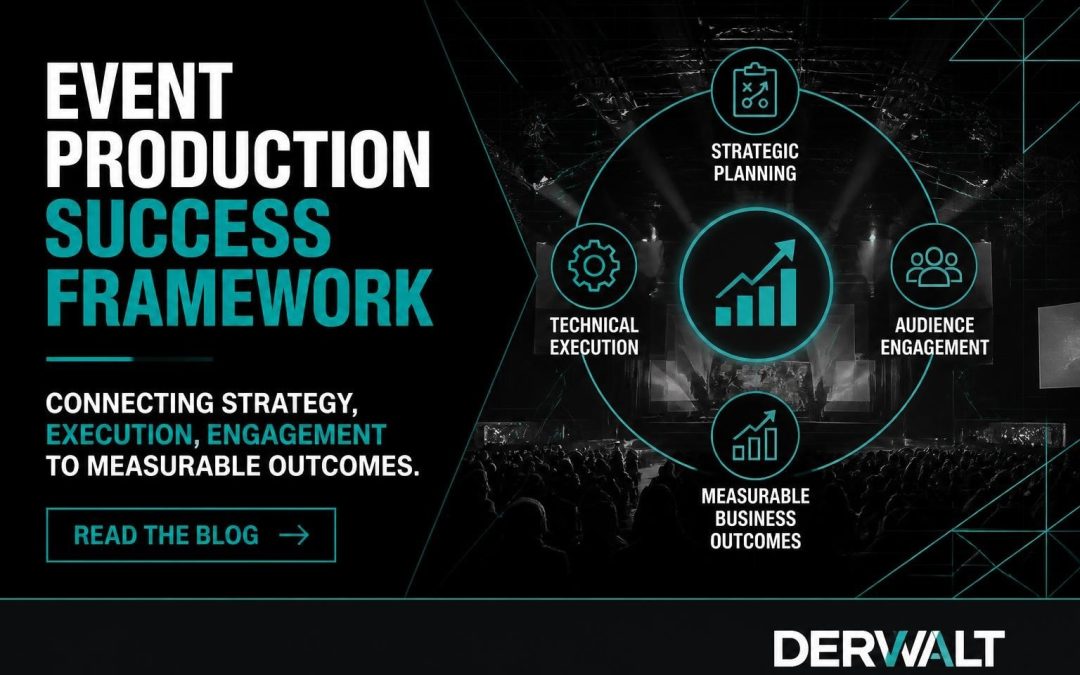
A successful event is not an accident. It is the result of deliberate planning, rigorous production intelligence, and flawless execution. In 2026, brands face higher expectations from attendees, tighter budgets, and increased scrutiny on return on investment. Whether orchestrating a brand activation, product launch, or corporate conference, the difference between an event that delivers measurable results and one that falls flat lies in the system behind it. This article examines the strategic, operational, and technical elements that separate successful events from mediocre ones.
Defining Success Before the First Brief
Before any production begins, clarity on objectives is non-negotiable. A successful event starts with defining what success means for your specific brand and audience. This requires moving beyond vanity metrics and focusing on business outcomes that align with broader organizational goals.
Establishing Measurable Objectives
Strategic event planning begins with S.M.A.R.T. goals: specific, measurable, achievable, relevant, and time-bound. These objectives provide the framework for every decision that follows, from venue selection to technical specifications.
- Revenue generation targets
- Brand awareness metrics
- Lead acquisition numbers
- Audience engagement rates
- Post-event conversion percentages
Consider how event management best practices emphasize clear objectives as the foundation for attendee satisfaction and revenue maximization. Without this clarity, production teams operate without direction, budgets spiral, and stakeholders question value.
Aligning Stakeholder Expectations
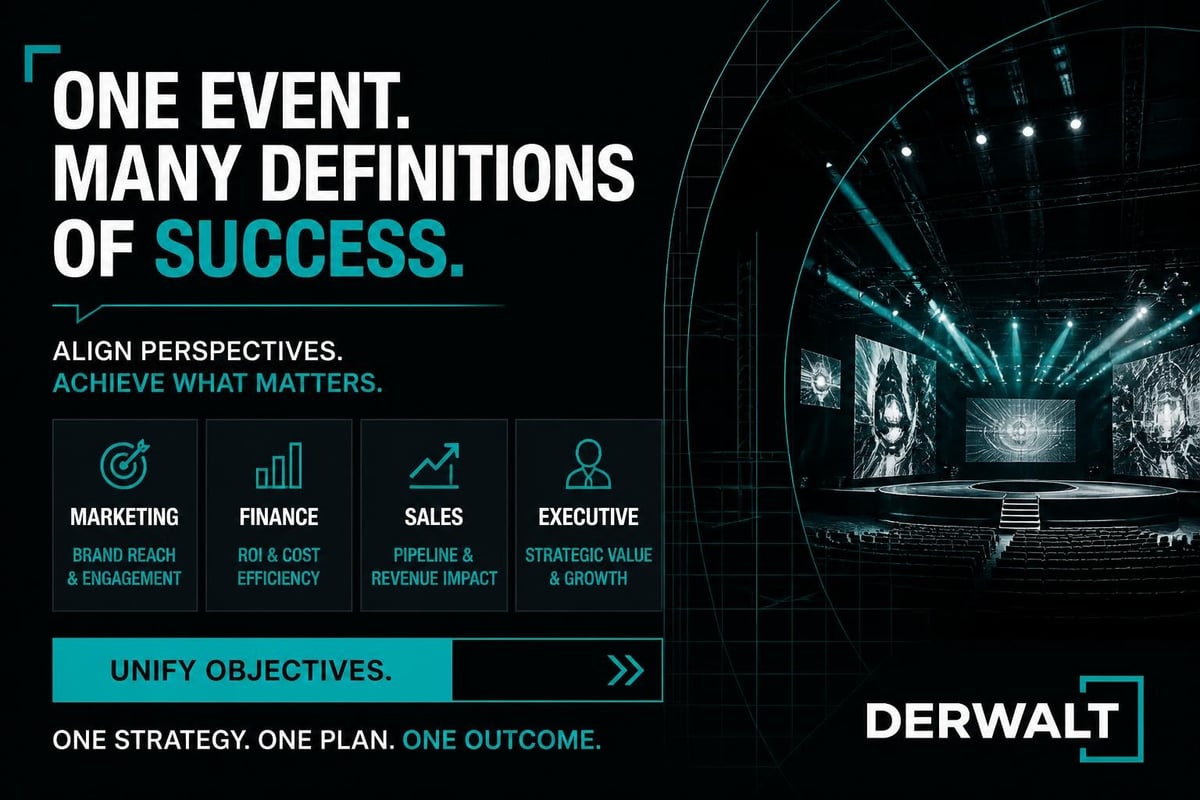
A successful event requires alignment across multiple stakeholders: marketing teams, executive leadership, finance departments, and external partners. This alignment process involves structured briefings, documented sign-offs, and consistent communication protocols throughout the production cycle.
| Stakeholder | Primary Concern | Success Metric |
|---|---|---|
| Marketing | Brand perception | Social reach, sentiment |
| Finance | Budget control | Cost per attendee, ROI |
| Sales | Lead generation | Qualified prospects |
| Executive | Strategic impact | Market positioning |
Production Intelligence as a Strategic Advantage
Production intelligence separates professional event delivery from amateur execution. It encompasses the systematic approach to resource allocation, risk mitigation, supplier management, and technical planning that ensures brand experiences achieve their intended impact.
Budget Control and Financial Discipline
Financial management is where many events fail before they begin. A successful event operates within clearly defined financial parameters while maintaining quality standards and meeting strategic objectives. This requires transparent budget modeling, contingency planning, and real-time cost tracking.
The production team must account for multiple cost categories: venue fees, technical equipment, staffing, catering, marketing materials, insurance, and post-event reporting. Forbes emphasizes the importance of early preparation and strategic planning to control costs while delivering premium experiences.
Budget allocation framework:
- Venue and infrastructure (30-35%)
- Technical production (25-30%)
- Content and programming (15-20%)
- Marketing and promotion (10-15%)
- Contingency reserve (10%)
Supplier Management and Risk Mitigation
Every successful event depends on a network of specialized suppliers: audiovisual technicians, lighting designers, staging companies, catering services, and security providers. Managing these relationships requires clear contracts, performance standards, backup plans, and accountability structures.
Risk mitigation extends beyond supplier reliability. It includes weather contingencies for outdoor events, technical redundancies for critical systems, medical protocols, security assessments, and crisis communication plans. Production intelligence means anticipating failure points and building systems to prevent or rapidly respond to issues.
When brands partner with comprehensive production management services, they gain access to established supplier networks, proven risk frameworks, and operational expertise that individual projects cannot develop independently.
Technical Planning That Delivers Flawless Execution
Technical excellence is non-negotiable for a successful event. Audiences expect seamless audiovisual experiences, reliable connectivity, proper lighting, and production values that match brand standards. Technical planning begins months before load-in and continues through post-event teardown.
Venue Assessment and Layout Optimization
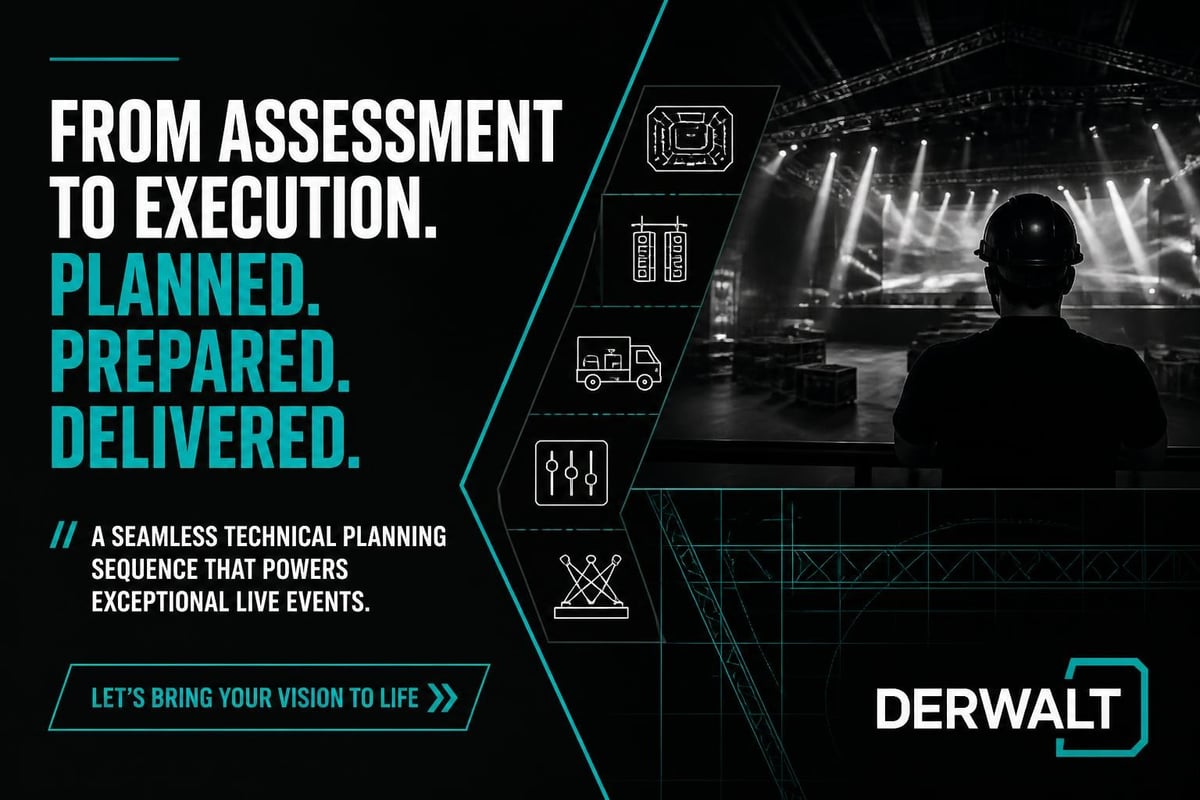
Technical layout planning starts with comprehensive venue assessments: power capacity, rigging points, acoustics, sight lines, loading access, and spatial flow. These physical constraints shape what is technically feasible and financially viable.
Layout optimization considers attendee movement patterns, accessibility requirements, branding visibility, and functional zones for registration, networking, presentation, catering, and support services. Every square meter must serve a strategic purpose.
Equipment Specification and Redundancy
Professional production teams specify equipment based on venue characteristics, audience size, content requirements, and brand standards. This includes audio systems, video displays, lighting rigs, staging structures, and connectivity infrastructure.
Redundancy is critical. Backup projectors, spare microphones, secondary internet connections, and alternative power sources prevent single points of failure from compromising the event. Strategic planning and technical delivery must account for these redundancies without inflating budgets unnecessarily.
Experiential Engagement That Creates Brand Impact
A successful event creates memorable experiences that strengthen brand relationships and drive business outcomes. This requires moving beyond passive attendance toward active engagement through thoughtfully designed interactions, content, and environments.
Audience-Centric Design Principles
Understanding your audience is fundamental. Demographics, preferences, expectations, and behavioral patterns inform every design decision. Hamilton’s insights on modern event expectations highlight how audiences in 2026 demand personalized experiences, seamless technology integration, and meaningful interactions.
Design principles for experiential engagement:
- Immersive environments that reflect brand identity
- Interactive elements that encourage participation
- Personalized touchpoints that recognize individual attendees
- Social amplification opportunities for organic sharing
- Value-added content that extends beyond the event itself
Content Programming and Flow
Content programming shapes the attendee journey from arrival to departure. This includes keynote presentations, panel discussions, workshops, networking sessions, entertainment, and breaks. The sequence, timing, and transitions between these elements determine whether attendees remain engaged or disengage.
A successful event maintains energy levels through varied formats, appropriate pacing, and strategic breaks. It respects attendee attention spans while delivering substantive value. Production teams coordinate speakers, manage transitions, and ensure technical elements support rather than distract from content delivery.
Measurement Systems That Prove Value
Measurement separates events that justify investment from those that consume budgets without demonstrable returns. A successful event in 2026 requires integrated measurement systems that track metrics before, during, and after the experience.
Real-Time Data Collection
Modern events leverage technology for real-time data collection: registration metrics, session attendance, engagement rates, social media activity, and audience sentiment. This data enables on-site adjustments and provides immediate feedback to stakeholders.
Key measurement categories:
| Metric Type | Examples | Collection Method |
|---|---|---|
| Attendance | Check-ins, session participation | RFID, app tracking |
| Engagement | Questions asked, content downloads | Interactive platforms |
| Social | Mentions, shares, hashtag use | Social monitoring tools |
| Business | Leads generated, meetings scheduled | CRM integration |
Post-Event Analysis and Learning
The measurement process extends beyond the event itself. Post-event analysis examines whether objectives were achieved, identifies performance gaps, and captures learnings for future improvements. This includes attendee surveys, sponsor feedback, financial reconciliation, and strategic debriefs.
Organizations that treat events as iterative learning opportunities rather than one-off projects build institutional knowledge, refine processes, and consistently deliver better outcomes. This approach aligns with production intelligence frameworks that emphasize continuous improvement and data-driven decision making.
Operational Excellence Through Systematic Planning
Operational excellence distinguishes professional event production from amateur execution. It requires systematic planning, disciplined processes, and coordinated execution across multiple workstreams and stakeholder groups.
Timeline Development and Critical Path Management
Every successful event follows a detailed timeline that identifies milestones, dependencies, and deadlines. Airtable’s structured approach to event planning demonstrates how breaking complex projects into manageable phases improves outcomes and reduces stress.
Critical path management identifies tasks that directly impact the event date and cannot be delayed without consequences. These tasks receive priority attention, dedicated resources, and enhanced monitoring to ensure completion on schedule.
- Concept phase (12-16 weeks before): Objectives, budget, venue
- Planning phase (8-12 weeks before): Suppliers, content, technical specs
- Production phase (4-8 weeks before): Rehearsals, logistics, confirmations
- Execution phase (1-4 weeks before): Load-in, testing, go-live
- Evaluation phase (post-event): Analysis, reporting, learning capture
Team Coordination and Communication Protocols
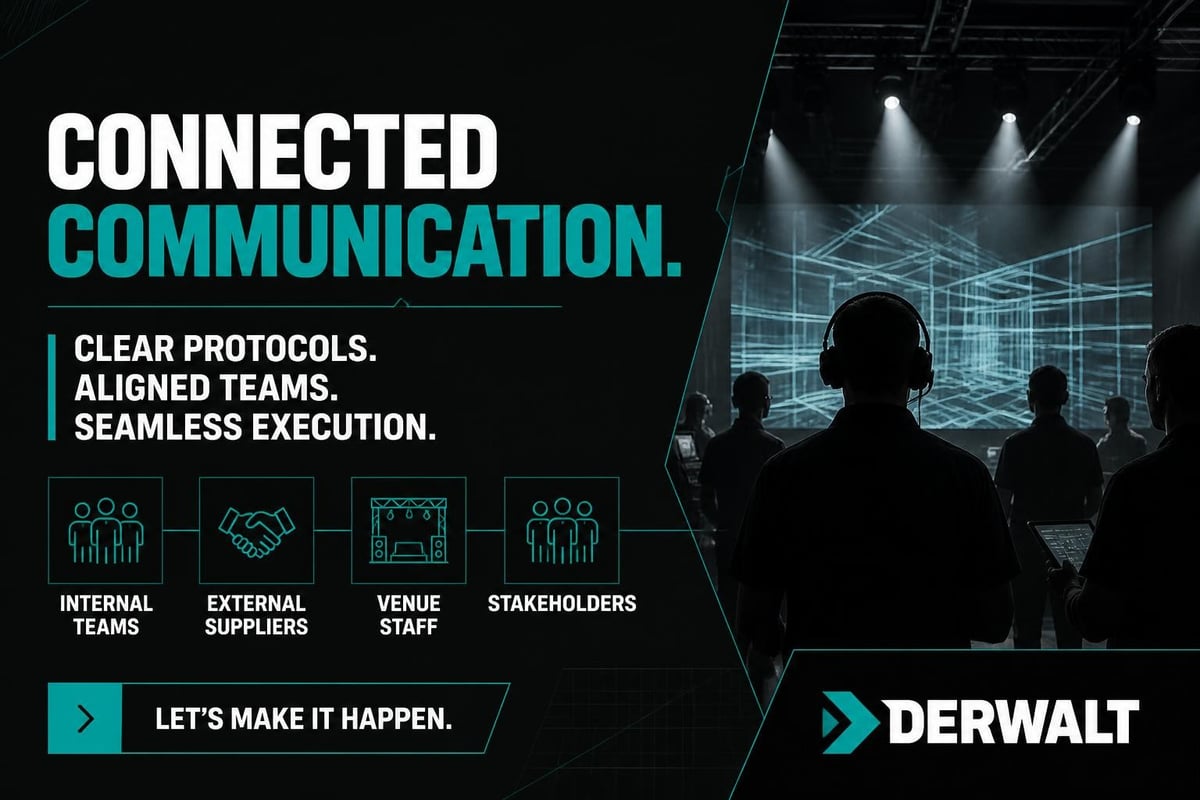
Large-scale events require coordinated action across internal teams and external partners. Communication protocols ensure everyone has access to current information, understands their responsibilities, and can escalate issues appropriately.
This includes regular planning meetings, shared project management platforms, documented decision logs, and clear escalation paths for problem resolution. The Castle Group emphasizes that seamless execution depends on strategy, creativity, and coordinated teamwork across all contributors.
Brand Activation and Creative Interpretation
A successful event translates brand strategy into tangible experiences. This requires creative interpretation that maintains brand integrity while delivering fresh, engaging activations that resonate with target audiences.
Concept Creation That Reflects Brand Values
Concept creation for live events begins with deep understanding of brand positioning, market context, and strategic objectives. Creative teams translate these inputs into environmental design, experiential elements, content themes, and activation concepts that bring brands to life.
The creative process balances innovation with feasibility. Ideas must be executable within budget and timeline constraints while meeting technical and safety requirements. This requires collaboration between creative strategists and production specialists from concept inception through final delivery.
Consistency Across All Touchpoints
Brand consistency extends across every touchpoint: pre-event communications, registration experiences, wayfinding signage, environmental design, digital platforms, staff uniforms, catering presentation, and post-event follow-up. Inconsistency erodes brand perception and diminishes event impact.
Production teams maintain brand standards through detailed style guides, quality checkpoints, and approval processes that ensure all elements align with established brand guidelines before attendees encounter them.
On-Site Execution and Command Structure
Even the most thorough planning requires adaptive execution. On-site command structures enable rapid decision-making, problem resolution, and coordination across multiple simultaneous activities during live events.
Command Center Operations
Professional events establish command centers that monitor all operational aspects in real-time: registration flow, session attendance, technical performance, catering service, security status, and schedule adherence. This centralized oversight enables proactive problem identification and rapid response.
Command center protocols include regular status updates, incident reporting procedures, and clear decision authority for various issue types. Team members understand when to resolve issues independently and when to escalate for leadership decisions.
Contingency Activation and Problem Resolution
Despite thorough planning, unexpected issues arise. Weather disruptions, technical failures, speaker cancellations, health emergencies, or security concerns require immediate response based on pre-established contingency plans.
The difference between a successful event and a failed one often lies in how quickly and effectively teams respond to these challenges. Pre-planned responses, practiced protocols, and empowered on-site leadership enable professional teams to maintain attendee experience even when circumstances deviate from plans.
DERWALT does not simply build events but rather constructs the comprehensive system behind successful brand experiences through production intelligence for brand experiences. That system integrates creative interpretation, strategic planning, budget control, technical delivery, supplier management, and risk mitigation to ensure every element supports your objectives.
Health, Safety, and Security Considerations
Event health, safety, and security planning is both a legal requirement and an ethical obligation. A successful event creates environments where attendees feel secure, protected, and cared for throughout their experience.
Risk Assessment and Mitigation Protocols
Comprehensive risk assessments identify potential hazards: crowd management issues, medical emergencies, fire risks, structural concerns, food safety, and security threats. Each identified risk requires documented mitigation strategies and response protocols.
Safety planning involves multiple specialists: venue safety officers, medical personnel, security teams, fire marshals, and insurance professionals. Their collective expertise ensures events meet regulatory requirements while providing appropriate protection for all participants.
Emergency Response and Crisis Management
Emergency response plans address various scenarios: medical emergencies, evacuations, severe weather, security incidents, and technical failures with safety implications. These plans include communication protocols, evacuation routes, designated assembly points, and coordination with emergency services.
Crisis management extends beyond immediate response to include stakeholder communication, media relations, business continuity, and post-incident analysis. Organizations that handle crises professionally often strengthen stakeholder confidence despite challenging circumstances.
Sustainability and Environmental Responsibility
Sustainability considerations increasingly influence event planning decisions. A successful event in 2026 demonstrates environmental responsibility through waste reduction, energy efficiency, sustainable sourcing, and carbon footprint management.
Sustainable Practices Across Production
Sustainable event production involves multiple practices:
- Digital alternatives to printed materials
- Reusable or recyclable display materials
- Energy-efficient lighting and HVAC systems
- Locally sourced catering with minimal food waste
- Sustainable transportation options for attendees
- Carbon offset programs for unavoidable emissions
These practices align with corporate sustainability commitments while often reducing costs through efficiency improvements and waste elimination.
Measuring and Reporting Environmental Impact
Organizations increasingly measure and report event environmental impact as part of broader ESG (environmental, social, governance) commitments. This includes calculating carbon footprints, tracking waste diversion rates, and documenting sustainability initiatives for stakeholder reporting.
Transparent sustainability reporting demonstrates corporate responsibility while providing data for continuous improvement in future events. Some organizations now require environmental impact assessments as standard components of event planning processes.
The Integration Challenge
The complexity of modern events creates integration challenges. A successful event requires seamless coordination across creative, technical, logistical, and strategic workstreams that often operate on different timelines with different priorities.
Professional production teams solve this integration challenge through structured processes, shared platforms, regular coordination, and experienced leadership that maintains focus on unified objectives while managing competing demands and constraints.
This integration capability distinguishes comprehensive production management from fragmented vendor coordination. When all elements operate within a unified system, the result is greater than the sum of individual components.
A successful event in 2026 demands more than logistics coordination or creative concepts alone. It requires production intelligence that integrates strategy, execution, and measurement into a coherent system designed to deliver measurable business outcomes. Whether you're planning a brand activation, product launch, or corporate conference, these principles provide the foundation for events that justify investment and strengthen brand relationships. DERWALT specializes in building these comprehensive systems for brands across South Africa, from initial concept through post-event analysis, ensuring every production element serves your strategic objectives with operational excellence and technical precision.
Recent Comments