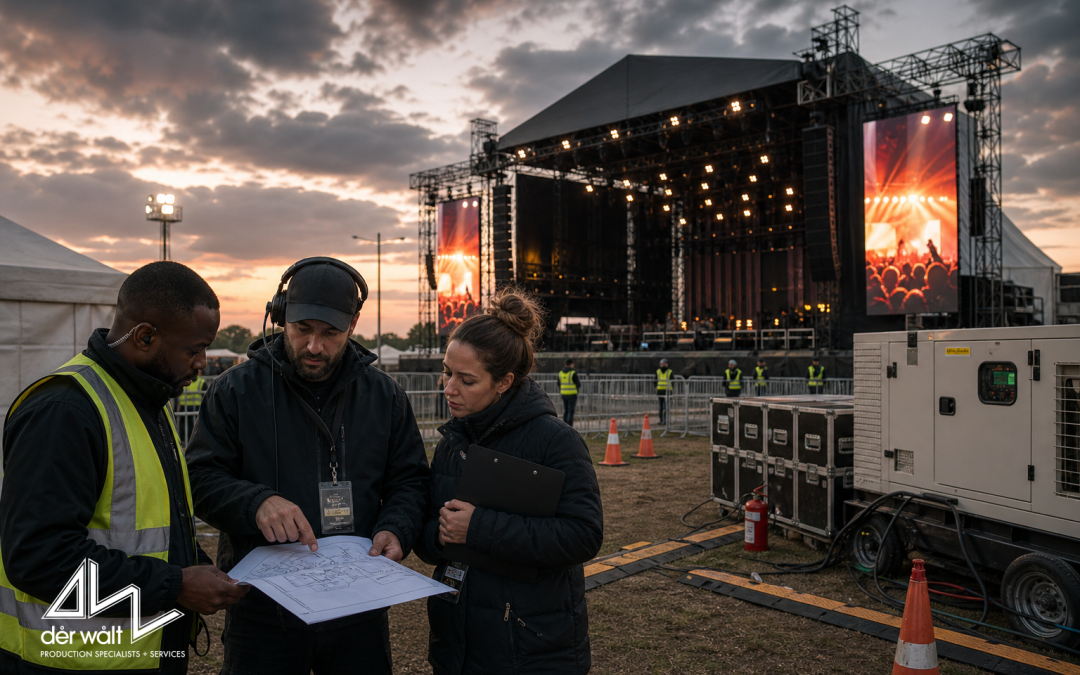
Safety-First Outdoor Event Production: A Practical SA Guide
A practical, field-ready guide for planning safe, scalable outdoor events in South Africa. Learn how to manage risk, permits, weather contingencies, power, and logistics for successful on-site experiences.
Plan safety-first from day one: establish a formal risk assessment, use modular stage designs, secure permits early, and set weather and power contingencies with a detailed on-site safety plan.
Primary search intent and direct answer
The goal is to provide a practical, South Africa–specific framework for planning large outdoor activations that prioritises safety, compliance, and operational efficiency. Start with a formal risk assessment, then design modular, wind-tolerant stages, secure permits early, build in weather contingencies, and implement structured on-site governance for people, power and logistics.
Context: South Africa’s unique considerations for outdoor events
Outdoor activations in SA must contend with variable weather, wind shear, heat, and occasional heavy rain. Power reliability can be a challenge due to load shedding and grid constraints, requiring robust backup solutions. Transport and access logistics are crucial near urban venues and regional sites, where traffic management and crowd flow influence safety and experience. Labour practices, minimum safety standards, and permit timelines require careful planning and coordination with authorities, venue operators and suppliers.
With these realities, a production plan should integrate safety, sustainability, and efficiency from the outset, rather than as afterthoughts. This means modular infrastructure, clearly defined responsibilities, and a procurement timeline that aligns with local permit processes and supplier lead times.
Practical guidance: a step-by-step planning framework
1) Establish safety governance and risk baseline
Appoint a dedicated safety lead or safety officer for the project. Conduct a formal risk assessment covering all phases: design, build, operation and strike. Identify critical controls for stage integrity, electrical safety, crowd management, fire protection, and medical support.
2) Early permitting and compliance
Map required permits early, including temporary structures, sound levels, road closures, and electrical installations. Engage local authorities, the venue, and any accountable institution well in advance to avoid last‑minute delays. Document everything in an accessible site safety plan.
3) Stage, structure and rigging design
Choose modular, reusable components with proven wind-loading performance suitable for SA conditions. Design for rapid assembly/disassembly and clear sightlines. Implement load paths, secure anchoring, and redundancy in critical connections to withstand wind and weather.
4) Power distribution and electrical safety
Plan power from generators or grid connections with adequate capacity and headroom. Use weatherproof distribution boards, proper cable management, and clear separation between power and public spaces. Prepare fuel plans, refuel protocols, and fire safety considerations for generator use. Adhere to relevant electrical standards and keep a live log of power consumption and load checks.
5) Weather planning and contingency strategies
Establish weather thresholds that trigger protective actions, such as partial closures or delays. Have rain plans, shade and cooling zones for heat, wind contingency procedures for stage movement, and sheltered control points for crew. Monitor forecasts from trusted local services and assign a decision-maker for weather-related changes.
6) Crowd management and venue operations
Design entry/exit routes with clear wayfinding, barriers, and queuing strategies to avoid pinch points. Ensure accessible routes for all attendees, including people with disabilities. Plan medical zones, hydration points, and communications protocols for staff and security teams.
7) Logistics: transport, access, and on-site coordination
Develop a logistics plan that covers supplier delivery windows, offloading areas, and on-site parking. Create a centralized communications hub (radio/phones) and a single-source of truth for schedules, stage cues, and emergency procedures. Build buffer times into the production timeline to accommodate delays.
8) Sustainability and environmental considerations
Incorporate waste management, recycling stations, and minimal single-use plastics. Optimize power usage with energy-efficient equipment and consider renewable options where feasible. Plan for responsible cleanup and venue restoration to minimize environmental impact.
9) Budgeting and timeline best practices
Build a phased budget aligned to permitting milestones, lead times for structural components, and contingency funds. Use a rolling timeline that includes critical path activities, milestones, and decision points. Include allowances for weather-related contingencies and supply chain variability.
10) On-site governance and staffing
Define roles and responsibilities clearly, including safety officers, riggers, electrical crews, crowd stewards, medical staff, and security. Implement shift patterns that maintain alertness and safety, with handover checklists and debriefs after major milestones or shifts.
11) Measurement, testing and rehearsal
Run controlled load tests on structures, electrical systems, and crowd barriers. Schedule rehearsals to validate cues, emergency procedures, and communications. Use simple, real-time checklists to verify readiness before doors open and before major transitions.
Common mistakes and key considerations
- Underestimating wind loads on temporary structures; modular designs with redundant anchoring reduce risk.
- Delaying permits; secure approvals early to prevent costly delays or site restrictions.
- Overlooking power reliability; plan robust backup power and failover strategies.
- Ignoring heat and hydration; provide cooling zones and accessible water points.
- Inadequate crowd flow planning; design ingress/egress to prevent bottlenecks and improve safety.
FAQ
What is the first thing I should do when planning an outdoor SA event?
Start with a formal risk assessment and appoint a safety lead to coordinate permits, structural design, and power planning from the outset.
Which permits are typically required for temporary outdoor structures in SA?
Permits commonly include temporary structure approvals, electrical installations, sound and noise permissions, and traffic or road-closure authorisations, all coordinated with local authorities and the venue.
How can I ensure reliable power for an outdoor activation?
Assess total load, use weatherproof distribution, and have redundant power sources and fuel plans. Schedule regular checks and establish clear safety zones around generators and cables.
What role does weather contingency play in a production plan?
Weather contingencies protect people and equipment; define thresholds for action, rehearse weather responses, and maintain flexible timelines to adapt to changes.
How do I design safer crowd movements at outdoor events?
Plan clear, non-overlapping pathways, ample vantage points, barrier layouts that prevent pinch points, and staffed control points to guide attendees during entry, movement, and egress.
Sources
- ISO 20121:2012, Event sustainability management systems — International Organization for Standardization
- ISO 45001: Occupational health and safety management — International Organization for Standardization
- NFPA 101 Life Safety Code — National Fire Protection Association
- Event safety guidance — UK Health and Safety Executive
What DERWALT can do for your next activation
DERWALT specialises in experiential marketing, brand activations, and end-to-end event delivery. We offer strategic input on safety-first production planning, production management, technical planning, stage and show production, logistics coordination, and on-site support to help brands deliver engaging, compliant, and scalable live experiences.
Contact DERWALT
Ready to bring a safety-forward, scalable outdoor activation to life? Reach out to DERWALT for expert experiential marketing, activation or event-production support tailored to South Africa’s unique context.
Recent Comments