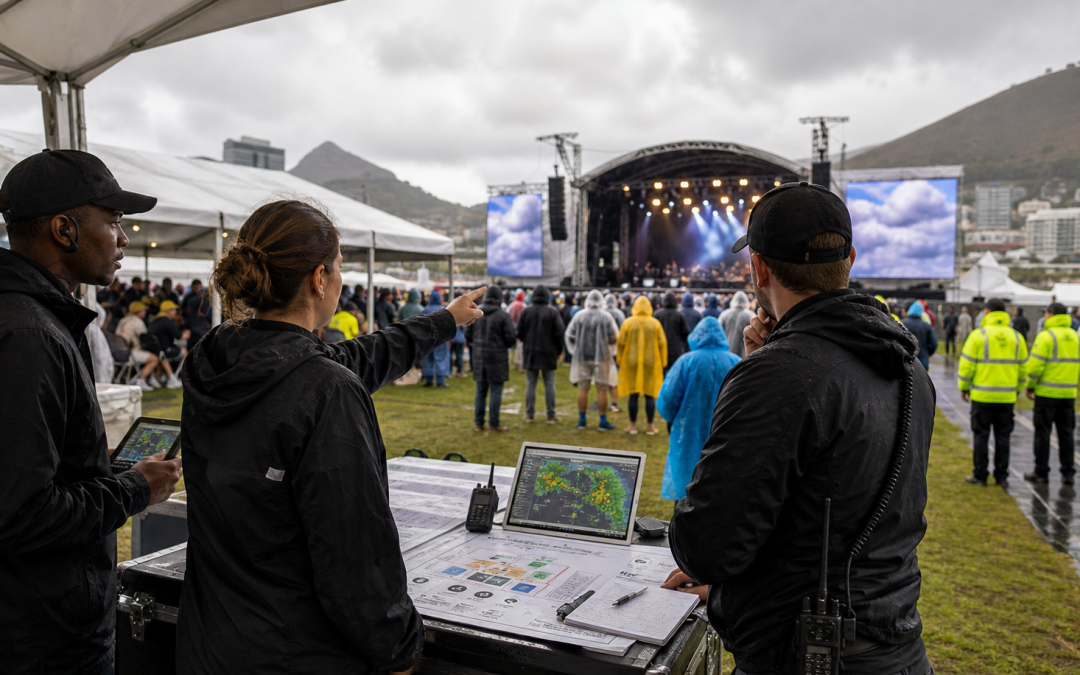
Weather-Proofing Outdoor Events in South Africa: A Practical Contingency Playbook
A practical, SA-focused guide to weather contingency planning for outdoor events, from monitoring and sheltering to safety protocols and budgeting. Learn how to keep audiences, staff and performances safe when weather shifts.
Direct answer: For outdoor events in South Africa, implement a comprehensive weather contingency plan that combines real-time monitoring, safe shelter options, lightning risk management, clear communication, and practical budgeting—started six to eight weeks before the event and updated continuously.
Why weather contingency planning matters for SA events
South Africa’s climate is diverse and seasonal. Summer thunderstorm activity, coastal wind patterns, and sudden rain can disrupt outdoor activations, stages, and audience comfort. A deliberate plan reduces risk, protects people, preserves the program, and helps safeguard budgets. The plan should align with general safety practices while reflecting local weather behavior, venue constraints and regulatory expectations.
Key concepts you’ll use in practice
Before you start, understand a few terms that recur in weather-focused event planning:
- Lightning safety: Procedures for slowing or stopping outdoor activities when lightning is detected within a defined distance or time window. This reduces risk to attendees, staff and performers.
- Weather monitoring: Real-time tracking of wind, precipitation, temperature, humidity, and storms. This typically involves professional meteorological feeds and on-site observations.
- Weather thresholds: Predefined criteria (e.g., wind gusts above X km/h, thunderstorm within Y km, rain rate, or temperature limits) that trigger actions such as pausing, sheltering, or evacuation.
- Shelter strategies: Designated safe spaces with capacity planning, accessibility, power, climate control, and clear signage for crowd flow.
- Emergency communications: Confirmed channels for rapid updates to staff, vendors, performers and attendees (PA, digital screens, SMS alerts, social channels).
Step-by-step approach you can implement now
and assign explicit roles. Define who makes weather-trigger decisions, who communicates changes, and how often checks occur during the event window. early. Use a trusted meteorological feed plus on-site observations. Assign a dedicated weather lead responsible for updating the team and escalating to producers when thresholds are reached. for each phase of the event (setup, gates open, main program, and teardown). Include wind speed limits for rigging, stages, and aerial gear; lightning distance triggers; and precipitation intensity that affects floor conditions and electrical safety. . Identify covered, weatherproofed spaces with adequate capacity, heating/cooling if needed, and accessible routes for guests with disabilities. Include portable canopies, marquees, and indoor backup venues where feasible. . Ground protection for wet surfaces, secure rigging, water ingress prevention, and power distribution with weather-rated enclosures. Pre-identify equipment that must be shut down or relocated during weather events. . Pre-scripted messages for status updates, delays, or evacuations. Use multiple channels (PA, screens, social media, internal apps) and ensure translations if audience needs require it. . Build contingencies into vendor pricing, insurance considerations, extra shelter costs, and potential venue or date changes. Include a defined process for approving unbudgeted weather-related costs.
Practical layout for a SA outdoor event weather plan
Below is a compact framework you can adapt for a large outdoor activation in South Africa:
: On-site observers + professional weather feed; local alerts from SAWS where available; radio or app-based alerts for staff. : Permanent shaded areas, mobile canopies, weather-rated marquees, indoor fallback options depending on venue. : Signage for shelter areas, staff marshals to guide movement, accessibility considerations, crowd flow to prevent bottlenecks during weather changes. : Water ingress plan for electronics, wind-safety checks for lighting rigs, secure ballast for temporary structures, backup power strategy.
Special considerations for South Africa
Weather patterns in SA vary by region and season. In coastal and eastern SA, afternoon thunderstorms are common in summer. In inland cities, heat waves and sudden gusts can affect outdoor stages. Local factors to account for include:
- Seasonality: Peak thunderstorm risk is typically in the warmer months; plan rehearsals and load-in early to avoid weather windows.
- Venue constraints: Some venues have limited sheltered options; verify access to indoor contingencies and the ability to reconfigure spaces quickly.
- Transport and access: Rain can affect road networks and parking; build extra time into arrival windows and coordinate with security teams for crowd movement.
- Labor and procurement: Weather-related delays impact crews; secure flexible supplier contracts and contingency staffing.
Common mistakes to avoid
- Underfunding the contingency budget or relying on ad hoc weather decisions close to showtime.
- Relying on a single weather source without on-site verification or redundancy.
- Delaying shelter deployment due to overconfidence in temporary setups or aesthetics.
- Ignoring accessibility when relocating audiences to shelter zones.
- Failing to rehearse weather-trigger procedures with staff and contractors.
Checklist: a concise weather contingency kit for SA events
- Pre-event risk assessment completed and signed off
- Weather monitoring plan with assigned roles
- Defined weather thresholds for each event phase
- Prepared shelter infrastructure and clear crowd routes
- Lightning safety protocol and evacuation plan
- Waterproofing, electrical safety and equipment protection
- Communication templates in multiple channels
- Budget reserve for weather-related contingencies
FAQ
What is the minimum lead time for a weather contingency plan?
Aim to have the plan in place 6–8 weeks before the event, with ongoing updates as forecasts evolve.
How should I handle lightning risk during a large outdoor concert?
Implement a lightning safety protocol that requires pausing outdoor activities and moving audiences to designated shelters when lightning is detected within a defined radius or time window, with a clear return-to-stage process after the threat passes.
What should be included in a shelter strategy for SA audiences?
Structured shaded and weatherproof spaces with accessible routes, climate comfort where possible, seating if appropriate, and a plan for crowd flow to minimize congestion during weather changes.
How can I manage costs related to weather disruptions?
Build a weather contingency line item into the budget, negotiate flexible terms with suppliers, and have a clear authorization workflow for unexpected weather-related expenditures.
Where can I find credible weather guidance for event planning?
Consult established sources for general safety and weather planning, such as national weather services and international safety guidelines, and tailor them to the SA context through local rules and venue requirements.
Sources
- South African Weather Service — Government of South Africa
- HSE: Event Safety — United Kingdom Health and Safety Executive
- OSHA — U.S. Department of Labor
- NFPA — National Fire Protection Association
- World Health Organization: Mass Gatherings — Health guidance for large events
Ready to plan weather-ready events with DERWALT?
DERWALT offers end-to-end experiential marketing, activation and event-production support, including comprehensive weather contingency planning, on-site safety coordination, and production management to keep your outdoor activation on track, rain or shine. Contact us to discuss your next SA event.
Recent Comments