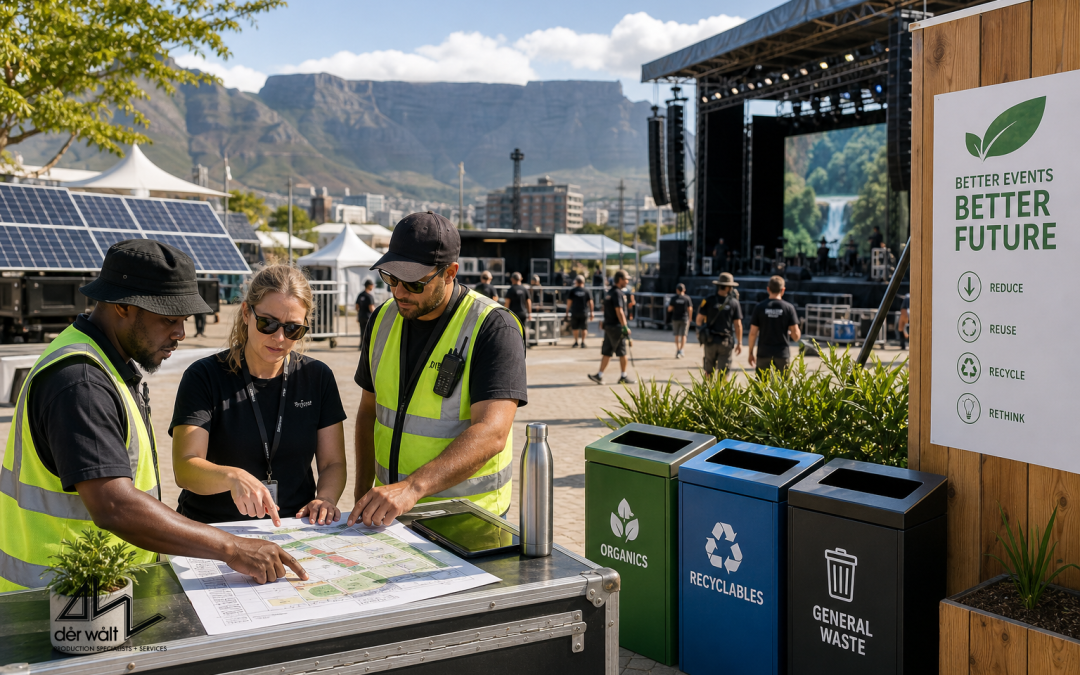
Sustainable Event Production in South Africa: A Practical Playbook for Brands
A practical, South Africa-focused guide for brands and agencies to deliver impactful live experiences with reduced environmental impact. Learn local procurement, waste, energy, safety, budgeting, and measurement strategies for major activations.
Start with a formal sustainability policy aligned to international best practices. Then map your supply chain to local, environmentally responsible vendors and implement measurable waste, energy, and transport plans from day one.
Why sustainability matters for South African events
In South Africa, large-scale activations, festivals, and brand experiences face unique logistical and environmental challenges. Energy reliability can be volatile, transport demand is high, and waste management requires disciplined planning. A thoughtful sustainability approach helps manage risk, reduces budget leakage, and enhances brand reputation with local communities.
Adopting structured standards—while tailoring them to SA realities—drives consistency across procurement, on-site operations, and reporting. It also aligns with global expectations around responsible production and supports local economic development by prioritising nearby suppliers, labour, and services.
Foundations: policy, governance and scope
Build sustainability into the project from the outset. This means a documented policy, clear roles, and measurable targets. Key components include a sustainability lead or committee, vendor requirements, and a set of on-site practices that can be audited after the event.
- Policy and goals: Define targets for waste diversion, energy use, water, and transport emissions. Tie these to broader corporate sustainability goals and to local regulations.
- Scope and boundaries: Decide which elements of the activation are in-scope (venue, stages, power, catering, merchandise, signage) and how you’ll track them.
- Roles and accountability: Assign a sustainability lead, a procurement contact, and a safety officer who can coordinate with venue and local authorities.
Local procurement and supplier coordination
Local procurement reduces transport emissions, supports SA suppliers, and simplifies compliance. It also mitigates risks associated with long supply chains, currency fluctuations, and potential border delays.
- Vendor pre-qualification: Require sustainability credentials, waste-management plans, and safety records. Prefer vendors with demonstrable recycling or reuse practices and energy-efficient equipment.
- Material choices: Prioritise reusable or recyclable materials, avoid single-use plastics, and source from local manufacturers where possible. Consider renting rather than buying modular staging, lighting fixtures, and decor.
- Community engagement: Where feasible, partner with local food producers, artisans or social enterprises. This supports local economies and enhances the experiential narrative.
- Verification and data: Request environmental data from suppliers (e.g., energy usage, waste streams, packaging materials) to inform post-event reporting.
Waste management: from planning to on-site execution
Waste is typically the largest controllable impact at events. A practical approach focuses on prevention, segregation, reuse, and responsible disposal, with specific SA considerations for recycling streams and landfill diversion.
- Waste audit and plan: Map expected waste streams (organic, recyclables, general) and set diversion targets before contracts are signed.
- On-site segregation: Use clearly branded, color-coded bins and trained stewards to sort waste into recyclables, organics, and residuals.
- Reusable and compostable options: Prioritise reusable cups, plates and cutlery; where disposables are unavoidable, choose compostable or recyclable alternatives with clearly marked recycling streams.
- Food waste: Partner with local composters or biodigesters; plan for surplus food donation where permitted to reduce waste.
- Post-event recycling and reporting: Document the actual waste diverted and calculated landfill impact for transparency in post-event reports.
Energy strategy: reliable power with a lower footprint
Energy reliability is a critical risk in SA. A sustainable energy plan combines efficiency with diversified power sources, leaning on local expertise and renewable options where feasible.
- Energy efficiency first: Use LED lighting, efficient sound and video equipment, and smart controls to minimise consumption. Size systems to actual needs to avoid over-generation.
- On-site generation and storage: Consider solar-powered solutions for daytime events, supplemented by battery storage and grid tie where permitted. Plan for fuel-efficient or low-emission generators with proper exhaust and noise management.
- Power management and monitoring: Implement real-time power meters to monitor loads by zone (stages, tents, concession areas) and adjust demand accordingly.
Transport, access, and the audience experience
Transport is a significant—and often under-estimated—source of emissions for large activations. A thoughtful approach reduces congestion and supports accessibility for all attendees.
- Staging and site layout: Design the site to minimise transit distances between entry points, stages, and refreshment zones. Use modular stages and setups to facilitate quick, efficient teardown and reuse.
- Public transport integration: Partner with local authorities or venues to encourage mass transit, shuttle services, bike parking, and clear wayfinding for pedestrians and cyclists.
- Travel budgeting and incentives: Offer incentives for attendees who use sustainable transport and highlight these options in communications.
Water, sanitation and catering practices
Water stewardship and responsible catering are essential in SA contexts, where droughts and variable supply can pose challenges. Focus on reducing water use and avoiding single-use products.
- Water stations and refill options: Install accessible water refill stations and encourage attendees to bring reusable bottles.
- Catering procurement: Source locally produced, seasonal foods with sustainable packaging. Favor vendors with waste-conscious practices and compostable service ware when reusable options aren’t feasible.
- Food waste reduction: Work with caterers to minimize over-procurement, use menu forecasting, and donate safe surplus where conditions and regulations allow.
Materials, signage and venue selection
The choice of venue and the materials used directly impact environmental performance. Where possible, select venues that already meet energy or sustainability standards and reuse assets from past events.
- Venue assessment: Prefer spaces with energy-efficient infrastructure, on-site waste management, and clear accessibility plans. Consider Green Star SA or similar venue certifications where available.
- Signage and branding: Use modular, reusable signage and digital displays to cut waste. Keep on-site branding simple and scalable to avoid overproduction.
- Equipment lifecycle: Select equipment with longer lifespans, easier repair options, and robust after-use return or recycling programs.
Compliance, safety and risk management
SA venues operate under a range of safety, health, and environmental regulations. A proactive approach reduces risk and ensures smoother operations for teams and attendees.
- Permits and permissions: Account for road closures, noise limits, and venue permits early in the planning cycle. Coordinate with municipal authorities to avoid delays.
- Workforce safety: Ensure compliance with local labour laws and provide adequate safety briefings, PPE, and on-site first aid resources for crew and performers.
- Weather contingency: In SA, weather volatility can affect outdoor events. Build contingencies into the plan, including rain plans, shelter solutions, and climate-resilient staging.
Measurement, reporting and learning
Measuring impact turns sustainability from a plan into accountability. Establish clear KPIs and collect data that can be shared with stakeholders and used to improve future activations.
- Key performance indicators (KPIs): Waste diversion rate, energy intensity (kWh per attendee), water use per attendee, and emissions per event day.
- Data collection: Gather data from vendors, on-site meters, and transport providers. Use simple templates to standardise reporting across events.
- Post-event review: Analyse results against targets, identify bottlenecks, and publish learnings to inform next-year planning and budget allocations.
Budgeting and timelines for sustainable activations
Incorporating sustainability typically requires upfront investment, but it often reduces total cost of ownership and risk over the event lifecycle. Start with a named budget line for sustainability and build the plan across procurement, transport, waste, and energy.
- Costing: Include items such as reusable assets, waste-management services, energy storage, and local supplier premiums in the early budgeting stage.
- Timeline integration: Align procurement, venue selection, permitting, and supplier onboarding with a dedicated sustainability timeline. Build buffer for permitting and last-minute supplier changes.
- Value realisation: Schedule debriefs with finance, operations, and marketing teams to quantify resource savings and reputational returns.
Checklist: quick-start actions for your next SA activation
- Define a policy and appoint a sustainability lead.
- Map local suppliers and request sustainability data with bids.
- Plan waste streams and target diversion rates; arrange recycling and composting.
- Design energy with efficiency first and diversify with renewable options where possible.
- Choose a venue with accessible, sustainable infrastructure and plan for transport integration.
- Prepare signage and materials for reuse; limit single-use items.
- Set KPIs and build a simple data-collection framework for post-event reporting.
FAQ
What is ISO 20121 and why is it relevant to SA events?
ISO 20121 is an international standard for sustainable event management that provides a framework for integrating environmental, social, and economic considerations into event planning and delivery. It helps SA brands align with global best practices while focusing on local implementation.
How can brands assess supplier sustainability in South Africa?
Ask for documented policies, track records in waste management and energy efficiency, and verify certifications from SA-based standards bodies. Prefer suppliers who provide data on waste streams, packaging, and transport efficiency.
What are practical ways to reduce waste at large activations?
Prioritise reusable or compostable service ware, implement source-separation of waste, reuse assets where possible, and partner with local composters or recyclers for end-of-life materials.
How should we measure the success of a sustainable event?
Use clear KPIs such as waste diversion rate, energy usage per attendee, water use per attendee, and transport-related emissions. Collect data from all suppliers and on-site systems to produce a concise post-event report.
What local permits or permissions affect sustainable event production in SA?
Municipal permits for noise, road closures, and venue safety are common; planning ahead with the venue and local authorities reduces risk and delays. Align with local environmental regulations and labour standards during procurement and operations.
Sources
- ISO — Sustainable Event Management (ISO 20121) — International Organization for Standardization
- UNEP — Sustainable Events and Conferences — United Nations Environment Programme
- Department of Forestry, Fisheries and the Environment (South Africa) — Government of South Africa
- SABS — South African Bureau of Standards — SA Standards Authority
- Green Star SA — Green Building Council South Africa
Partner with DERWALT for sustainable experiential activation
DERWALT delivers end-to-end experiential marketing, activation, and large-scale event production with a focus on sustainability, safety, and operational excellence. Reach out to discuss how we can plan, produce, and deliver impactful live experiences that meet your budget and timeline while minimising environmental impact.
Recent Comments