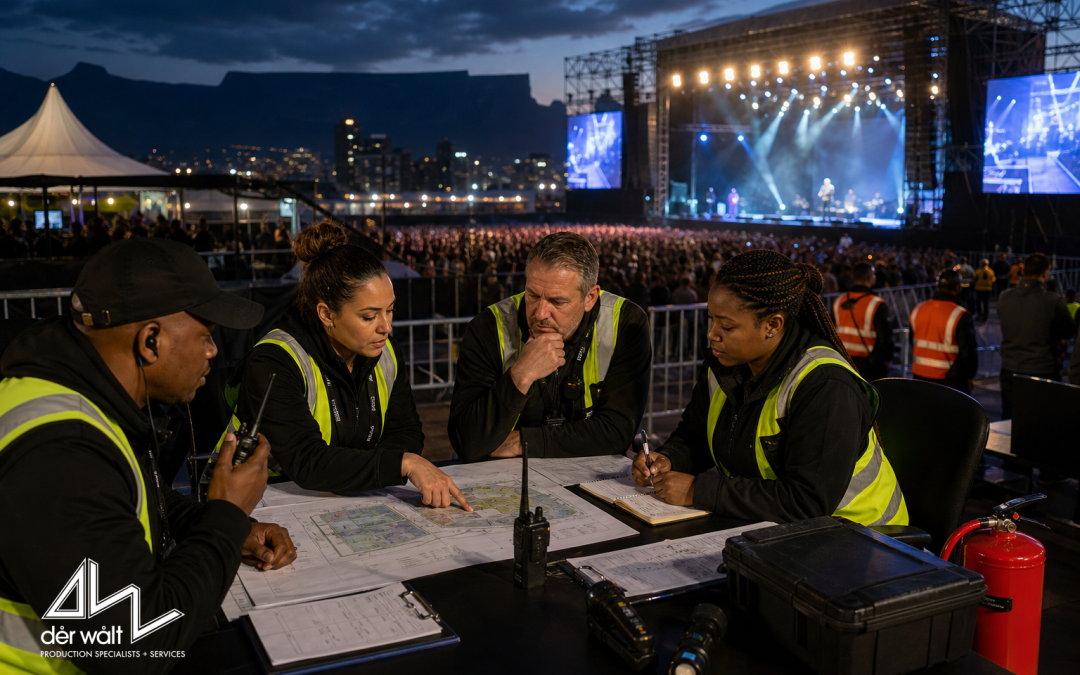
Safely Planning Large-Scale South African Events: A Practical Safety Checklist
This article provides a practical safety planning checklist for large-scale live events in South Africa. Learn how to structure risk assessments, regulatory compliance, crowd management, and emergency response to deliver safe, memorable experiences.
In short, safety planning for large-scale SA events starts with a formal risk assessment and a named safety officer, plus clear emergency procedures and regulatory compliance. This guide provides a practical, ready-to-implement framework.
Why safety planning matters for South African events
Large events bring together thousands of people, complex logistics, and diverse risk factors. In South Africa, event safety must align with national safety standards and local regulations, while also addressing environmental realities like weather, transport access, and the variability of outdoor venues. A proactive safety plan reduces risk, protects attendees, staff and performers, and keeps production timelines intact.
Foundational elements: what every SA event needs
Start with three non-negotiables that set the tone for the rest of your plan:
- Formal risk assessment (Hazard Identification and Risk Assessment, HIRA) covering all phases: planning, setup, operation, and teardown.
- A named Safety Officer and a dedicated safety team with clearly defined roles and decision-making authority.
- Emergency response protocols: evacuation routes, muster points, access for emergency services, and a robust communications plan.
Regulatory and governance considerations in SA
Event safety in South Africa is guided by national frameworks and local by-laws. Key considerations include compliance with occupational health and safety standards, crowd management regulations, and, where applicable, national acts governing safety at sports and recreational events. Engage your legal, health and safety, and venue teams early to ensure all permits, inspections, and reporting requirements are met well before doors open.
Practical planning steps you can implement now
1) Establish the safety leadership and governance structure
Appoint a dedicated Safety Officer (SO) and a safety committee, including security, medical, operations, and production leads. Define the approval authority for changes to the plan, incident escalation paths, and daily safety briefings. Establish a single point of contact for authorities and venue management.
2) Conduct a comprehensive HIRA for all event phases
Identify potential hazards (crowd crush, slips/trips, electrical faults, fire, extreme weather, vehicle movement, stunts) and assess likelihood and severity. Prioritize risks with a risk matrix, then implement controls (elimination, substitution, engineering controls, administrative measures, PPE).
3) Design a robust Emergency Response Plan (ERP)
Document evacuation routes with clearly marked exits, signage, and unobstructed egress paths. Define muster points, roll-call procedures, and liaison points with local emergency services. Include communication protocols (PA, radios, mobile alerts) and a crisis communication plan for attendees and staff.
4) Develop a comprehensive crowd management plan
Calculate ingress/egress capacity using venue geometry, stage access, and security staffing. Plan queue management, barrier placement, ticketing flow, and spectator distribution to prevent pinch points. Ensure sightlines, shelter areas, and WC provisions keep pace with crowd growth.
5) Ensure electrical, rigging, and stage safety are rock solid
Use competent riggers for stage structures, lighting, and sound systems. Control access to elevated rigging; shield cables and power distribution; install residual current devices (RCDs) and ensure generators have appropriate fuel management and fire protection. Plan for electrical load balancing and emergency shutoffs.
6) Fire protection and access for responders
Place fire extinguishers and hydrants according to code, maintain clear access for firefighting appliances, and ensure staff know how to report fires quickly. Coordinate with the local fire department for pre-event checks and on-call response during the event.
7) Transportation, access, and security coordination
Develop a transport plan addressing parking, rideshare drop-offs, and bus routes. Coordinate with security to manage bag checks, entry screening, and VIP access. Ensure security staffing aligns with risk level and expected attendance.
8) Weather, environmental, and disaster readiness
SA weather can be volatile. Build contingency plans for heat, rain, lightning, and wind. Establish sheltered queues, cooling zones, hydration stations, and contingency timelines to protect attendees and keep production on track.
9) Communications and staff readiness
Equip staff with radios or a unified comms app, provide briefings on ERP, and run a short drill before doors open. Ensure multilingual signage and PA systems so information reaches diverse audiences quickly.
10) Documentation, training, and continuous improvement
Keep a current safety manual, site map, emergency contacts, and vendor responsibilities. After the event, conduct a debrief to capture lessons learned and update the safety plan for future activations.
Checklist: fast-read safety essentials
- Appoint a Safety Officer and assemble the safety team
- Complete HIRA with prioritized controls
- Publish and drill the ERP with defined roles
- Design a crowd management plan with capacity calculations
- Verify electrical, rigging, and fire safety measures
- Coordinate transport, security, and venue permissions
- Prepare weather contingency plans and hydration provisions
- Establish clear comms protocols for staff and attendees
- Document everything and schedule a post-event review
Common mistakes and considerations to avoid
Underestimating crowd size or risk, skipping the formal HIRA, or delaying permit applications are common failures. In SA contexts, poor coordination with local authorities or venue management can derail a production. Ensure realistic timelines, adequate staffing, and redundancy in critical systems (power, communications, medical).\n
How to verify readiness before doors open
Run a pre-event safety drill, review ERP with all stakeholders, confirm all permits and inspections are complete, and ensure medical and security teams are on standby at the required capacity. A final walk-through with the SO should confirm that all safety controls are in place.
FAQ
What is SASREA and why does it matter for SA events?
SASREA stands for the Safety at Sports and Recreational Events Act; it governs safety obligations at events and informs risk management and emergency planning in South Africa.
Who should be the Safety Officer, and what are their responsibilities?
The Safety Officer leads safety strategy, approves safety changes, coordinates with authorities, and ensures compliance with ERP, risk assessments, and incident reporting.
What should a basic Emergency Response Plan include?
Evacuation routes, muster points, communications protocols, liaison contacts with emergency services, and a clear chain of command for incident management.
How early should risk assessments be completed?
As early as the planning phase, with updates as scope, vendors, or venue details change; typically, a formal HIRA should be completed before early build begins.
How can safety be balanced with attendee experience in SA weather?
By planning sheltered spaces, hydration points, shade, responsive pa systems, and flexible timelines that can adapt to weather changes without compromising safety.
Sources
- ISO 45001: Occupational Health and Safety Management Systems — International Organization for Standardization
- Event safety guidance — UK Health and Safety Executive
- Event Safety Alliance — Industry guidelines for mass gatherings
- NFPA Codes and Standards — Fire and life safety resources
- IAVM — International Association of Venue Managers resources
Call to action
Ready to bring a safer, more seamless experiential program to life? DERWALT collaborates on end-to-end event strategy, production management, and safety planning to ensure your activation meets the highest standards while delivering standout audience experiences. Get in touch to discuss your next activation or large-scale event.
Recent Comments