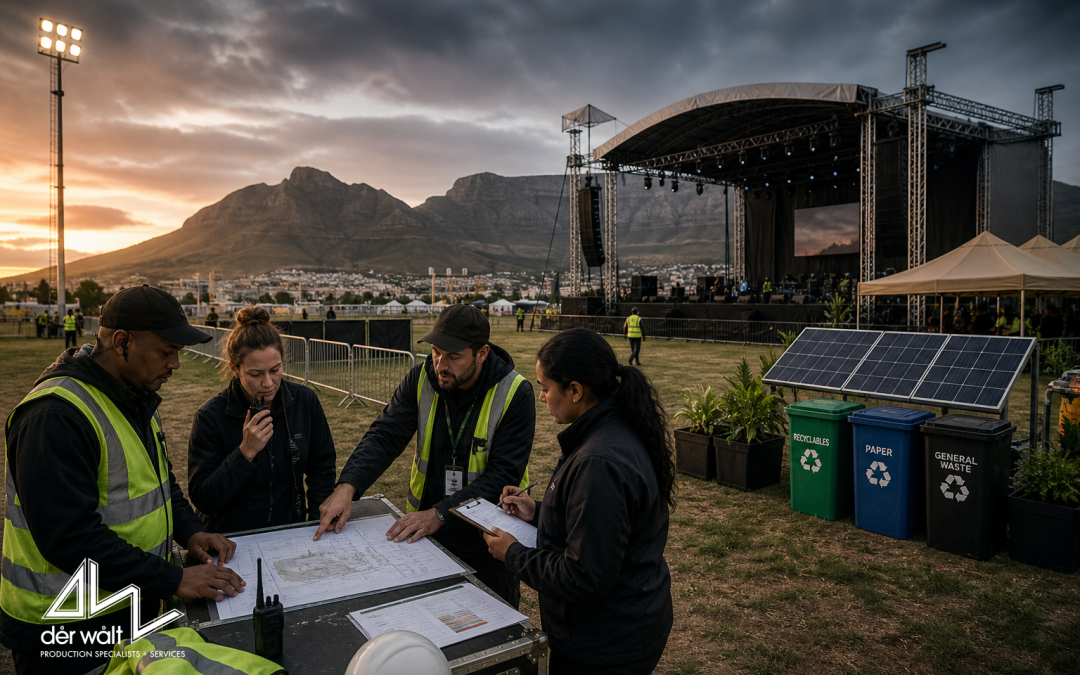
How to Plan Safe, Sustainable Outdoor Activations in South Africa
A practical guide to weather-aware risk management, safety infrastructure, and green procurement for large outdoor experiences in SA. Learn how to align production timelines, budgets, and local suppliers for a compliant, memorable activation.
The direct answer: Start with a risk-based safety framework, integrate weather contingency planning, and embed sustainability into every decision from day one. In South Africa, coordinating with local suppliers, permits, and transport must be built into the timeline and budget.
Why safety, weather resilience and sustainability matter for South African events
Outdoor activations inherently carry safety, weather, and environmental risks. In South Africa, where venues range from urban parks to coastal precincts and rural estates, you must plan for heat, sudden rain, wind, dust, and variable infrastructure. Nullifying these risks isn’t about fear it’s about reliability: a well-prepared event protects attendees, staff and partners, preserves your brand reputation, and reduces last-minute budget shocks.
There is no one-size-fits-all solution. The best approach blends formal risk management with practical, on-the-ground logistics: robust crowd management, clear access routes, scalable power and back-up systems, and a sincere commitment to reducing environmental impact. Aligning with international standards and local regulations helps ensure your event can adapt to changing conditions while delivering a consistent audience experience.
Practical guidance: how to plan for safety, weather, and sustainability
Think of the planning cycle in three core layers: safety governance, physical production resilience, and sustainable operations. Each layer informs decisions about staffing, equipment, suppliers, and timelines.
1) Establish a risk-based safety governance framework
Define roles, responsibilities, and communication paths before any vendor signs a contract. Create a live risk register that tracks hazards, mitigations, and owners. Build an Emergency Action Plan (EAP) with clearly defined muster points, medical response, and evacuation routes. Use certified crowd management professionals for large groups and ensure all staff complete basic safety briefings specific to the site.
2) Build weather contingency into the plan
Weather planning should be explicit in your schedule and budget. Leverage the South African Weather Service forecasts and historical climate data to forecast heat, thunderstorm risk, wind, and rain windows. Prepare shade and hydration stations for heat, and designate sheltered areas or rain plans for storms. Have a wind/stability assessment for temporary structures and stage components, with anchor systems suitable for local soil and wind patterns.
3) Design safe, scalable infrastructure
Electricity, lighting, and AV systems should be planned with redundancy. Use weather-rated canopies and stages, and ensure electrical installations comply with reputable standards and local permitting. Implement clear barriers, queuing rails, and attendee flow paths to prevent crush points. Plan for maintenance access and easy remediation of any safety issue without disrupting guest experience.
4) Integrate sustainability from the start
Adopt a waste management plan with clearly defined goals: reduce single-use plastics, increase recycling, and reuse or repurpose materials where possible. Source energy sustainably (e.g., solar-powered lighting) and select vendors who can provide eco-friendly options. Track progress with simple metrics such as waste diversion rate and energy consumption per 1,000 attendees.
5) Local procurement and permits
Engage local suppliers with prequalification that includes safety records, insurance, and compliance with relevant South African regulations. Start permit applications early—municipal permissions for road closures, noise, and temporary structures often have long lead times. Coordinate with transport authorities for road access, parking, and crowd movements to minimize disruption and risk.
6) Budgeting and timelines that reflect reality
Build contingency into both budget and schedule. Factory lead times, rigging, and electrical permits can affect critical path milestones. Include buffers for weather-related adjustments and supply chain delays. Document decisions and approvals in a single plan so teams can respond quickly to changes.
7) Measurement, evaluation and continuous learning
Plan post-event debriefs to capture lessons learned on safety, weather response, and sustainability. Use simple metrics: incident counts, response times, compliance checks, waste-to-landfill, and attendee satisfaction. Share findings with stakeholders to improve future activations.
8) Governance and collaboration
Assign a single point of contact for safety, logistics, and sustainability to avoid diffusion of responsibility. Establish clear lines of communication with venue staff, police or security, medical responders, and suppliers. Regular pre-event briefings keep everyone aligned on risk, roles, and contingency actions.
Operational checklist: steps you can take now
- Run a formal risk assessment covering crowd flow, access control, staging and electrical safety, weather contingencies, and environmental impact.
- Create an EAP with defined escape routes, assembly points, and medical response procedures.
- Coordinate with the local weather service and have real-time monitoring during the event.
- Source energy and lighting from weather-resistant, energy-efficient solutions; plan for generator redundancy if needed.
- Prequalify and contract local vendors with safety certifications, insurance, and emergency capabilities.
- Document permits, road closures, noise limits, and hazardous materials handling requirements early.
- Implement a waste management plan and track sustainability metrics throughout the event lifecycle.
- Stock safe transport and handling equipment for all temporary structures, including anchors and fasteners suitable for SA sites.
Common mistakes and key considerations
- Underestimating lead times for permits and structural permits—start early to avoid delays.
- Overlooking basic safety briefings for non-technical staff and volunteers.
- Failing to plan for extreme heat or sudden storms, which can shut down outdoor activations quickly.
- Ignoring sustainability targets in the rush to hit schedule and budget milestones.
FAQ
What is the most important factor in safety planning for outdoor events in SA?
A clear Emergency Action Plan with defined responsibilities, accessible muster points, and rapid communication channels is essential to protect attendees and staff.
How can I integrate sustainability into a large activation?
Set concrete targets for waste reduction, recycling, and energy use; build a procurement plan that prioritises reusable or recyclable materials; and work with vendors who share your sustainability commitments.
How do I manage weather risk for an outdoor event?
Use official forecasts, establish contingency dates, and prepare immediate shelter options and a rapid shutdown protocol if conditions become unsafe.
What permits are typically required for SA events?
Permits often include temporary structures, road closures, noise abatement, and venue-specific authorisations. Start applications early and coordinate with the local municipality and venue management.
How should I communicate risk to clients and stakeholders?
Provide a concise risk register, EAP summary, and contingency options early in the planning; keep stakeholders updated with changes and rationale for decisions.
Sources
- ISO 20121: Event sustainability management systems — ISO
- South African Weather Service — Government of South Africa
- Department of Employment and Labour (South Africa) – Occupational health and safety — Government of South Africa
- Event Safety Alliance — Industry resource
Ready to activate your next experience?
Partner with DERWALT for end-to-end experiential marketing, activation design, and event production. We help brands and agencies navigate safety, production, and sustainability at scale—delivering memorable experiences with confidence.
Recent Comments