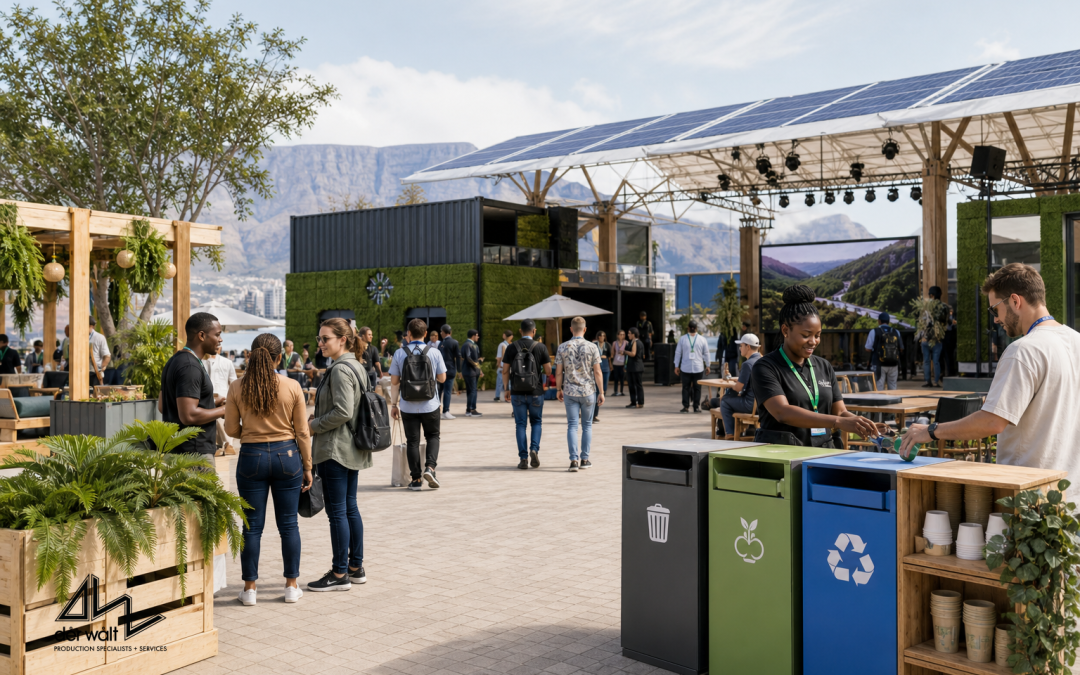
How to Design Sustainable Event Logistics for Large-Scale Brand Activations in South Africa
Get a practical, field-tested approach to sustainable event logistics for large-scale activations in South Africa—from local procurement and power planning to waste reduction and impact measurement—so brands can deliver memorable experiences responsibly.
To plan a sustainable activation in South Africa, start with a local-first procurement plan, a power strategy that prioritises renewables, and a waste- and transport-minimisation approach. Measure progress against clear sustainability KPIs to guide decisions.
Why sustainability matters for SA experiential activations
South Africa’s event landscape faces distinctive challenges and opportunities. Energy reliability can affect on-site operations, transport costs influence logistics planning, and water or waste management demands careful handling in venues and communities. Beyond compliance, brands increasingly expect quantifiable environmental and social outcomes from big activations. A sustainability-first approach not only reduces risk but strengthens audience trust and partner alignment.
A practical framework: from planning to on-site execution
Local procurement and modular design
Prioritise local suppliers for stage, décor, power, catering, and logistics. Local sourcing reduces transport emissions, supports community economies and shortens lead times. Use modular, reusable set pieces and materials that can be repurposed across events rather than single-use components.
Power and energy strategy
Design a power plan that leans on cleaner energy where feasible. Consider a mix of grid power with on-site renewables (such as solar) and hybrid generators. Use energy-efficient lighting (LEDs) and smart controls to minimise consumption. Schedule high-energy activities during daylight hours when possible to reduce peak demand on generators and the grid.
Transport and crowd management
Create a transport plan focused on reducing vehicle kilometres and emissions. Centralise logistics hubs to minimise trips, consolidate freight, and coordinate with local shuttle partners for attendees. Promote sustainable transport options where practical, such as public transport integration or bike-friendly access, and communicate clear arrival and departure windows to avoid peak congestion.
Waste management and materials
Establish a waste hierarchy: prevent waste first, then reuse, then recycle, and finally dispose. Use compostable or reusable serviceware, encourage digital ticketing and programs to cut paper use, and implement on-site waste sorting with trained staff. Conduct a post-event waste audit to quantify performance and identify improvement areas.
Set design, branding and on-site experiences
Lean into design that travels well between events. Use durable, recyclable materials and design branding elements that can be disassembled and reused. Integrate digital experiences or projection-based storytelling to reduce physical props without compromising impact. Ensure all materials meet safety standards and local regulations.
Digital experiences and data capture
Where possible, replace bulky physical installations with immersive digital interactions—mobile apps, AR/VR activations, and live polls. Digital layers can enhance engagement while lowering material footprints and enabling richer measurement of audience interaction.
Measurement, reporting and accountability
Set clear KPIs at the outset and track them throughout the project. Key focus areas include: energy use per square metre, total waste diverted from landfill, proportion of materials sourced locally, transport emissions, water use, and supplier diversity. Use simple dashboards and post-event reporting to share outcomes with stakeholders. Benchmark against international standards, such as the ISO 20121 framework, to maintain credibility and drive continuous improvement.
Budgeting and timeline considerations
Sustainability-focused activations often require additional planning time and early supplier engagement. Build in extra lead time for permits, permits for outdoor venues, and supplier vetting aligned with sustainability criteria. Budget contingencies should reflect potential costs for renewables, modular build-outs, and enhanced waste management. In SA, weather variability and venue constraints can affect logistics; include flexible scheduling and contingency buffers to maintain program integrity without sacrificing environmental goals.
12-point Sustainability Action Checklist
- Engage local suppliers and contractors with clear sustainability expectations.
- Choose venues with robust energy and water management practices.
- Audit and optimise power use; prioritise renewable energy where feasible.
- Minimise single-use materials; opt for reusable or recyclable assets.
- Design modular set pieces that can be reused in multiple formats.
- Implement a waste management plan with on-site sorting stations.
- Promote low-emission transport options and consolidate freight.
- Go digital where possible to reduce physical props and print media.
- Involve communities in planning and communicate local benefits.
- Measure energy, waste, and water metrics with simple dashboards.
- Document supply chain ethics and labour practices.
- Build in post-event debriefs to capture lessons and opportunities.
- Publish a transparent sustainability report to stakeholders.
Frequently asked questions
What is ISO 20121 and why should SA events adopt it?
ISO 20121 is the international standard for sustainable events management. It provides a framework to integrate environmental, social, and economic considerations into the entire event lifecycle. Adopting it helps ensure consistency, credibility and measurable improvements for SA activations.
How can we reduce transport emissions for SA events?
Consolidate freight, source locally where possible, and optimise routes with data-driven planning. Promote sustainable attendee travel options and stagger arrivals/departures to reduce on-site congestion and vehicle use.
What about powering events during load-shedding or in venues with limited grid capacity?
Plan a hybrid approach using grid power supplemented by renewable sources and efficient generators. Conduct energy audits, deploy LED lighting, and schedule high-demand activities to align with available power windows.
How do we engage suppliers for sustainability?
Set clear sustainability criteria in procurement, require responsible sourcing disclosures, and include sustainability performance in supplier contracts. Hold pre-event briefings and on-site checks to ensure adherence.
How should we measure sustainability success post-event?
Track the predefined KPIs, compile a simple sustainability report, and compare outcomes against targets. Use insights to refine future activation plans and share learnings with partners and audiences.
Sources
- ISO 20121: Sustainable events management — ISO
- Greener events — WRAP
- Resources for greener events — A Greener Festival
Ready to elevate your next activation with sustainability at the core?
DERWALT specialises in experiential marketing, activation design, and end-to-end event production. If you’re planning a large-scale activation in South Africa and want to embed sustainability into every phase—from strategy and procurement to on-site delivery and measurement—get in touch to explore how we can help.
Recent Comments