How to Plan Resilient Outdoor Experiential Activations in South Africa
A practical guide for brands, agencies and venues planning outdoor experiential activations in South Africa, covering weather contingency, safety compliance, power reliability, transport logistics, permits and budgeting with actionable steps.
Outdoor experiential activations in South Africa are dynamic, rewarding and highly dependent on meticulous planning across weather, safety, power and logistics. The country’s diverse climates, variable infrastructure and local procurement practices mean that a successful activation hinges on robust contingency planning as much as creative execution. This article is a synthesis of practical considerations tailored to brands, agencies, event organisers, venues and production teams operating in SA. It blends widely accepted safety and event-management principles with context-specific insights, while clearly distinguishing what can be implemented now from what requires verification against current regulations and site-specific conditions.
Weather and climate realities in SA and practical contingencies
South Africa experiences a broad climate spectrum. Coastal venues may face wind, humidity and sudden showers, while inland spaces can encounter heat waves, dust and temperature swings. Spring and early summer (August–November) often bring afternoon thunderstorms to several regions, including Gauteng, the Western Cape and parts of KwaZulu-Natal. To minimize weather risk, build a weather contingency into every activation plan from the outset.
Actionable steps you can take now:
Pre-event weather planning steps
Assign a dedicated weather lead on the project, embed a decision-making process in the production plan, and lock forecast review dates (e.g., 14-day, 7-day and 48 hours before doors). Establish objective thresholds for weather-driven actions, such as postponement, shelter-in-place or evacuation. Map out weather-resistant shelter options (marquees rated for wind loads, collapsible shade structures) and ensure ground protection and drainage are part of site drawings.
Coordinate with the venue and suppliers to confirm sheltering arrangements, rain covers for equipment, and protection for digital signage and camera gear. Include clear signage and public-address messaging for spectators about weather instructions. Document the weather plan in the site safety file and share it with all stakeholders well ahead of time.
Power reliability and on-site electrical planning
Load shedding and unpredictable grid reliability are real factors in South Africa. Power interruptions can disrupt lighting, audio, visuals, ventilation and crowd-control systems. A disciplined electrical plan reduces risk and protects the audience experience.
Key considerations include the design of a power distribution plan, backup power strategy and equipment energy efficiency. Local rental partners typically offer generator packages with crew, fuel supply planning and after-hour support, which helps keep operations smooth and compliant with noise and emission norms.
Generator strategy
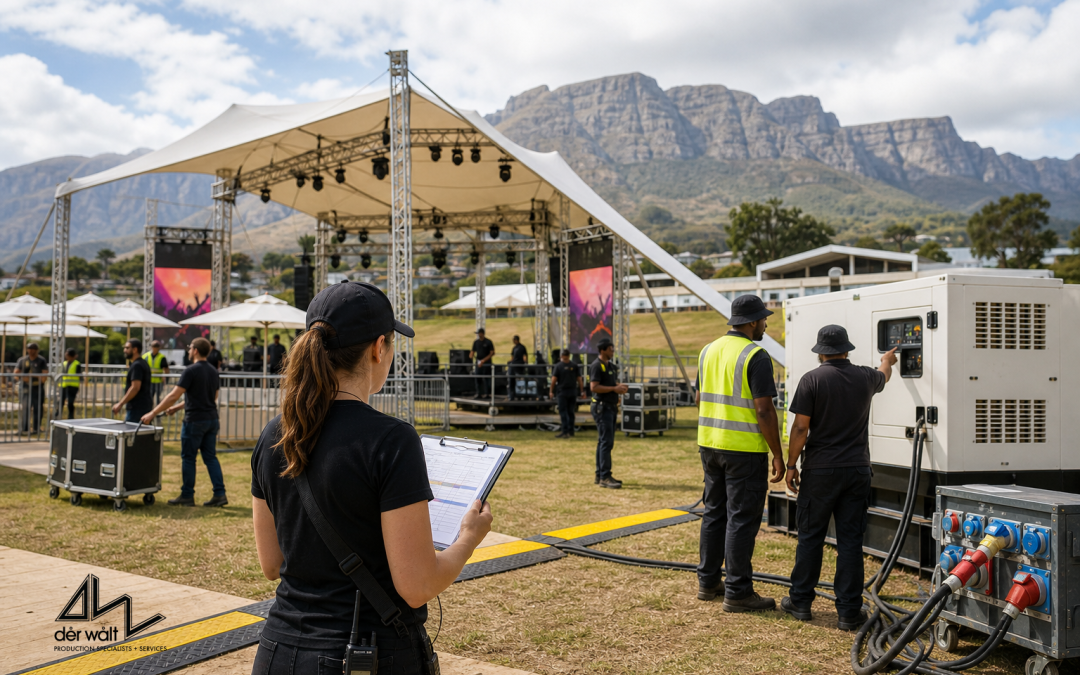
Use redundant power where practical. A common approach is to have at least two independent power sources for critical systems (lighting, sound, control consoles, live feeds). Place generators away from audience sightlines and in well-ventilated areas, with appropriate exhaust management and fuel storage that complies with local regulations. Develop a clear fueling plan, including refueling logistics, spill prevention measures and fire safety procedures around the generator sites.
Powering critical elements
Prioritise power for essential systems such as stage lighting, PA/radio systems, live feeds, control consoles and shelter lights during outages. Where feasible, incorporate energy-efficient LED lighting and low-wattage AV solutions. Consider hybrid options (solar plus battery storage) for daytime events or locations with limited access to fuels, and ensure battery backups are tested and maintained in advance.
Permits, safety planning and local requirements
SA event operations require careful navigation of permits, occupancy limits, fire safety and crowd-management standards. While the exact permitting process varies by municipality and venue, a proactive approach reduces delays and last-minute complications. Aligning with the Occupational Health and Safety Act and local safety guidelines sets a solid baseline for responsible practice.
Recommended practice includes a formal risk assessment, a fire safety plan, emergency evacuation routes, on-site medical support and crowd-management strategies. Ensure the plan accounts for accessibility requirements and clear egress routes for different audience sizes and configurations. Confirm fire marshal presence and liaise with local emergency services where required. Document all permits, approvals and safety plans in the event file and share them with key partners before production week.
Fire safety, crowd management and emergency planning
Develop muster points, marshal roles, and first-aid protocols tailored to the site geography (open fields, enclosed venues or temporary streetscapes). Clearly mark emergency exits and ensure staff training covers communications, crowd flow, incident reporting and evacuation procedures. Regular on-site rehearsals or walk-throughs help verify that crowd-control measures function as intended under real conditions.
Transport, access and route planning
Traffic patterns, parking logistics and pedestrian access significantly influence the spectator experience and safety. South Africa’s urban and regional roads can be unpredictable, and weather events can worsen conditions. A clear transport plan reduces frustration and supports on-time arrivals for guests, staff and talent.
Practical steps include coordinating with local authorities and security providers for potential road closures, creating park-and-ride options if space is limited, and scheduling staggered entry windows to reduce congestion. For venues or streetside activations, develop dedicated pedestrian routes, signage and staff checkpoints to maintain order. Ensure accessibility provisions for people with disabilities, including step-free routes and adequate viewing points where possible.
Labour, procurement and supplier coordination in SA
Local procurement is often central to successful activation delivery in SA. Working with local rental houses, event services and technicians not only supports communities but can improve lead times and service levels when budgets tighten. Verify supplier qualifications, licensing and certifications (rigging, electrical work, sound engineering, stage safety) and confirm service-level agreements (SLAs) that cover delivery windows, maintenance and contingency support.
Contracts should clearly define deliverables, responsibilities, force majeure provisions and cancellation terms. When sourcing from multiple suppliers, implement a single point of contact for logistics to reduce miscommunication. Consider B-BBEE and regional supplier networks as part of procurement strategy to support transformation targets and compliance goals while ensuring reliability.
Budgeting for risk, contingencies and timeline flexibility
Contingency budgeting is essential for outdoor activations. A practical range is to earmark a contingency of 5–15% of the total production budget, depending on complexity, location, expected weather variability and the level of safety infrastructure required. In SA, fluctuations in exchange rates, fuel costs, transport availability and permit processing times can influence both capex and opex. Build a contingency line in the budget for weather-related sheltering, additional power needs, last-minute vendor changes and extended on-site staffing if conditions demand it.
Additionally, incorporate a contingency timeline. Allow extra days for site readiness, equipment checks and early delivery where access is constrained or where permits require longer approval windows. A robust schedule helps avoid rushed decisions that could compromise safety or the audience experience.
Production timelines and procurement strategies
End-to-end production success relies on a clear timeline with defined milestones for site surveys, permit submissions, power planning, supplier onboarding and rehearsals. Use a phased procurement approach: lock core elements early (permits, major AV, stage structural components) and stagger smaller rentals (decor, signage, sponsor materials) to align with delivery windows. Build risk reserves into each milestone and ensure the project plan accommodates potential weather delays or equipment delivery setbacks.
DERWALT’s approach to end-to-end experiential production
For brands, agencies and venues seeking a coordinated production partner, DERWALT offers experienced guidance across experiential marketing, activation strategy and production management. Our process emphasises risk-aware planning, technical planning and on-site coordination, with a focus on safety, reliability and audience experience. We work with local suppliers and venues to align production design with practical realities—weather contingencies, power resilience, crowd management and transportation considerations—to deliver immersive activations that travel well from concept to completion. While every project is unique, the underlying discipline remains consistent: plan thoroughly, stay adaptable and communicate clearly with all stakeholders throughout the lifecycle of the activation.
Sources
- South African Weather Service — South African Weather Service
- Occupational Health and Safety Act, 1993 — Department of Employment and Labour
- Event Safety Guide — Event Safety Alliance
- Safety and health at work — International Labour Organization
Ready to bring resilience to your next activation?
If you’re planning an outdoor experiential activation in South Africa and want a partner who can integrate weather, safety, power and logistics into a cohesive production plan, contact DERWALT. We provide strategic guidance, technical planning and end-to-end event production support to help brands and agencies deliver memorable, safe and reliable experiences.
Recent Comments