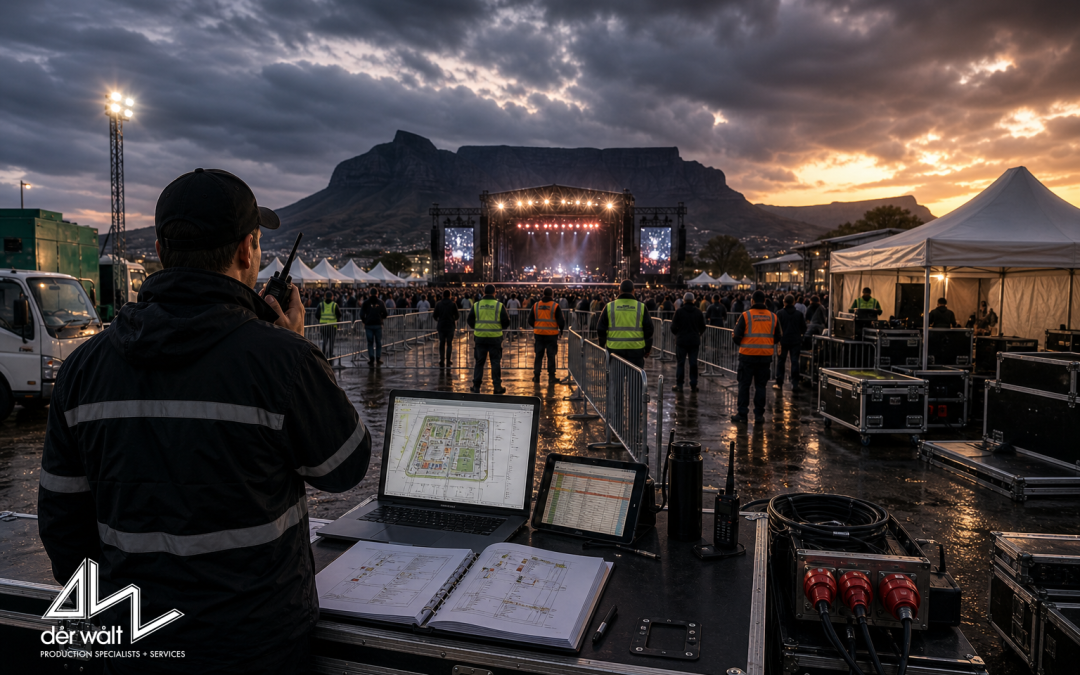
Designing a Scalable Outdoor Event Logistics Plan for South Africa
A practical blueprint for SA brands to build scalable outdoor event logistics, balancing weather risk, safety, transport, and supplier coordination. Learn modular planning, run-of-show integration, and local regulatory considerations to elevate live experiences.
Direct answer: Build a modular, risk-weighted logistics playbook that scales with attendance, anchored by a robust weather contingency, safety management plan, and supplier coordination framework tailored to South Africa’s venues and regulatory context.
Why this topic matters in South Africa
Outdoor events in South Africa must contend with diverse weather patterns, from summer thunderstorms to heatwaves and sudden lightning. A scalable logistics plan helps you adapt quickly to changes in attendance, conditions, and venue access without sacrificing safety or experience.
Power reliability, particularly during load-shedding periods, can affect lighting, sound, and communications. A plan that accounts for generators, battery backups, and energy-efficient gear reduces risk and keeps performances on schedule. Transport and access are equally critical in major metros where traffic, parking, and pedestrian flow influence on-site operations.
Regulatory and permitting requirements in SA vary by municipality and venue. A scalable plan aligns with local safety standards, fire compliance, crowd management, noise bylaws, and venue-specific rules, helping you avoid delays and last‑minute changes.
Finally, sustainable procurement and local supplier coordination matter for cost control and community impact. A modular approach lets you swap components (suppliers, venue layouts, run-of-show elements) as the event scales up or down.
What a scalable logistics plan includes
Think of the plan as a set of modules that can be expanded or reduced without rearchitecting the entire operation.
Define clear capacity bands (e.g., 500, 2,000, 5,000) with corresponding resource templates for crew, equipment, and stations. A dedicated plan for heat, rain, wind, and lightning, with sheltering, misting or cooling options, shade structures, and evacuation routes. A formal risk assessment (what could go wrong, likelihood, impact) and an incident command structure with defined roles and communication protocols. Generator capacity, fuel strategy, battery-backed systems, and energy-efficient gear to reduce outages and noise. Consider local grid reliability and noise restrictions. A permit calendar, fire safety approvals, venue-specific requirements, noise management plans, and contingency for changes in regulations. A centralized vendor matrix, lead times, install/deinstall windows, and contingency suppliers for critical components. A run-of-show, shift plans, radios or digital comms, and clearly defined on-site roles (production, safety, security, client liaison). Waste management, recycling streams, reusable materials, and engagement with local suppliers and services.
Step-by-step implementation for South African brands
Start with your event’s goals and identify capacity tiers. Align staffing, gear, and routes to each tier rather than re‑building from scratch. Design the ground plan with scalable elements—shelters, power zones, private back-of-house corridors, and public spaces that can be adjusted for size. Integrate SA Weather Service forecasts into your daily planning. Predefine sheltering, shade, cooling, and rain contingencies with trigger thresholds. Assign a safety lead, create incident escalation paths, and implement a crowd-management plan tailored to your venue and audience profile. Size generators with a 20–30% buffer, test backup systems in rehearsal, and map critical loads to avoid outages during key moments. Map routes from main arteries to the site, designate drop-off zones, parking, and pedestrian flow that minimize crowding and delays. Build a master calendar of required permits and approvals; engage early with municipal authorities, venue managers, and fire safety officers. Document lead times, SLAs, cancellation terms, and cross-verify backups for critical equipment and services. Create a minute-by-minute plan for load-in, setup, show, and load-out; embed contingency buffers for weather or delays.
Common mistakes and considerations
- Overlooking weather contingencies and underestimating the impact of heat or rain on guest comfort and equipment.
- Under-allocating power or failing to test backup systems, leading to hardware downtime during peak moments.
- Inadequate crowd management planning, resulting in bottlenecks, safety hazards, or accessibility issues.
- Failing to align permits, venue rules, and local bylaws early, which can cause costly last‑minute changes or shutdowns.
- Neglecting sustainability, which can increase waste and cost and harm brand perception.
FAQ
What is a scalable logistics plan?
A plan that uses modular components and tiered resources to efficiently scale operations up or down based on audience size and site constraints.
How should I handle weather for SA outdoor events?
Use local forecasts (WeatherSA) to trigger predefined weather responses, including sheltering, cooling, or evacuation, with clearly assigned roles and timings.
Who owns on-site safety planning?
Assign a dedicated safety lead or team with defined responsibilities, ensuring alignment with applicable health and safety regulations (OHS Act principles can guide governance).
What permits are typically required for SA events?
Permits vary by municipality and venue but commonly include event permits, fire safety approvals, and noise management plans; check with the venue and city authorities early.
How do I measure logistics success?
Track on-time load-in/out, incident rates, vendor performance, guest flow efficiency, and post-event feedback to identify improvements for future activations.
Sources
- South Africa Weather Service (WeatherSA) — Weather planning for events — WeatherSA
- Event safety — UK Health and Safety Executive
- ISO 45001 — International Organization for Standardization
- NFPA 1600 Emergency Management — NFPA
- A Greener Festival — Sustainability guidelines for events
Ready to elevate your next activation?
For brands and agencies seeking end-to-end experiential marketing, activation or event-production support in South Africa, DERWALT offers scalable logistics planning, supplier coordination, and on-site management to bring your live experiences to life with safety, efficiency and impact. Contact us to discuss your next activation.
Recent Comments