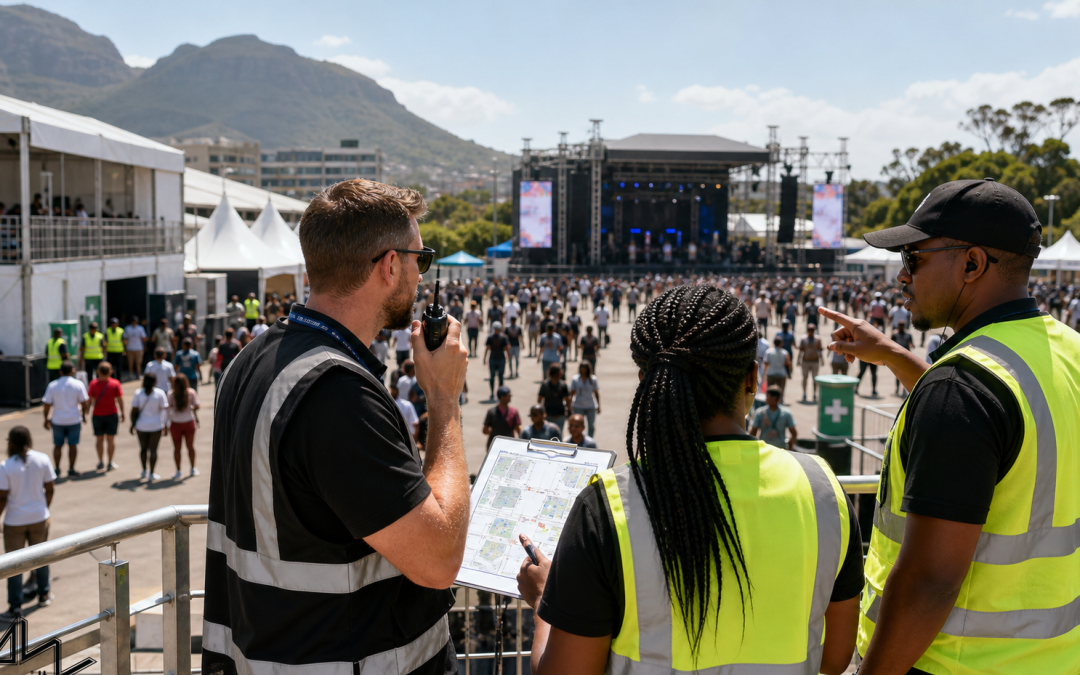
A Practical Safety and Risk Plan for Large-Scale Experiential Events in South Africa
Developing a practical safety and risk framework for SA activations requires a formal risk assessment, regulatory compliance, weather contingency planning, and clear on-site roles. This guide provides a step-by-step approach tailored to South African context.
The direct answer: Build a formal risk assessment and safety framework early, align with local regulations, prepare for weather disruptions, and appoint a clear on-site safety team with tested emergency procedures. The plan should be practical, auditable and revisited as plans evolve.
Why safety and risk planning matter for SA experiential activations
South Africa’s event landscape blends vibrant audiences with complex logistics, from weather variability to urban transport constraints. A proactive safety approach protects attendees, staff, partners, and venues while safeguarding project timelines and budgets. A robust plan helps procurement teams justify contingency costs and streamlines approvals with authorities, venues and service partners.
Core components of a practical safety and risk plan
1) Start with a formal risk assessment
Document hazards, estimate likelihood and potential impact, and score risks to set priorities. Use a simple matrix to categorize risks as low, medium, or high and assign owners. Revisit the risk register at major milestones and after supplier changes or weather events.
2) Map regulatory compliance and permits
Identify required permits and approvals early—fire safety clearance, occupancy limits, liquor licensing where applicable, and venue-specific regulations. Align with the Occupational Health and Safety Act principles and local municipal requirements. Build time buffers into timelines to accommodate approvals.
3) Plan for weather and climate variability
South Africa’s weather can shift quickly and differently across regions. Build weather contingency into the schedule, with alternate layouts, indoor backup spaces, and flexible show elements. Use official forecasts and alerts from the South African Weather Service to trigger pre-defined actions.
4) Design for crowd safety and flow
Prioritize clear ingress/egress, visible wayfinding, and controlled density. Plan for peak crowd scenarios, define muster points, and ensure that crowd management teams receive formal briefings and ongoing support during the event.
5) Establish on-site safety governance
Appoint a Safety Lead or Safety Officer and a dedicated EMS liaison. Create an on-site safety briefing routine for all crews, vendor partners, and contractors. Use a site map with escape routes, barrier lines, and restricted zones clearly marked.
6) Create an emergency response framework
Develop a written emergency response plan covering medical incidents, fire, structural concerns, and security threats. Define evacuation procedures, communication channels (PA, radios, digital alerts), and post-evacuation assembly points.
7) Coordinate suppliers with safety in mind
Include safety briefings in vendor onboarding, require appropriate qualifications and licenses, and ensure equipment is inspected and compliant. Integrate safety expectations into contracts, with clear consequences for non-compliance.
8) Balance sustainability and safety
Replace single-use elements with reusable or recyclable options where possible; designate waste streams that do not interfere with crowd safety. Ensure energy plans consider redundancy and noise limits, particularly in urban locations.
9) Budget for safety and contingency
Allocate a dedicated safety contingency separate from the core production budget. Include funds for additional security, medical services, signage, PPE, and training. Treat safety as an investment that reduces risk-sensitive cost overruns.
10) Build a practical timeline and governance cadence
Institute a phased planning schedule with key safety milestones: risk workshop, permit deadlines, supplier onboarding, on-site rehearsals, and live event execution. Schedule regular safety reviews and real-time issue tracking during the build and show days.
Practical checklists for pre-event, on-site and post-event safety
Pre-event safety workshop
- Compile risk register with owner assignments
- Review regulatory requirements and permits
- Confirm emergency services contacts and hospital proximity
- Inspect critical infrastructure (stages, rigging, barriers, electrical)
On-site safety kit and readiness
- First aid stations and trained responders on-site
- Two-way radios and backup power for PA systems
- Weather contingency equipment (tents, heat lamps, fans, portable shelters)
- Signage for routes, exits, and safety instructions
Emergency and incident response
- Evacuation routes and muster points mapped and tested
- Clear communication plan for attendees and crew
- Incident reporting forms and a debrief protocol
Common mistakes and how to avoid them
- Underestimating weather-related disruptions: always plan alternative spaces and layouts.
- Treating safety as a last-minute add-on: integrate safety budgeting and planning from the outset.
- Overlooking venue or municipal coordination: engage early with the venue and authorities to avoid delays.
FAQ
What core regulations matter for SA events?
Key considerations include general OHS requirements and local venue-specific rules; ensure your plan aligns with national guidelines and municipal expectations.
How do you build a risk assessment for an activation?
List hazards, assess likelihood and impact, assign owners, and create action plans with due dates; review regularly as plans change.
How should planners handle weather disruptions in SA?
Use official forecasts, pre-arranged indoor options, and flexible scheduling; define triggers that switch to contingency plans.
What should a safety officer coordinate with vendors?
Provide safety briefings, verify licenses and certifications, inspect equipment, and embed safety clauses in contracts.
How can safety performance be measured after an event?
Conduct a formal debrief, compare outcomes to the risk register, quantify incidents, and capture learnings for future events.
Sources
- ISO 45001 — International Organization for Standardization — ISO
- Event Safety Alliance — Event Safety Alliance
- IAVM — International Association of Venue Managers
- South African Weather Service — SA Weather Service
- Department of Employment and Labour — Government of South Africa
Ready to elevate your next activation with safety, precision and impact?
DERWALT partners with brands, agencies and venues to deliver experiential marketing and large-scale event production that prioritises safety, compliance and audience experience. Reach out to discuss a tailored safety and production plan for your next activation.
Recent Comments