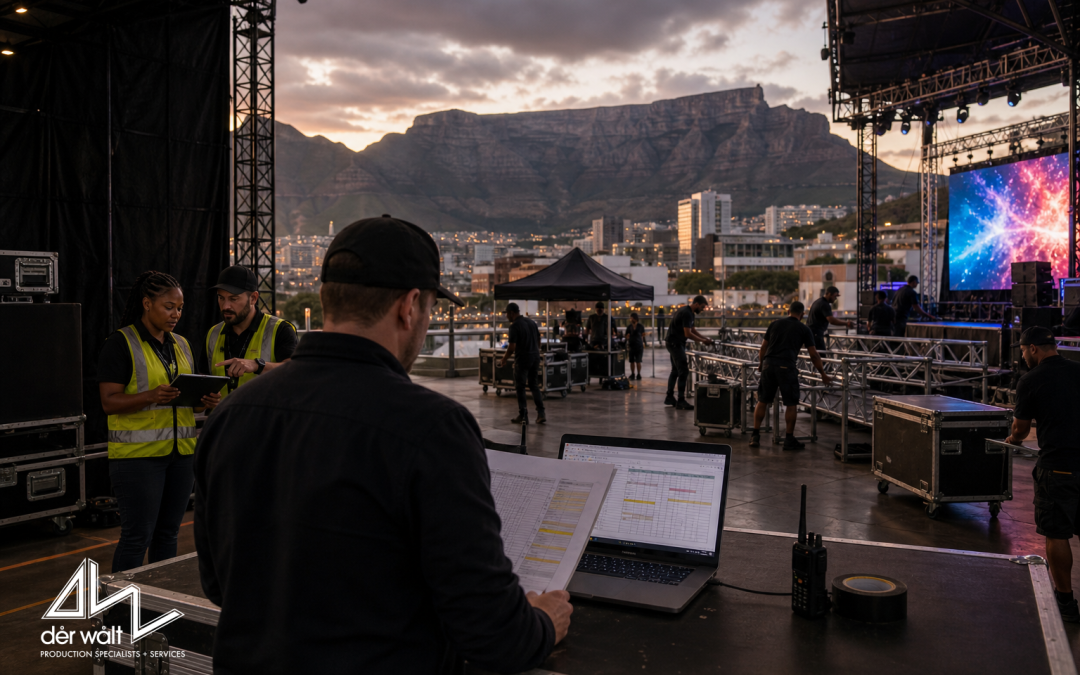
A Practical Playbook for Multi-Venue Experiential Activations in South Africa
A planning guide for brands, agencies and venues delivering experiential activations across multiple SA locations. Learn practical tactics on logistics, procurement, weather contingency, safety, labour, and timelines to maintain consistency and budget control.
Multi-venue experiential activations in South Africa bring unique opportunities and challenges. The best outcomes come from a well-structured brief, a scalable production plan, and a network of trusted local suppliers who understand the country’s regulatory landscape, transport realities, and weather patterns. This article offers practical guidance to help brands, agencies, and production teams design and execute activations that feel consistent across sites while remaining adaptable to local constraints.
Define a scalable activation brief and objective framework
Begin with a clearly defined objective that can scale across locations. Translate brand goals into measurable KPIs, such as reach, dwell time, lead capture, or post-event engagement. Build a master timeline with milestones that apply to all venues, but allow modularity for site-specific requirements (permits, power, access). In South Africa, regulatory and safety considerations vary by municipality, so include a local regulatory checklist early in the process and appoint a single point of contact per site to reduce miscommunication. By aligning objectives with a scalable framework, you create a backbone for procurement, staffing, and logistics that travels with the activation rather than being rebuilt for each city.
Practical note: use ISO 20121 as a reference for sustainable event management and stakeholder coordination. It provides a structure for planning, delivery, and post-event review that helps ensure accountability across the supply chain and across sites. While every location is different, the standard’s emphasis on governance, stakeholder engagement, and continuous improvement can strengthen multi-site activations.
Map locations and build a local vendor network
Venue discovery, permits and site access
Identify a core set of venue types that can host your activation with scalable capacity across sites (e.g., indoor exhibit halls, outdoor precincts, or pop-up spaces). In SA, permits and approvals are often issued at municipal level, and approval timelines can vary widely. Create a permit calendar that includes noise by-laws, occupancy limits, alcohol licensing when relevant, and any temporary structure authorizations. Build contingency plans for alternative sites or flexible floorplans if a city process delays core sites. Engage local venue teams early to clarify rigging, power, and access constraints, which can affect your run-of-show and production design.
Pro tip: working with a single local coordinator per location helps synchronize permit timings, utility hookups, and site access while ensuring compliance with safety standards and local expectations.
Procurement and supplier coordination in SA
Procure locally where possible to reduce transport miles, shorten lead times, and support Black Economic Empowerment (B-BBEE) objectives, which can influence tendering and procurement terms. Build a preferred supplier list with clear service-level agreements, payment terms, and pre-qualification for safety and insurance. Create a standard contract appendix covering jurisdiction-specific terms (indemnities, force majeure, and insurance) so vendors across sites operate under consistent expectations. Maintain a live equipment list (AV, lighting, rigging, power distribution, stages) with site-specific adaptations and cross-site compatibility.
Consider currency and import factors for any equipment sourced abroad. Where feasible, lock in pricing with short, well-defined windows to mitigate cost volatility. Document procurement decisions in a central shared file so site teams can access the latest terms and contact points quickly during setup and on the day.
Transport, staffing and on-site operations
Logistics across multiple venues
Develop a consolidated transport plan that covers city-to-city travel, crew rosters, and equipment movement. Factor flight times, vehicle hire, fuel costs, and potential traffic constraints in major hubs like Johannesburg, Cape Town, and Durban. Build staggered delivery windows to ease on-site loading, with contingency buffers for weather or traffic disruptions. Use a centralized logistics dashboard to monitor assets, crew availability, and location-specific constraints in real time, so project managers can adapt without losing momentum.
Coordinate with local teams on power provision, generator management, and cabling routing. In SA, reliability of power supply can vary; plan for redundancy, run-of-show power budgets, and quick-restoration protocols to avoid show interruptions. Maintain a clear escalation path for site-based issues and a universal point of contact for each location to speed decision-making on the day.
Labor and safety compliance in SA
Adhere to South African labour laws and safety norms. Ensure workers have the necessary PPE, health screenings where applicable, and site-specific safety inductions. Pre-qualify suppliers for electrical, rigging, and stage works, including proof of insurance and safety certifications. Create a site safety brief for each location and maintain incident reporting protocols. A consistent safety culture across sites reduces risk and increases crew confidence, which translates into smoother execution during the activation.
Weather, risk management and safety planning
Contingency planning for SA weather patterns
South Africa’s climate varies by region and season. Coastal Cape Town can bring strong winds and sudden rain, while inland cities may experience heatwaves or thundershowers. Build weather contingency into the run-of-show, including shelter plans, shade structures, and easy transitions to indoor spaces if outdoor conditions deteriorate. Plan for back-up power and network connectivity in case weather affects equipment or communications. The South African Weather Service can provide forecasts and alerts to inform scheduling decisions and allow rapid re-forecasting of the show if needed.
Illustrative practice: include a weather-trigger checklist in daily run-of-show briefs, specifying triggers for weather-related changes (e.g., wind speed thresholds for rigging, rain plans for stages, or heat exposure limits for performers). Shared across sites, this ensures teams respond consistently when conditions shift.
Budgeting, contracts, and production timelines
Cost controls and supplier terms
Develop a transparent, centralized budget with explicit line items for transport, permits, insurance, contingency, and de-rig. Use fixed-price contracts where feasible, and include escalation clauses for currency movements or fuel changes. Create a master production timeline that links site-specific milestones to a single critical path, and schedule regular check-ins to identify potential overruns early. Document any scope changes in a formal change-order process to preserve budget integrity across sites.
Be mindful of VAT, invoicing requirements, and local tax considerations within SA. Clarify who bears costs for last-minute changes and what constitutes an approved, billable variation. A consistent procurement framework helps prevent misalignment between sites and ensures that brand experiences remain on-message and on-budget.
On-site production and measurement
On-site execution benefits from a single source of truth. Use a shared run-of-show, with site-specific adaptations clearly flagged. Run pre-briefs with all crews and vendors, and implement a robust handover process from setup to show to debrief across each location. Collect quick post-event learnings at each site to inform future activations and adjust playbooks accordingly. Prioritize accessibility, audience flow, and safety compliance to preserve the quality of the brand experience while ensuring participant well-being. A disciplined approach to on-site execution translates into a smoother production, fewer last-minute surprises, and clearer post-event reporting.
Sources
- ISO 20121: Sustainable event management — International Organization for Standardization
- SAACI — South African Association for the Conference Industry
- South African Weather Service — Weather forecasts and climate guidance
- Event Safety Guide — Health and Safety Executive (UK)
Call to action
Is your next experiential activation ready for South Africa’s multi-venue landscape? DERWALT specializes in experiential marketing, brand activations, and end-to-end event production. Contact us to discuss strategy, production management, and on-site delivery tailored to your SA market and timelines.
Recent Comments