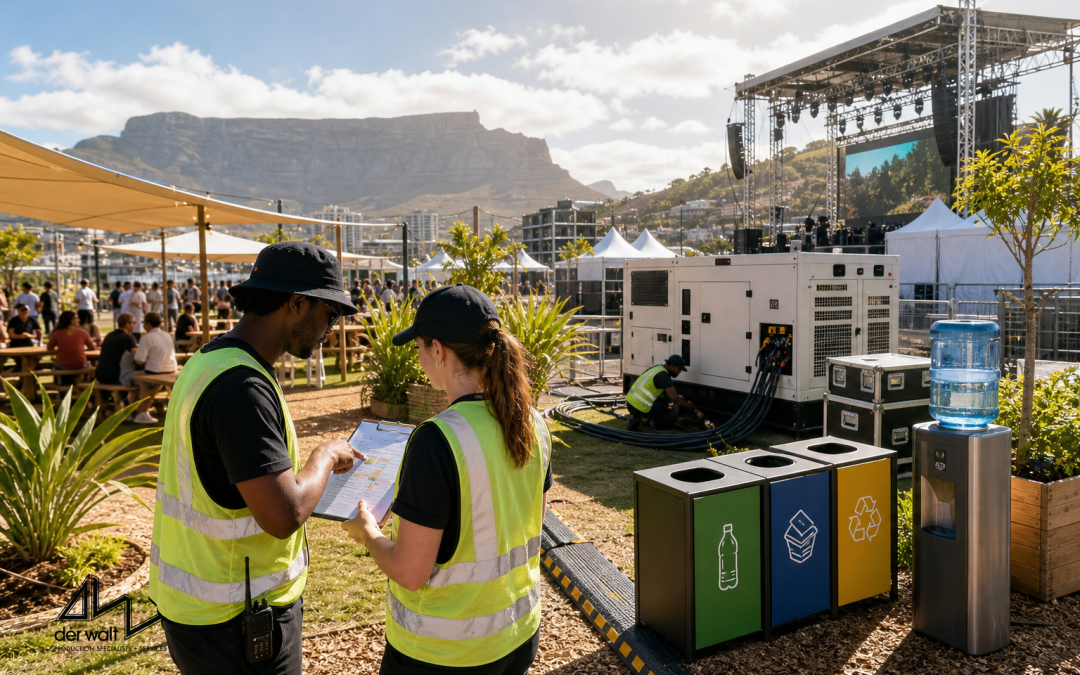
How to Plan a Safe, Sustainable Outdoor Brand Activation in South Africa
A practical, SA-focused guide to outdoor activations that prioritises safety, weather resilience, power reliability and sustainable practices. Learn a step-by-step planning framework for risk, permits, logistics and audience experience.
Direct answer
Outdoor activations in South Africa require early, integrated planning around risk assessments, permits, weather contingency, power management and sustainable operations to deliver a compliant, safe and memorable experience.
Context: the South African outdoor activation landscape
South Africa’s climate is highly regional and seasonally variable. A Cape Town summer afternoon can pivot from sun to sudden rain and gusty winds, while Gauteng may offer dry heat with dramatic late-afternoon thunderstorms. For large-scale activations, this variability translates into elevated risk, unpredictable logistics, and tight windows for delivery and de-rig. In addition to weather, hosts must navigate local council permits, traffic management requirements, and noise or curfew restrictions. Getting these elements right early reduces last‑minute fines, transport delays and the chance of a compromised guest experience.
Choosing a location, schedule and supplier network that can adapt in real time is essential. This means geometry in your plan: robust back‑up power, sheltered spaces, clear crowd-flow patterns, and sustainable waste and water management. It also means aligning on safety leadership, medical provisions and communication protocols for on-site teams and vendors. DERWALT supports brands with end-to-end activation planning, production management and on-site delivery, ensuring your project remains cohesive across strategy, logistics and on-site execution.
Practical guidance: step-by-step planning for SA outdoor activations
- Define scope, objectives and constraints. Document target attendance, key experiences, budget boundaries, site access, and permit requirements. Clarify roles with your production partner, venue and local authorities to avoid overlap and gaps in accountability. Define what “success” looks like beyond attendance—guest satisfaction, safety metrics and sustainability outcomes.
- Conduct a risk assessment (RA) and safety plan. A formal RA identifies hazards, likelihood and impact, with mitigations and emergency procedures. At minimum, cover crowd management, fire safety, electrical safety, weather-related risks, slipping hazards and medical response. Use a live risk-log on site and appoint a Safety Manager with clear authority to pause activities if conditions worsen.
- Weather, climate and contingency planning. Use local forecasts and historical patterns for the venue region. Prepare contingency spaces (covered stages, shade structures, fans or misting systems), and designate indoor or alternate outdoor areas. Build buffer time into build, move-in and move-out windows to absorb weather delays.
- Permits, approvals and compliance. Engage with the local municipality early to determine required permits (sound, road closures, electricity supply, liquor licensing if applicable) and noise-by-law compliance. Factor in inspection timelines, fire safety approvals and accessibility requirements. Start the permit process as early as possible to avoid last-minute delays.
- Power, electrical safety and backup systems. Size total electrical loads with a qualified electrical engineer or lighting designer. Plan for main-grid access where available, plus certified generator backup with adequate fuel supply and storage. Install proper cable management, weatherproof connections, and clear exclusion zones to protect attendees and staff. Define a back-up plan for power loss or voltage fluctuations to maintain essential experiences and safety lighting.
- Technical production and stage management. Design with wind loads and temporary structure safety in mind. Use certified rigging for stages, lighting truss and sound systems, and ensure competent supervision for all temporary installations. Pre‑test all systems and rehearse emergency shutdown procedures before opening to the public.
- Crowd management, access and circulation. Map entry and exit routes, queuing zones, barriers, and scoring of bottleneck areas. Plan for accessibility, family zones, and staff/volunteer briefing areas. Use a clear on-site comms plan and real-time crowd feedback to adjust flow during the activation.
- Logistics, transport and supply chain. Build delivery windows with suppliers to accommodate traffic, loading dock restrictions and last‑mile access. Establish a single on-site logistics hub with clearly labeled zones for crew, vendors and materials to minimize on-site confusion and risk.
- Sustainability and waste management. Prioritise reusable or recyclable structures, reduce single-use plastics, and implement a site-wide waste-sorting system. Plan water use carefully, install refill stations, and coordinate with local waste-collection services to manage materials responsibly. Consider carbon accounting for transport and on-site energy consumption.
- Measurement, learning and knowledge transfer. Define post-event evaluation metrics: safety incidents, queue times, on-site dwell time, audience sentiment, energy use and waste diversion rates. Capture learnings to improve future activations and share insights with stakeholders.
Checklist and practical considerations
- RA completed and signed off; Safety Manager appointed.
- Weather contingency plan with sheltered areas and cooling options.
- All permits, approvals and road closures secured in advance.
- Electrical load properly calculated; certified generators; safe distribution.
- Rigging, stage and structural elements inspected; wind limits defined.
- Crowd flow maps, barriers, and accessible paths validated.
- Sustainability plan with waste stations and water stations; reusable materials prioritized.
- Logistics hub tested; delivery and dispatch windows confirmed.
- On-site communications tested; medical and security coverage confirmed.
- Post-event debrief scheduled to capture learnings.
Common mistakes and key considerations
- Underestimating the weather impact or not planning for sudden changes; always have a timed standby plan and shelter options.
- Overlooking permits or under-allocating to risk management; early engagement saves delays and fines.
- Skipping electrical safety steps or inadequate back-up power; fragile systems fail under load or weather.
- Failing to plan for accessibility or audience comfort; a poor environment hurts brand perception and inclusivity.
- Neglecting sustainability; a wasteful activation can damage reputation and violate client values.
FAQ
How far in advance should I start planning an outdoor activation in SA?
Begin at least 4–6 months ahead for larger activations to secure permits, venue booking, suppliers and logistics, with a minimum 8–12 weeks for smaller, simpler events.
What permits and approvals are commonly required for SA outdoor events?
Permits typically cover road closures, sound/noise control, alcohol licensing if applicable, fire safety checks and health/safety compliance. Check with the local municipality and the venue’s management early.
How do I size generators safely for a SA activation?
Calculate total electrical load (in kilowatts), apply a diversity factor, select certified generators with adequate capacity, factor in startup surges, ensure proper ventilation and fuel storage, and involve a licensed electrical contractor.
What weather contingencies should I have for SA events?
Have sheltered areas, windbreaks, cooling options and rain plans; build buffer times into the schedule; monitor forecasts continuously and be prepared to pause or relocate activities if conditions deteriorate.
How can I ensure sustainable practices for a South African activation?
Prioritise reusables, reduce single-use plastics, implement clear waste sorting, choose energy-efficient lighting and equipment, and coordinate waste collection and recycling with local services.
Sources
- Event Safety Alliance — Event safety standards and best practices
- South African Weather Service — Weather planning and advisories for outdoor events
- OSHA — Electrical Safety — Electrical safety fundamentals and on-site practices
- IAVM — Venue management and safety guidance
- ISO 20121 Sustainable Events Management — Standards for sustainable events
Ready to activate with confidence? Contact DERWALT
DERWALT delivers end-to-end experiential marketing, activation and event-production support—from strategy and production management to on-site logistics and safety. Reach out to discuss how we can plan and deliver your next outdoor activation in South Africa.
Recent Comments