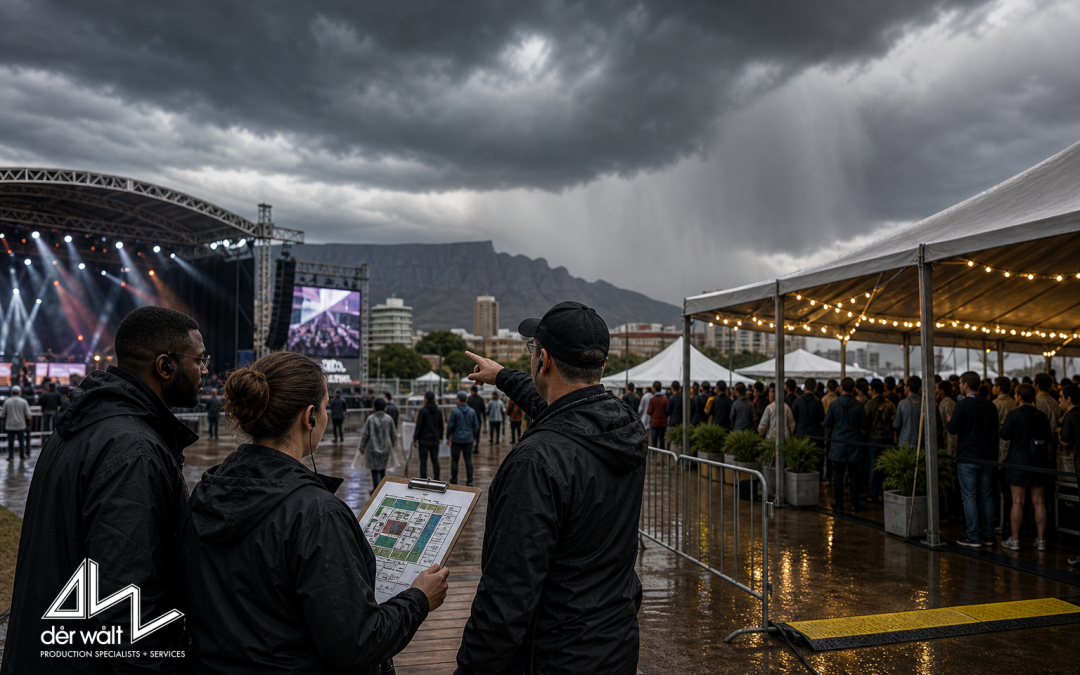
Weather contingency planning for South African outdoor events
A practical, step-by-step guide to building a weather contingency plan for outdoor activations in South Africa. Learn risk assessment, triggers, shelter, power, transport, and communications to protect guests and keep shows on track.
Direct answer: Build a weather contingency plan by performing a risk assessment, defining weather-triggered decision thresholds, and pre-arranging shelter, power, transport, and communications to keep guests safe and events moving.
Context matters: South Africa’s climate is diverse, and outdoor events face heat, rain, wind, lightning, and seasonal storms. A robust plan isn’t only about rain dates; it’s about proactive design, clear roles, and agile operations that can adapt from the planning phase to showtime. The goal is to protect people, protect assets, and preserve the guest experience without sacrificing brand standards or schedule integrity.
Practical framework: four pillars of a weather-ready activation
- Risk assessment and weather triggers — Begin with a formal hazard-identification exercise focused on your site, season, and local microclimates. Define clear weather-trigger thresholds for when you pause, delay, relocate, or proceed with reduced show elements. Document decision rights and escalation paths.
- Shelter, site design and crowd management — Plan shade, rain coverage, and wind-rated tents or marquee systems with appropriate anchorage. Include drainage, flooring, and anti-slip measures. Map safe assembly and evacuation routes, muster points, and crowd flow that stay accessible during weather shifts.
- Power, AV, and rigging contingency — Pre-qualify backup power solutions and fuel plans. Design stage rigging and audio-visual setups with redundancy where feasible, and specify drop-dead timelines for switching to alternate configurations if gusts or lightning threaten safety.
- Operations, communications, and permits — Establish a central command structure, with on-site weather monitoring, regular briefings, and attendee communications. Coordinate with the venue, local authorities, and insurers to ensure compliance and rapid access to sheltering options when required.
Step-by-step implementation
- Forecast-informed planning — Build your plan around reliable, site-specific weather sources and a pre-event briefing schedule. Align your plan with the event calendar, staffing shifts, and vendor lead times.
- Weather-trigger matrix — Create a simple matrix that links weather conditions (e.g., wind, lightning, rain intensity) to specific actions (pause, relocate, shelter-in-place, or continue). Assign decision-makers and time windows for each action.
- Infrastructure redundancy — Select shelter solutions and power setups with redundancy. Pre-stage essential components (fans, heaters, lighting) at multiple points to minimize delays during a weather shift.
- Communication playbook — Draft audience-facing messages and internal alerts. Use multiple channels (PA system, digital screens, mobile app push notifications) to ensure timely, clear instructions for attendees and staff.
- Venue and permit alignment — Confirm weather-responsive procedures with the venue, local authorities, and emergency services. Ensure permits allow for temporary shelter structures, evacuation routes, and late-hour operations if needed.
- Drills and rehearsals — Run weather contingency rehearsals with key staff, including security, stage management, and transport teams. Practice transitions between modes to minimize delays during live events.
Templates, checklists and practical tips
- Weather risk register: list site-specific hazards, likelihood, potential impact, and mitigation actions.
- Decision-rights document: identify who can authorize each action and under what conditions.
- Venue schematic with contingency zones: mark shelter areas, evacuation routes, and access points for emergency vehicles.
- Backup power and fuel plan: outline capacity needs, refueling procedures, and safety separation from audience areas.
- Communication scripts: create audience and staff messages for weather-related changes, with translations if needed.
Common mistakes and how to avoid them
- Waiting for perfect forecasts before making a plan. Proactively design flexible responses so you can adapt quickly.
- Underestimating the power and duration of weather events. Build in longer time buffers for sheltering and transitions.
- Failing to test the plan with staff and suppliers. Regular drills build muscle memory and reduce confusion on the day.
- Treating weather risk as purely a technical issue. Integrate it with guest experience, branding commitments, and safety culture.
- Neglecting local regulations and venue requirements. Always align contingency actions with permits and safety standards.
South African context: practical considerations to tailor a plan
Venue accessibility, local supplier networks, and transport logistics can influence weather decisions. In SA, communication with local authorities and the venue is essential for rapid changes, especially in urban settings where crowd management and traffic control are critical. Consider power reliability and potential load-shedding scenarios when planning backup systems. Leverage pre-approved supplier rosters and on-call crews who understand SA-specific weather patterns and seasonal risks.
DERWALT’s role in weather-ready activations
DERWALT offers end-to-end support for experiential marketing, brand activations, and large-scale events, including risk planning, production management, and on-site coordination. Our approach integrates safety, logistics, and show production so weather contingencies become a natural part of the event design rather than an afterthought.
FAQ
What defines a weather contingency plan?
A weather contingency plan details proactive steps, triggers, and roles to respond to adverse weather while protecting guests and preserving the event experience.
Who is responsible for weather decisions on the day?
Decision-making is assigned to a clear chain of command, with predefined triggers and escalation paths so actions are timely and consistent.
What should be included in a contingency budget?
Include shelter and infrastructure redundancy, backup power, staffing for rapid transitions, and potential venue changes or postponements.
How should changes be communicated to attendees?
Use multiple channels (PA, screens, app notifications) with concise, actionable messages and updated timelines.
How far in advance should a contingency plan be prepared?
Prepare the plan during the planning phase, with quarterly refreshes and a full rehearsal within weeks of the event date to reflect updated conditions.
Sources
- Event Safety Alliance — Industry guidance on event safety and operations
- OSHA — U.S. Department of Labor: Occupational safety standards
- International Association of Venue Managers — Venue operations and safety best practices
- ISO 20121: Sustainable events management — International standards for sustainable events
Ready to plan with DERWALT?
If you’re brands or agencies seeking strategic activation, end-to-end event production, or on-site risk management that reliably plans for weather and other contingencies, contact DERWALT to discuss how we can support your experiential marketing, activation or event-production needs with safety, innovation and seamless execution.
Recent Comments