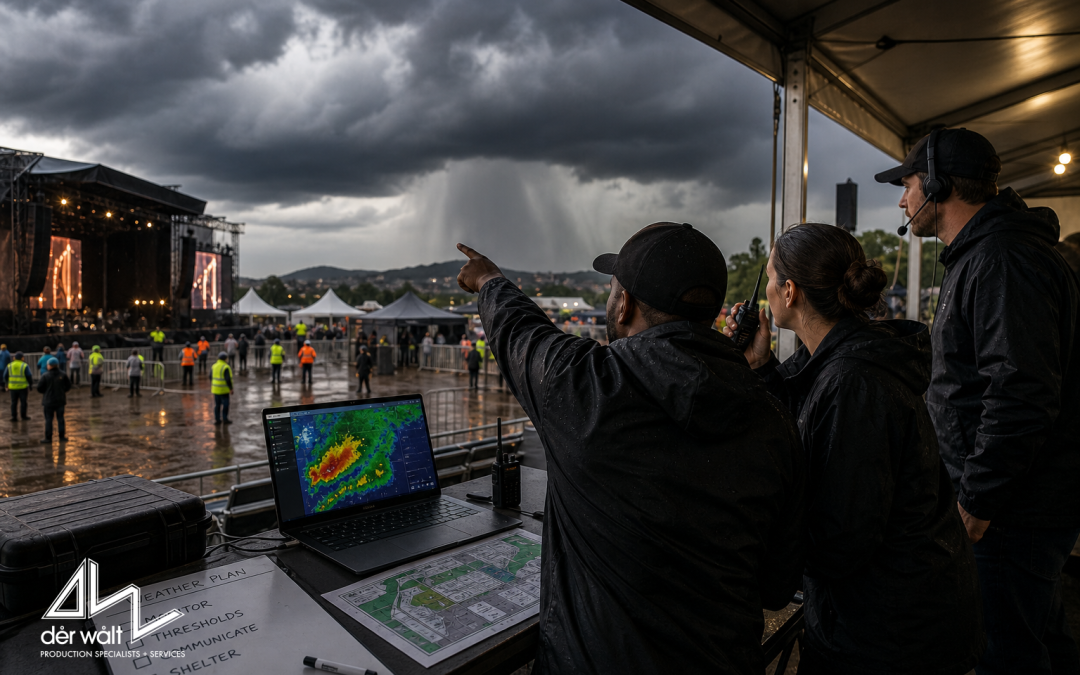
How to Build a Weather-Ready Plan for South African Outdoor Events
A practical, field-tested weather-contingency plan reduces risk and keeps activations on track. This guide covers risk assessment, shelter design, communication, and supplier coordination tailored to South Africa’s outdoor event context.
Direct answer
A robust weather-contingency plan starts with a site-specific risk assessment, clear decision thresholds, and ready-to-deploy responses for shelter, power, and logistics. It should be integrated into the event timeline and communication plan from day one.
Context: why weather planning matters for South African events
South Africa’s outdoor events face diverse weather patterns. Summer brings thunderstorms in many regions, while coastal and inland areas can experience intense heat, winds, and heavy rainfall at short notice. Lightning is a critical safety factor in many parts of the country, and sudden weather shifts can disrupt schedules, impact attendee experience, and raise costs if not managed well. Planning for these realities helps protect people, equipment, and budgets while preserving brand value and guest experience.
Industry guidance from international and national standards emphasizes proactive risk management, structured decision-making, and effective communications during weather events. ISO 20121, the global standard for sustainable event management, underscores integrating risk controls into planning and operations. Local and regional practices stress practical on-site monitoring, safe sheltering, and clear escalation paths. See external resources for more on these principles.
Practical guidance: building your weather-ready plan
Use a modular approach: design your plan so it can scale from a 200-person product launch to a multi-thousand-person outdoor festival. Below is a practical framework you can adapt.
1) Start with a site-specific weather risk assessment
- Collect historical weather data for the venue and season from trusted sources (e.g., national meteorological services or local forecasts). In South Africa, use WeatherSA and regional forecasts for storm and heat risk.
- Identify top weather threats by region (thunderstorms and lightning, heavy rain and flooding, heat stress, wind).
- Map risk to the event timeline, noting which activities are most vulnerable to weather shifts.
2) Define thresholds and decision-making roles
- Establish measurable “go” and “no-go” triggers (e.g., lightning within X km, rain rate above Y mm/hour, wind gusts over Z km/h).
- Assign roles: a weather lead, safety lead, operations lead, and communications lead, each with clear authority and timeframes for action.
- Create a decision tree that outlines steps for delays, shelter-in-place, venue changes, or cancellation.
3) Design on-site shelter, power, and water contingencies
- Choose weather-rated structures with certified anchoring and ballast. Have a plan for rapid sheltering for attendees and staff if lightning or heavy rain occurs.
- Specify weather-protected power and distribution, with enclosures and drip-proof connections. Plan for generator fuel, refueling logistics, and potential outages.
- Prepare drainage and runoff strategies to prevent water pooling, mud, and equipment damage. Include a quick-dry plan for tents and flooring.
4) Build a robust communications and audience-notification plan
- Pre-event communications: brief staff and vendors on weather protocols and contact trees. Provide attendees with app alerts, PA announcements, and digital signage with live updates.
- On-site updates: use simple, consistent language (e.g., “Shelter-in-place,” “Delay 30 minutes,” “Proceed with caution”).
- Contingency messaging: ensure social media, ticketing platforms, and partner channels reflect weather changes promptly to avoid confusion.
5) Align logistics and procurement for weather-readiness
- Contractors and suppliers should include weather-related contingency clauses (timelines, cancellations, and rescheduling options).
- Stock essential weather-response items: tarpaulins, ground-fix anchors, pumps, spare power cables, lighting, and portable canopies.
- Plan for alternate venues or streaming options if on-site conditions become unsafe or impractical.
6) Integrate safety, health, and regulatory considerations
- Lightning safety: establish safe sheltering protocols, define exposure limits, and ensure staff know how to identify and respond to lightning risks.
- Heat and hydration: provide shaded areas, hydration points, and cooling zones to protect attendees and staff.
- Permits and compliance: verify that sheltering, crowd-flow modifications, and temporary structures comply with local regulations and venue rules.
7) Create a weather-monitoring workflow you can rely on
- Appoint a dedicated weather monitor who follows authoritative forecasts and real-time alerts during the event window.
- Set up a rapid-response checklist that activates when weather thresholds are met, including “shelter-in-place” or “evacuate to the alternative venue” actions.
- Schedule periodic weather briefings for the core team and on-site supervisors.
8) Build a post-event review into your plan
- Document weather-related decisions and outcomes to improve future contingencies.
- Capture lessons learned for supplier contracts, on-site layouts, and attendee communications.
Common mistakes and key considerations
- Underestimating the severity of local weather: even short-lived downpours can disrupt power, access, and sightlines.
- Delaying shelter until late in the event window: proactive sheltering is safer and reduces chaos.
- Failing to test communications: if attendees or staff can’t hear updates, the plan collapses.
- Ignoring lightning safety during build and teardown: structures and rigs must be addressed in the safety plan, not just the event itself.
- Inadequate contingency budgeting: weather-readiness costs should be included in the upfront budget, not treated as an afterthought.
FAQ
How early should a weather contingency plan be created?
As early as the initial project plan, with revisions at major milestones to reflect venue-specific risks and seasonal forecasts.
What triggers a delay or cancellation?
Clear thresholds tied to safety risks (lightning distance, wind, rainfall) and the feasibility of delivering a safe, quality attendee experience.
How should changes be communicated to attendees?
Use a multi-channel approach: venue signage, push notifications, social posts, and a dedicated updates page or app feed.
What about budget impacts?
Build weather contingencies into the baseline budget and include a dedicated contingency line for weather-related changes and sheltering needs.
How can we ensure lightning safety on site?
Implement a lightning policy with designated shelters, safe distances for stage rigging, and a trained safety lead to advise when to pause or stop activities.
Sources
- ISO 20121: Sustainable Event Management — International Organization for Standardization
- Event safety guidance for planners — Health and Safety Executive (UK)
- Event Safety Alliance Resources — Event Safety Alliance
- South African Weather Service (WeatherSA) — South African Weather Service
Ready to plan your next activation?
DERWALT helps brands and agencies design and deliver weather-aware, safe, and immersive live experiences. From risk assessment and planning to on-site execution and post-event learning, we support end-to-end activation and event production capabilities tailored to South Africa’s outdoor environments. Reach out to discuss your next activation and how a weather-ready plan can protect your timeline, budget and audience experience.
Recent Comments