Optimising Crowd Flow for Large-Scale Brand Activations in South Africa
A practical guide to balancing safety, guest experience and sustainability for mega activations in South Africa. Learn zone-based layouts, wayfinding, staffing, technology and local considerations to keep events efficient and memorable.
Direct answer: Implement a zone-based, modular layout with clearly delineated ingress and egress, complemented by real-time crowd monitoring and proactive staffing. This design reduces bottlenecks, preserves safety, and enhances dwell time and overall experience.
Why crowd flow matters for activations
Large-scale brand activations hinge on safe, smooth movement. Poor crowd management can create bottlenecks, increase wait times, and degrade guest experience, which in turn harms brand perception and potential future attendance. Conversely, well-planned flow supports higher throughput, better audience engagement and stronger recall of the experiential moment.
In South Africa, venues range from stadiums to convention spaces and pop-up sites, each with unique entry patterns and transport access. The core principles stay the same: anticipate how people arrive, move, gather and depart; design for clear visibility and quick decisions; and build in flexibility for weather, capacity shifts and unexpected demand.
Core concepts: zone-based layouts, wayfinding, staffing, and monitoring
Zone-based layouts
Divide the venue into functional zones—entry/arrival, pre-show zones, main experience areas, and exit/egress lanes. This modular approach makes it easier to manage queues, control density and adapt to changing conditions without compromising the entire site.
Wayfinding and signage
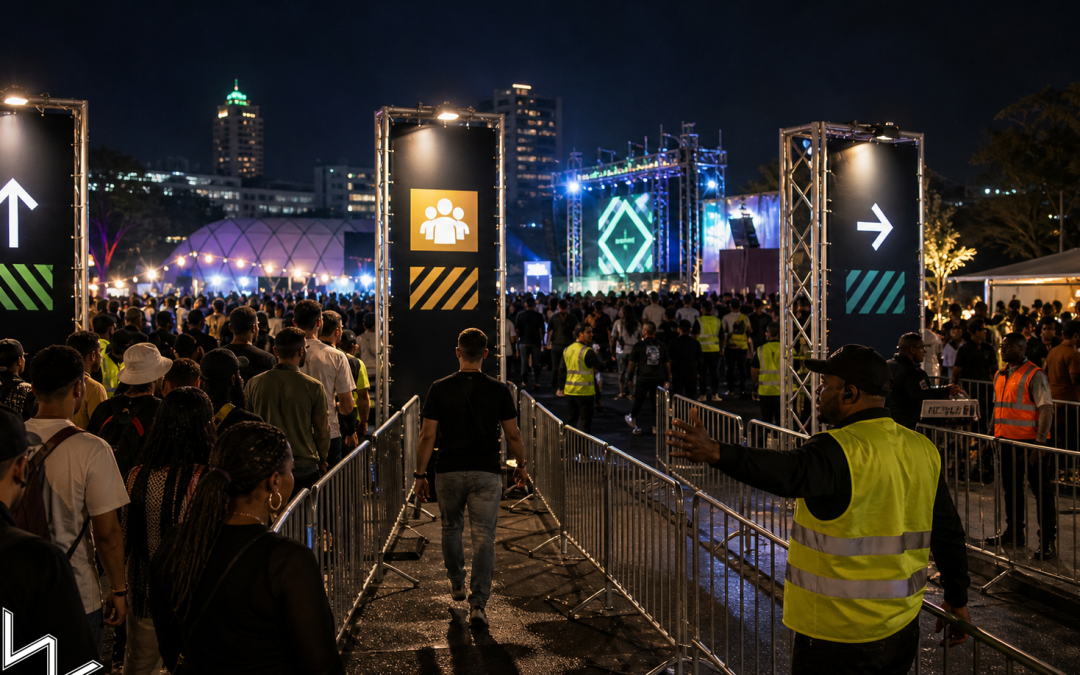
Clear, consistent wayfinding reduces confusion and bottlenecks. Use high-contrast signage, digital boards and floor markers. Color-coded zones and simple arrows help guests navigate with minimal instruction, even in dimmed lighting or busy moments.
Staffing and training
Lay out a staffing plan aligned to zone boundaries, with trained stewards at key junctions. Staff should be briefed on crowd psychology, emergency procedures, and guest assistance protocols. A dedicated safety lead per zone improves responsiveness during peak periods.
Technology and monitoring
Real-time monitoring supports proactive management. Consider non-intrusive crowd counting sensors, CCTV analytics, and mobile apps for staff communication. Ensure data privacy and comply with local regulations when collecting guest information.
Practical guide: phased planning and implementation
- Define zones and capacities. Map ingress, activity zones, food and beverage clusters, rest areas and the main stage. Establish maximum guest density targets per zone and per square metre to guide layouts.
- Design the circulation paths. Create unidirectional flows where possible, with clearly separated entry and exit corridors. Include buffer spaces to absorb surges and reduce contact between groups.
- Plan wayfinding early. Develop a simple map and signage strategy. Test it with a small audience segment to ensure it minimizes confusion.
- Build a staffing blueprint. Assign stewards to critical junctures, establish muster points, and align shifts with anticipated peak times. Include a rapid-response team for incidents or crowd buildups.
- Choose monitoring tools. Select scalable, non-intrusive technologies for counting and flow analytics. Prepare a central control point to monitor live data and coordinate on-site decisions.
- Incorporate weather and safety contingencies. Build shelters, shaded zones, water stations and emergency egress routes. Monitor local forecasts and have phased responses ready for heat, rain or wind.
Sustainability and local context
Beyond safety and flow, sustainable practices ensure the activation aligns with responsible production standards. ISO 20121 guides event sustainability, from materials and energy use to waste management and supplier ethics. In South Africa, working with local suppliers reduces transport emissions and supports community capacity while meeting regulatory expectations.
- Use modular, reusable barrier systems and signage where possible to cut waste.
- Plan waste streams with clearly marked recycling and composting points and partner with local waste management services.
- Schedule energy-intensive elements (lighting, AV) to run at peak efficiency and consider temporary power options with proper safety controls.
Budgeting, procurement and risk considerations
Effective crowd management is a cost driver but also a risk management tool. Allocate budget for staffing, signage, barriers, monitoring tech and contingency buffers. Where possible, reuse assets across events to maximise value and reduce waste. Risk assessments should cover peak times, weather disruption, crowd density, accessibility and emergency egress.
In South Africa, compliance with local occupational health and safety requirements and municipal permit obligations is essential. Engage early with venue management, local authorities and contractors to harmonise timelines and responsibilities.
Common mistakes and how to avoid them
- Underestimating peak capacity. Build in a 15–25% buffer for peak times and pre-emptive stage-building buffers around major activations.
- Unclear wayfinding. Invest in signage and map visibility; test with first-time attendees to reveal potential dead-ends.
- Overcomplicating the flow. Simpler, more predictable paths reduce confusion; avoid multiple cross-flows that interject with show lines.
- Ignoring weather and environmental factors. Always include weather contingency zones, shade, hydration points and shelter plans.
- Inadequate staff training. Regular rehearsals and clear escalation routes ensure quick, calm responses during incidents.
FAQ
What is the fastest way to reduce crowding risk during peak times?
Staggered entry, clearly defined zones and real-time monitoring allow you to throttle entry and re-route flows before bottlenecks form.
How can I balance safety with guest experience?
Use zone-based design to keep lines short and predictable, while creating engaging experiences in each zone to maintain dwell time and interest.
What tools help with real-time crowd monitoring?
Non-intrusive sensors, CCTV analytics and staff live-communicating apps provide visibility into density and movement, enabling proactive decisions.
How does sustainability fit into crowd management?
Plan for responsible materials, energy efficiency and waste management as part of the flow design, aligning with ISO 20121 guidelines.
What are South Africa-specific regulatory considerations for events?
Ensure compliance with occupational health and safety requirements, and secure municipal permits and approvals through early coordination with authorities and venue partners.
Sources
- ISO 20121: Sustainable Event Management — International Organization for Standardization
- Event Safety — Health and Safety Executive (UK)
- NFPA — National Fire Protection Association
- OSHA — Occupational Safety and Health Administration
- South African Weather Service — National Meteorological Service
DERWALT — contact us
Ready to elevate your activation with expertly managed crowd flow, safety, and sustainable production? DERWALT offers end-to-end experiential marketing, activation and event-production services, including crowd management planning, on-site coordination and safety compliance. Get in touch to discuss your project.
Recent Comments