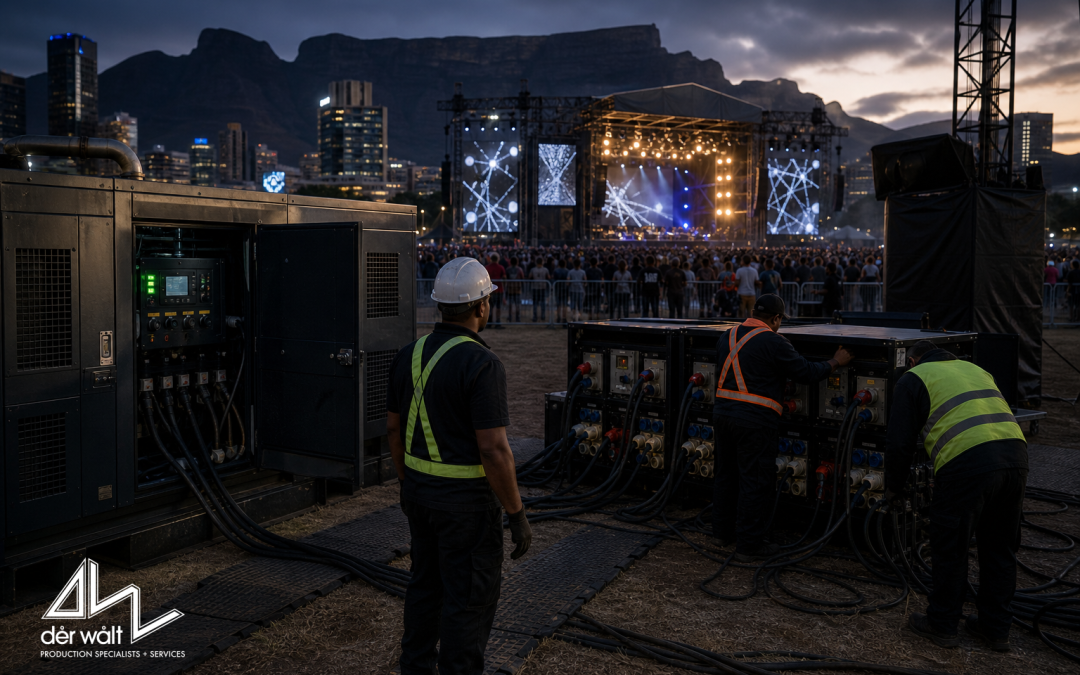
Power Planning for Large-Scale Experiential Activations in South Africa
A practical, SA-focused guide to budgeting, sourcing, and safely coordinating power for large live activations. Learn load estimation, generator strategies, fuel logistics, safety, and sustainable options to keep shows on schedule.
Primary search intent: provide a practical, actionable guide to power planning for large experiential activations in South Africa. The direct answer: design a multi-layered power plan that combines reliable on-site generation with grid options where feasible, plus a clear fuel, safety, and scope-management strategy to keep production moving and compliant.
Introduction: why power planning matters in SA experiential activations
In South Africa, power stability varies by location and time of day. Outdoor stages, pop-up experiences, and multi-venue activations demand careful power planning to prevent downtime, protect crew, and ensure a safe, high-quality audience experience. A well-structured power plan reduces risk, controls costs, and supports on-brand storytelling across environments—from urban activations to remote venues.
Key considerations before you start
Begin with a clear briefing that links your power plan to show design, audience experience, and risk management. Include the following in your initial scope:
- Venue constraints: access, proximity to grid supply, noise limits, and local regulations.
- Event duration and peak load timing: estimated draw during soundcheck, performances, and audience flow.
- Equipment inventory: lighting, audio, video walls, special effects, backstage power needs, and charging stations.
- Weather and environmental factors: heat, humidity, dust, and potential rain; these affect equipment choice and cooling needs.
What brands need to know about power for SA events
Every activation should balance reliability, safety, and cost. In SA, energy costs and fuel logistics are especially impactful, so plan for redundancy and fuel resilience. Align the approach with safety standards and local requirements, including clearances for generators, ventilation, and firefighting readiness. This reduces the likelihood of outages during critical moments and supports a consistent audience experience.
Practical steps to build a robust power plan
1. Estimate your total load accurately
Sum the continuous loads (lighting, sound, video, control systems, and stage power) and add start-up surges for equipment like LED walls and motion systems. Create a peak-load figure you would not exceed. Include contingency (often 10–25%) to cover unexpected spikes or weather-related derating.
2. Decide on power sources and topology
Choose a primary supply method (grid connection or big-diesel generators) and determine where on-site generators fit best. Consider hybrid solutions that use batteries or solar during daylight or low-demand periods. The goal is to minimize outages while controlling noise and emissions in sensitive venues.
3. Build redundancy and distribution
Follow a tiered approach: main feed, standby feed, and local distribution to stages, control booths, and back-of-house areas. Use proper power distribution units (PDUs), stage racks, and weather-protected cabling. Plan for N+1 redundancy for critical systems to avoid single points of failure.
4. Plan fuel, fueling logistics, and environmental impact
Calculate fuel needs based on generator efficiency, load, and runtime. Establish refueling routines that avoid on-set hazards, designate fueling zones with clear ventilation, and ensure spill containment. In SA, fuel pricing and availability can fluctuate, so secure vendor terms and storage plans in advance.
5. Safety, security, and regulatory compliance
Account for ventilation, fire safety, and electrical clearance zones. Equip generators with proper enclosures, exhaust routing, and carbon monoxide (CO) monitoring where applicable. Ensure staff are trained on lockout/tagout procedures, cable management, and emergency shutdowns. Check local permits and venue-specific safety rules well before load-in.
6. Sustainability and cost management
Prioritize energy-efficient equipment, LED lighting, and smart dimming. Where possible, incorporate battery storage or solar backup for daytime hours or quieter periods. Compare total cost of ownership for diesel generators versus hybrid solutions, including fuel, maintenance, and transport.
7. Timeline integration and logistics coordination
Integrate power planning into the overall show schedule. Align load-in/out windows with generator setup, calibration, and winding-down times. Coordinate with transport, site access, and crane operations to avoid conflicts that could delay power setup.
8. Vendor engagement and procurement timeline
Engage local SA suppliers early to secure equipment and technicians. Build a detailed bill of quantities, rigging diagrams, and fuel contingency plans. Confirm credentialing for all crew, and establish on-site contact points for 24/7 power support during production days.
Common mistakes and how to avoid them
- Underestimating start-up currents and surge requirements for stage equipment.
- Neglecting ventilation and exhaust planning for on-site generators, leading to CO risk or overheating.
- Assuming grid power will be stable or available when you need it—plan for contingencies due to load-shedding patterns and local outages.
- Overlooking fuel logistics and refueling safety, creating unnecessary delays and hazards.
- Ignoring quieter, greener alternatives where venue noise restrictions or sustainability goals apply.
A practical checklist you can use today
- Produce a load chart with continuous and peak loads, plus a 15–25% contingency.
- Decide on a primary power topology: grid, diesel, or hybrid, with redundancy.
- Detail a distribution plan, including PDUs, cabling routes, and protection devices.
- Develop a fuel plan with quantities, delivery timing, safety zones, and spill response.
- Define safety measures: ventilation, CO monitoring, fire suppression readiness, and safe clearance zones.
- Incorporate sustainability: energy-efficient gear, LED fixtures, and potential solar/battery options.
- Coordinate with venue, transport, and production teams to embed the power plan in the event timeline.
- Confirm vendor terms, licenses, and on-site support during load-in and showtime.
Safety and regulatory environment in South Africa
In SA, electrical installations and equipment must comply with national standards and local authority requirements. Engage qualified electricians for critical tasks and follow best practices for temporary installations and generator enclosures. Always verify with the venue and local authorities before finalizing power design and timing.
Sources
- National Fire Protection Association — NFPA — Publisher
- Health and Safety Executive (UK) — Event safety resources — Publisher
- ISO 20121:2012 — Sustainable event management — Publisher
- NERSA — South Africa energy regulator — Publisher
- Event Safety Alliance — Publisher
Ready to plan your activation’s power with confidence?
Contact DERWALT for end-to-end power planning, production management, and on-site coordination tailored to experiential marketing and live events in South Africa.
Recent Comments