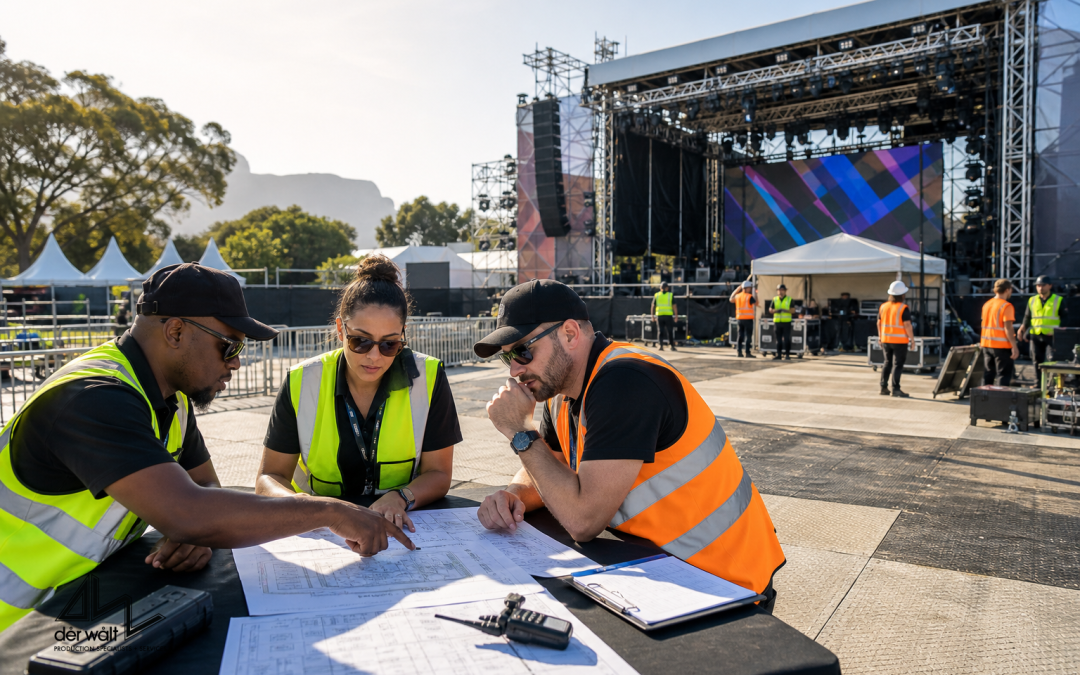
How to Plan a Safe, Sustainable Large-Scale Experiential Activation in South Africa
A practical, standards-based approach to delivering high-impact activations in SA. Learn how to structure risk assessments, timelines, power and weather contingency plans, and stakeholder coordination for safe, sustainable live experiences.
Direct answer: For South Africa activations, start with a formal risk assessment and a phased production timeline aligned to ISO 20121 (sustainable event management) and NFPA 101 (life safety). Build weather, power, and transport contingencies into every stage of planning.
Why reliability and compliance matter for SA activations
Large experiential activations sit at the intersection of creativity, safety, and operational discipline. In South Africa, the complexity is heightened by weather variability, power reliability, transport constraints and local permitting processes. A plan that treats safety, sustainability and logistics as equal priorities reduces last‑minute rework, protects audiences and staff, and preserves brand value.
Key standards and frameworks to anchor your plan
ISO 20121: Sustainable event management
ISO 20121 provides a structured approach to integrate sustainability into every phase of an event, from planning to post-event review. It helps teams reduce waste, optimize resource use, and document improvements for future activations. More details at ISO’s official standard page.
NFPA 101: Life Safety Code
NFPA 101 offers a widely adopted framework for egress, occupancy limits, fire protection, and emergency response. While not specific to SA, adopting its risk-based, code-compliant practices improves crowd safety and supports regulatory alignment for venues and sites. See NFPA’s official code information for context.
ISO 45001: Occupational health and safety management
ISO 45001 helps organisations structure health and safety governance, incident prevention, and continuous improvement. Applying this standard supports safer work environments for crews, suppliers and performers. Official ISO resources outline requirements and guidance.
Practical steps: from brief to bench schedule
- Define the activation’s risk profile. Start with a formal risk assessment covering crowd dynamics, electrical and rigging work, stunts or live demonstrations, food and beverage operations, entry/exit flows, medical support, and emergency response. In SA, align with SASREA guidance and local by‑laws where applicable.
- Develop a phased production timeline. Break the project into phases: concept and design, pre‑production, build, test and rehearsal, live event, and debrief. Map dependencies, critical paths, and decision gates for sign‑offs.
- Design for safety in every zone. Create separate zones for audience, crew, performers, and back-of-house. Define access controls, fire watch routines, and clear egress routes on site plans.
- Plan power and weather contingencies. Specify primary and backup power sources, fuel logistics, and automatic transfer switches. Develop weather contingency plans for wind, rain, heat, and lightning, including shelter strategies and schedule adaptations.
- Coordinate with suppliers and venues early. Establish communication rituals, checklists, and lead times for rigging, sound, lighting, and effects. Ensure all equipment complies with SA electrical standards and venue requirements.
- Institute a risk–control budget and timeline buffers. Allocate contingency funds for unforeseen safety measures, weather delays, and supply gaps. Build in time buffers at critical handoffs to avoid cascading delays.
Weather, power, and transport: SA-specific considerations
Weather contingency planning
South Africa’s microclimates can challenge outdoor activations. Build weather windows into the schedule and prepare flexible programming, sheltered zones, and covered stages. Use real‑time weather updates and decision‑making thresholds to trigger stage or schedule changes.
Power reliability and fuel management
Power availability is a common risk factor. Plan for robust on‑site power with generators sized for peak loads, plus uninterruptible power supply (UPS) for critical systems. Maintain fuel reserves, secure refueling logistics, and test automatic transfer switches before build days.
Transport and logistics in SA
Efficient transport planning reduces delays and crowding risks. Map routes for equipment, crew, and performers, consider traffic patterns, secure parking, and establish liaison points with municipal authorities and venue management. Build in extra time for peak traffic and load‑in constraints.
Stakeholder coordination, permits, and on-site governance
A successful activation depends on harmonised collaboration among brands, agencies, DERWALT’s production team, vendors, and venue operators. Establish a single point of contact for each area (safety, operations, logistics, and creative) and hold regular coordination meetings. In SA, identify and secure required permits and permissions early, including fire and occupancy approvals and any SASREA‑related requirements. Document approvals and maintain audit trails for compliance and accountability.
On-site safety management: roles, drills, and documentation
Assign clear safety roles—Site Safety Supervisor, Fire Warden, Medical Lead, and Rigging Supervisor. Run pre-event safety briefings, daily toolbox talks, and site‑specific hazard analyses. Maintain up‑to‑date emergency contact lists, clear evacuation routes, and accessible first‑aid points. Post‑event, compile a debrief highlighting what worked well and where improvements are needed.
Measurement, sustainability, and learning for future activations
Measure success beyond attendance. Capture safety metrics (incident counts, near‑miss reporting), sustainability outcomes (waste diverted, energy use), and audience experience indicators (line wait times, wayfinding clarity, accessibility). Use these data points to refine future activations and demonstrate value to clients and partners.
Sources
- ISO 20121: Sustainable Event Management — ISO
- NFPA 101: Life Safety Code — NFPA
- ISO 45001: Occupational Health and Safety — ISO
- A Greener Festival: Sustainable Event Resources — A Greener Festival
What you should ask before the next activation
How do we integrate sustainability into the activation’s design and operations?
Adopt ISO 20121 as the guiding framework and embed sustainable choices in procurement, waste management, and energy use from concept to post‑event review.
What are the essential safety elements to validate with the venue and suppliers?
Confirm egress calculations, fire protection, electrical safety, rigging certainties, medical presence, and clearly defined emergency procedures with all stakeholders.
How can we mitigate power and weather risks without compromising the creative vision?
Plan redundant power, stage shelters, and flexible programming so the show can adapt quickly to weather shifts while preserving the experiential intent.
What permits or approvals should we secure early in SA?
Identify venue approvals, occupancy permits, fire safety clearances, and any SASREA-related requirements, then document and track all sign-offs.
How should we measure success after the event?
Track safety outcomes, environmental metrics, and audience experience to inform continuous improvement and demonstrate value to stakeholders.
DERWALT: ready to elevate your next activation?
Partner with DERWALT for end‑to‑end experiential marketing, activation strategy, and live event production. We help brands, agencies and venues translate creative concepts into safe, scalable, and sustainable live experiences.
Recent Comments