Weather-Resilient Outdoor Events in South Africa: A Practical Guide
Outdoor activations in SA demand weather-aware planning, safety compliance, and tight logistics. This practical guide outlines actionable steps for brands, agencies, venues, and production teams to deliver reliable, compliant experiences.
Outdoor brand activations and experiential events bring energy, immediacy and memorable moments. In South Africa, planners must navigate a mix of unpredictable weather, varied venues, evolving safety standards, and local procurement realities. The goal is to design an event that remains engaging even when conditions shift—without compromising safety, budgets, or timelines. The following framework blends practical, verifiable guidance with a clear view of what DERWALT can offer as an end-to-end partner in experiential marketing and event production.
Understand local risk and weather patterns
Begin with a formal risk assessment that accounts for seasonality, microclimates, and historical weather events in your venue’s region. South Africa experiences diverse conditions—from sudden thunderstorms in coastal cities to dry, windy days inland. Use reliable local forecasts to inform your plan and build contingency windows into both schedule and budget. The South African Weather Service (SAWS) offers regional forecasts, severe-weather alerts, and seasonal outlooks that can feed into your risk registers and contingency planning.
Practical step: establish a 48-hour weather watch with a specific trigger for triggering contingencies (for example, shelter deployment, venue reconfiguration, or early teardown). Document decision points and who approves them to ensure rapid, action-based responses during rising risk.
Legal and safety framework for events
Compliance underpins safe, shareable experiences. In South Africa, event planners should align with the Occupational Health and Safety Act and related regulations. A documented safety plan, incident reporting processes, and clearly defined roles help manage risk in real time. Include crowd management, emergency procedures, and access control as part of the safety envelope. When dealing with public spaces or venues, verify any municipal or provincial permitting requirements, noise-by-laws, and fire-safety compliance in advance.
Practical step: assemble a safety and compliance checklist early, including signage, fire extinguishers, medical response capabilities, and clear evacuation routes. Engage accredited safety professionals or a partner with event-safety experience to audit your plan before procurement and installation begin.
Planning with weather as a design constraint
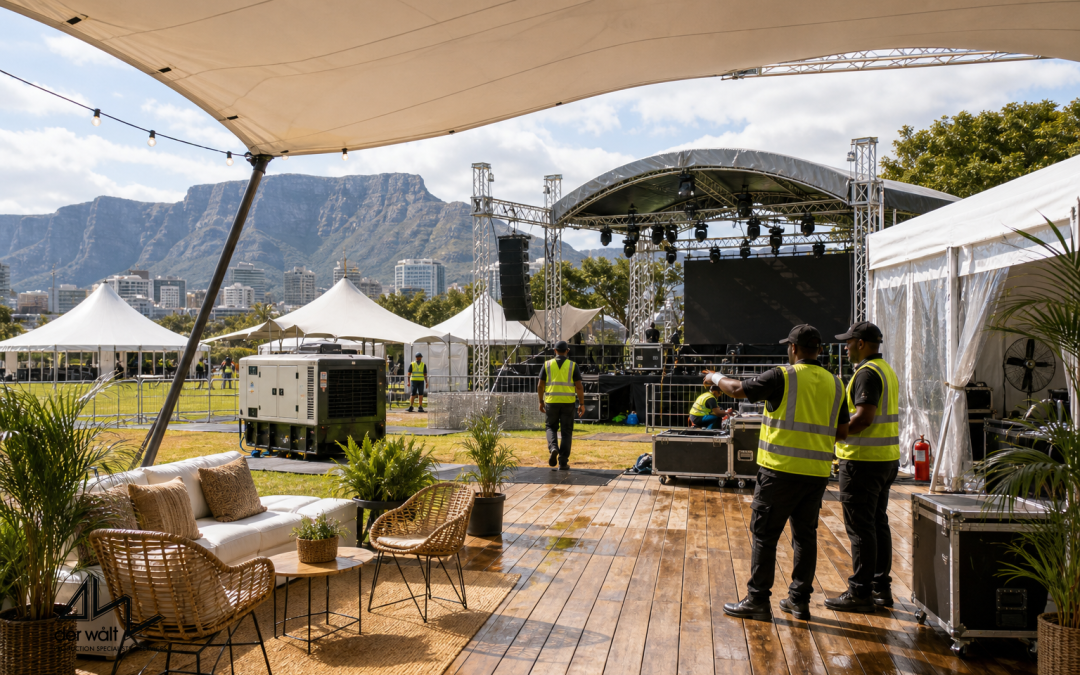
Design choices should enable flexibility. Temporary structures, shade, wind protection, rain covers, and modular setups can keep guests comfortable and equipment safe. Consider ground conditions—soft surfaces may require heavier ballast for tents and stages. Modular staging and scalable sheltering help you adjust quickly if forecasts shift. Build in multiple redundancies for critical elements such as power, lighting, and audio to avoid a single point of failure.
Practical step: source weather-ready solutions with rated wind-load capacities and secure anchoring strategies. Create alternate layouts that can be deployed in rain or heat, such as reconfigurable audience lines, sheltered queues, and pop-up dining zones with their own airflow and safety considerations. Document these layout options in a binder accessible to the core production team.
Power, climate control, and technical planning
Electrical reliability is non-negotiable for any outdoor activation. Plan for generator capacity with headroom for peak loads, temperature-driven equipment efficiency, and fuel-supply logistics. Implement cable-friendly routes, weatherproof enclosures, and IP-rated equipment where possible. Consider temporary climate controls such as fans or misting systems for hot days, while ensuring electrical safety and public-safety clearances are observed.
Practical step: map power distribution plans with real-time monitoring where feasible. Include on-site diesel reserves, refueling plans, and strict separation between live performance areas and audience zones. Validate equipment with a pre-event test that simulates expected weather conditions to identify weak points in the electrical and rigging systems.
Logistics: transport, access, and operations
South African cities present unique logistics challenges, including traffic patterns, road-closure processes, and security considerations. Collaborate with local transport partners to stage equipment in advance, secure access for larger builds, and coordinate vendor deliveries within permit constraints. Weather can affect road conditions and schedule slippage, so build buffer into load-in and load-out windows and communicate with all stakeholders about critical milestones.
Practical step: create a transport and access plan that includes anchor points for trucks, on-site parking, and a controlled route for equipment movement. Confirm a backup route in case of unexpected closures. Pre-book local equipment rental and service providers well in advance to reduce last-minute spikes in procurement costs and lead times.
People, safety, and emergency response
People-first safety is the cornerstone of any successful activation. Train staff and volunteers on emergency procedures, evacuation routes, and on-site medical support. Establish a clear chain of command for safety decisions tied to weather events, medical incidents, or security threats. Communicate plans to participants in accessible, multilingual formats where needed, and ensure information is visible at multiple points in the venue.
Practical step: staff a dedicated safety liaison team with radios or reliable digital communications. Create a simple, rehearsable emergency drill that can be executed within minutes if conditions deteriorate.
Supplier coordination and local procurement
Partnering with local suppliers reduces transport time, supports local economies, and enhances sustainability. Build a procurement plan that prioritises locally available equipment and services for lighting, sound, staging, tents, and recycling or waste management. Ensure robust insurance coverage for temporary structures, power generation, and transportation. Vet suppliers for their ability to meet safety standards, reliability, and the ability to scale on short notice if a weather contingency requires rapid changes.
Practical step: create a preferred supplier list with clearly defined service levels, lead times, and contingency options. Include fallback suppliers and an escalation path to avoid delays if a primary vendor becomes unavailable due to external conditions.
Realistic production timelines and budgeting
Weather-resilient planning must translate into realistic timelines and budgets. Build in contingency days for load-in and load-out, and reserve a weather contingency fund to cover sheltering, additional staffing, and rapid equipment replacements. When applying budgets, separate “must-have” safety elements from “nice-to-have” enhancements and consider prioritising core resilience capabilities: shelter, power redundancy, medical readiness, and clear wayfinding. Maintain a living schedule that can be updated in response to new weather information or regulatory changes.
Practical step: use a phased timeline with explicit go/no-go decision points tied to weather forecasts and safety milestones. Keep stakeholders aligned through daily or bi-daily check-ins during critical pre-event periods.
DERWALT’s approach to end-to-end event delivery
DERWALT collaborates across strategy, production management, and technical planning to deliver experiences that are creative, compliant, and resilient. Our approach emphasizes early risk identification, integrated design, and close coordination with local suppliers and venue teams. We help translate weather and safety requirements into concrete production plans, with clear ownership, milestones, and contingency frameworks. From site survey and permitting support to stage design, power management, and on-site operations, the goal is to minimize risk while maintaining the creative impact and guest experience that brands seek.
Sources
- South African Weather Service — South Africa
- ISO 45001: Occupational health and safety management systems — International Organization for Standardization
- Occupational Health and Safety Act 85 of 1993 — South African Government
- National Disaster Management Centre — South Africa
- Event Safety Alliance – Resources — International
Contact DERWALT for your next activation
Ready to plan a weather-resilient outdoor activation? Contact DERWALT for end-to-end event production, experiential marketing, and logistics support tailored to South Africa’s unique landscape.
Recent Comments