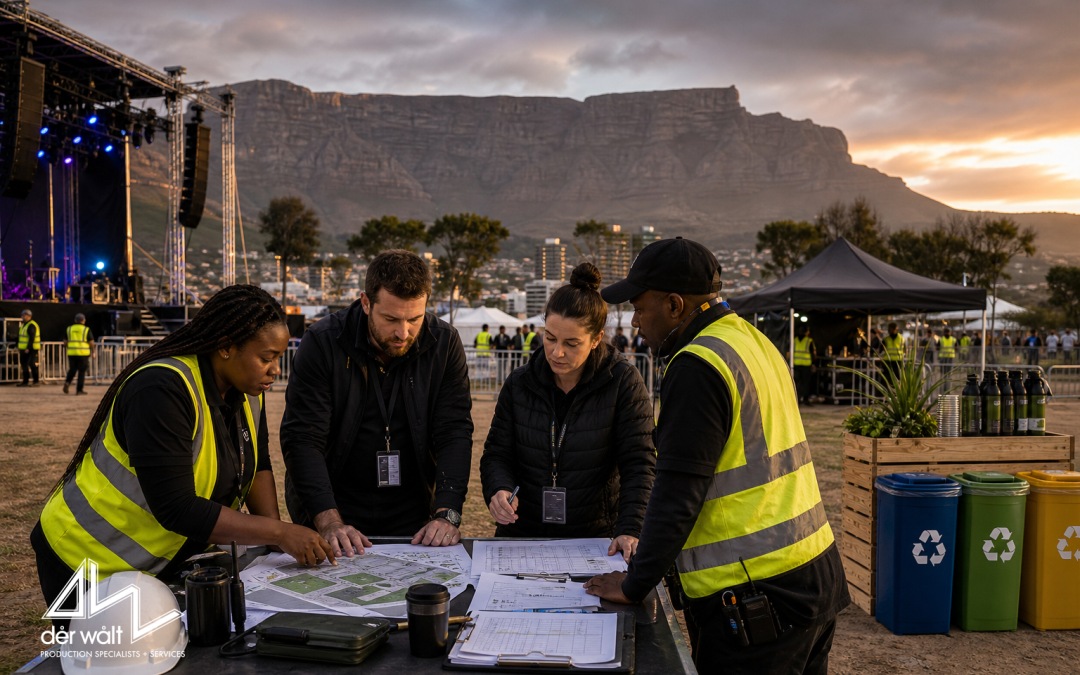
How to plan safe, sustainable outdoor experiential activations in South Africa
A practical, field-tested approach to planning outdoor experiential activations in South Africa that prioritises safety, weather contingency, sustainability and seamless supplier coordination.
Direct answer: For a safe, sustainable outdoor activation in South Africa, start with a formal risk assessment, weather contingency plans, and permits, then align with local safety standards and environmental guidelines while coordinating every supplier from day one.
Why safety and sustainability matter for SA outdoor activations
Outdoor activations in South Africa must contend with variable weather, transport logistics, and diverse venues. A proactive safety framework helps protect audiences and staff, while sustainability practices align with investor expectations and regulatory norms. Leveraging established standards—such as sustainable-event management guidelines—reduces risk and enhances reputational value for brands and agencies.
A practical, step-by-step plan for risk, weather and sustainability
1) Define scope, site, permits and stakeholders
Begin with a formal brief that includes location, expected crowd size, accessibility, hours, and key stakeholders (venue, authorities, sponsors, and emergency services). Map permit requirements by municipality, road closures, noise limits and temporary structures. Confirm insurance coverage and incident-reporting processes. A clear scope prevents late changes that ripple through budgets and timelines.
2) Conduct a robust risk assessment and control measures
Use a structured risk assessment that documents hazards, likelihood, consequence and controls. Typical areas include crowd flow, structure stability (stages, tents, grandstands), electrical safety, fire risk, medical response, and access for emergency vehicles. Apply the hierarchy of controls—from elimination and substitution to engineering and administrative measures—then track residual risk with a simple risk matrix.
3) Weather contingency planning tailored to SA climate
South Africa’s weather is highly variable by season and region. Build weather-triggered contingencies: go/no-go criteria, shelter and shade provisions, rain plans, and contingency dates. Establish timely weather monitoring and a rapid communication protocol to inform staff, suppliers, and audiences. Include humidity, wind, lightning risk, and temperature considerations in site design and portable shelter selection.
4) Power, staging, and technical planning
Outline a reliable power strategy with generator sizing, fuel plans, spill prevention, and noise controls. Plan stage loading, rigging, electrical distribution, and safe clearance around overhead lines. Schedule asset delivery and removal to minimise on-site congestion. Use engineered solutions for cabling and weatherproof enclosures to protect equipment and maximize uptime.
5) Logistics and supplier coordination
Map the supply chain from vendors to on-site teams. Create a single source of truth for schedules, contact lists, delivery windows, and contingency contacts. Align procurement lead times with permit approvals and weather windows. Pre-build flexible layouts to accommodate last-minute changes and maintain clear walkways and ingress/egress routes for attendees and staff.
6) Sustainability and waste management
Apply the waste hierarchy: prevent waste where possible, reuse materials, recycle, and recover energy where feasible. Use digital tickets and programs to reduce paper, deploy refill water stations, and select reusable or recyclable materials for structures and packaging. Establish a site-wide environmental plan, including litter control, responsible supplier practices, and post-event clean-up targets aligned with ISO 20121 guidance.
7) On-site safety, training and incident response
Deliver concise safety briefings to staff and volunteers before access. Implement radio communications, crowd marshals, and clearly marked emergency exits. Prepare an on-site medical plan with first aid stations, trained responders, and rapid access to hospitals or clinics. Create an incident-reporting workflow and conduct a post-event debrief to capture learnings.
Budgeting, timelines and practical considerations
Allocate contingency funding—typically 5–15% of the event budget—to cover weather-related disruptions, permit delays, or supply chain shifts. Build timelines that reflect permit processing times, venue readiness, and supplier lead times, especially for multi-venue activations. In South Africa, plan for local procurement lead times and ensure all suppliers comply with safety and environmental standards.
Measuring success: safety, sustainability and experience KPIs
Track safety performance (incidents, near-misses, response times) and environmental metrics (waste diverted, energy use, water consumption). Use audience feedback and staff debriefs to assess experience quality, wayfinding, and accessibility. Documentation supports continuous improvement and helps demonstrate compliance with ISO 20121 and related guidelines.
FAQ
What is ISO 20121 and why does it matter for SA events?
ISO 20121 is an international standard for sustainable events management. It helps organisations plan, run and evaluate events with a clear focus on social, environmental and economic impact.
How should I conduct a risk assessment for an outdoor activation?
Identify hazards, assess likelihood and consequence, implement controls in line with the hierarchy of controls, and document residual risk. Use a simple risk matrix and review it with your safety team and venue early in the planning process.
What permits are typically needed for an outdoor SA activation?
Permits vary by municipality but commonly include event permits, temporary-structures approvals, noise permissions, and, if roads or public spaces are involved, road-closure authorisations. Coordinate with the local authority and venue well in advance.
How can we minimize environmental impact without increasing costs?
Choose reusable or recyclable materials, reduce single-use items, digitise tickets and programs, and implement water stations and waste separation on site. Align with ISO 20121 principles to balance sustainability with cost efficiency.
What are effective on-site safety practices for large crowds?
Use trained stewards, clear signage, accessible emergency routes, first-aid stations, and reliable communications. Regular safety briefings and quick incident reporting are essential for timely response.
How do you measure success after the event?
Review safety metrics, environmental performance, audience sentiment, staff debriefs, and supplier performance. Use these data points to refine future activation plans and demonstrate value to partners.
Sources
- ISO 20121: Sustainable events management — ISO
- Event safety guidance — UK Health and Safety Executive
- Event Safety Alliance — Event Safety Alliance
- IAVM: International Association of Venue Managers — IAVM
- Sustainable Event Alliance — Sustainable Event Alliance
Call to action
Ready to deliver a safely executed, environmentally responsible outdoor activation in South Africa? Contact DERWALT to discuss experiential marketing, activation or end-to-end event production support that aligns with your brand goals and budget.
Recent Comments