Weather-Ready Outdoor Events in South Africa: A Practical Contingency Plan
A practical guide to building a weather contingency plan for South African outdoor events, covering risk assessment, trigger thresholds, stakeholder roles, and rehearsed responses to protect guests, staff and budgets.
A robust weather contingency plan for South African outdoor events combines a formal risk assessment with clear, trigger-based actions. It defines roles, thresholds (like wind, lightning, rain), and rehearsed responses to keep guests safe and schedules intact.
Understanding the SA weather risk landscape
South Africa’s climate is diverse, and outdoor events face a mix of heat, heavy rain, strong winds, and lightning—especially during the summer thunderstorm season. Coastal venues contend with humid conditions and gusty coastal winds, while interior venues can experience rapid temperature swings and dust storms. Planning must reflect local seasonality, typical hour-by-hour forecasts, and the likelihood of seasonal lightning. Relying on a single forecast close to showtime rarely suffices; you need a live plan that adapts as conditions evolve.
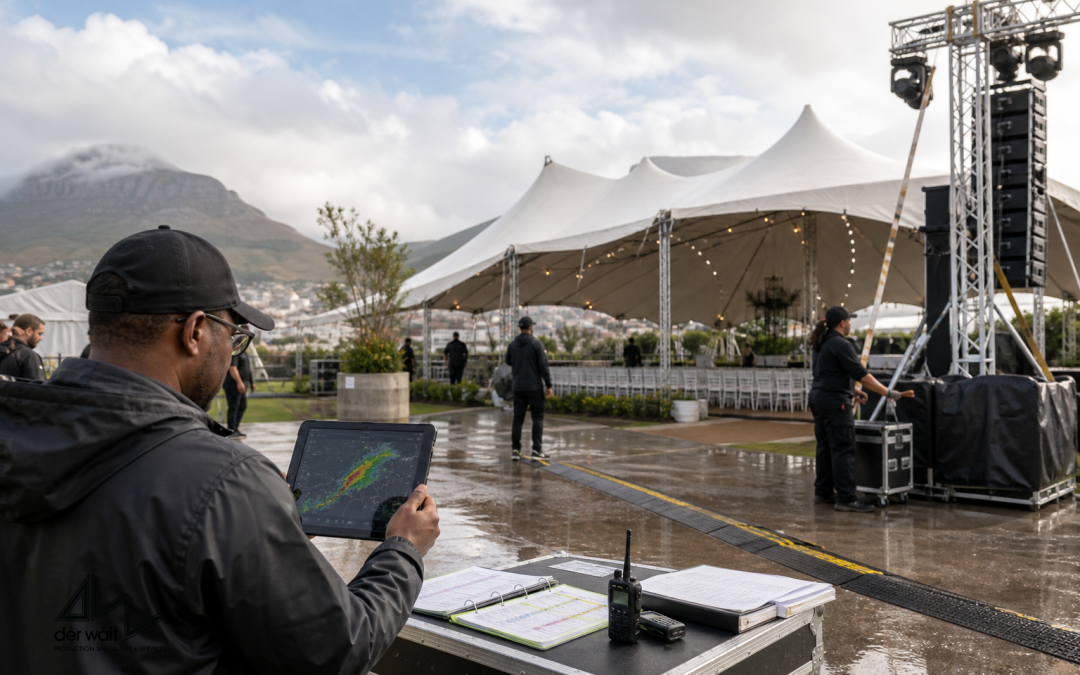
Key takeaway: treat weather as a live actor in your production. Every change in forecast should trigger a predefined response, not a knee-jerk reaction. Ground decisions in data from reputable sources and in collaboration with trusted local suppliers and authorities.
Foundations of a practical contingency plan
Start with a plan that is simple to execute and thoroughly documented. The core elements below are designed to be actionable for brands, agencies, event organizers and venues in South Africa.
: Map the venue, audience footprint, equipment, electrical loads, and access routes. Identify zones at risk from lightning, flooding, or wind-driven debris. Record how often the area is used and its relative safety with crowds present. : Establish objective triggers for delays, hold, partial shutdown, and full cancellation. Typical thresholds include: - Lightning distance thresholds (e.g., strike within 8–15 km requires immediate halt and special protection measures, per local guidance).
- Wind speeds that compromise stage rigging or temporary structures (e.g., structures rated to a minimum wind speed; if gusts exceed that, secure or disassemble).
- Rain intensity and duration leading to pooling, hydrostatic risks, or slippery surfaces.
- Extreme heat or cold that affects attendee health or staff safety; offer cooling or warming zones as needed.
: Define who can trigger each level of response (banquet manager, production director, venue rep, insurer). Ensure sign-off from the client and, where required, authorities or the venue’s safety manager. : Create a menu of practical adaptations, such as: - Practical shelter: weatherproof tents, marquees, or indoor relocation options that preserve programming flow.
- Stage and rigging strategies: redundant rigging points, temporary bracing, and quick-release mechanisms.
- Power and AV continuity: backup generators, uninterruptible power supply (UPS) for critical systems, and rapid switchovers.
- Audience flow: clearly marked evacuation routes, assembly points, and crowd-management tactics for sheltering or relocation.
- Logistics: transport lanes, loading dock procedures, and supplier access during weather events.
: Establish a multi-channel cascade for staff and attendees—PA announcements, digital screens, stage managers with scan-ins, SMS or app notifications, and local radio if appropriate. Pre-approved, safety-focused messaging reduces confusion during disruption. : Align with local meteorology providers, marquee and tent suppliers, riggers, electrical contractors, and transport partners. Agree on response times, emergency contacts, and on-site roles with the venue. : Include weather response rehearsals in your production timeline. Test triggers, communication flows, and sheltering procedures so teams can operate under pressure. : Capture the contingency plan in writing, with checklists and sign-off from all stakeholders. Review insurance coverage for weather-related disruptions and any liability implications.
Practical guidance: translating plan into action
Implementation hinges on clarity and the ability to act quickly. Use the following practical steps to ensure your plan is usable on event day.
: Combine official forecasts from a trusted source with local observations (on-site weather station, mobile app feeds, and the venue’s wind monitors). Regularly refresh the data and broadcast critical changes to the team. : Tie thresholds to concrete actions (e.g., “if lightning detected within 10 km, stop all stage activities and evacuate crowd to shelters within 20 minutes”). Keep thresholds conservative to protect safety without unnecessary disruption. : Pre-identify shelter options—indoor alternatives or weatherproof tents with adequate capacity, air movement, accessibility, and sanitation. Ensure sheltering doesn’t degrade essential access routes for medical or security teams. : Use certified, tested temporary structures with wind-loading guidance. Design storm-resilient contingency options such as accessible quick-release clamps and redundant anchor points. : Create a layered communication plan. Use staff radios, on-site screens, PA system, and a WhatsApp/notification channel for quick, precise updates to teams. Prepare templates for different scenarios (delay, relocation, evacuation). : Prepare backup power for critical systems (lighting, communications, medical). Plan refueling, fuel storage, and safe shutdown procedures in case of extended outages. : Confirm emergency procedures with local fire and medical services. Align with the venue’s safety protocols, evacuation routes, and assembly points in case of severe weather. : Build a simple post-event debrief to capture weather-related learnings, which improves future contingency plans and supplier coordination.
Key plan elements you’ll want on hand
As you document and distribute the contingency plan, ensure these elements are easy to access for all stakeholders:
- One-page triggers and actions sheet for rapid reference by staff on shift.
- A map of shelters, assembly points, and evacuation routes clearly marked for attendees and staff.
- A contact directory for all critical partners (venue, production, security, medical, weather services, and insurers).
- Templates for all weather-related communications, including push notifications, signage, and on-site announcements.
- A safety-first checklist for every stage of production, from load-in to load-out, including wind and lightning precautions.
Common mistakes and important considerations
Even with a plan, missteps can derail the best intentions. Watch for these common issues and address them early in your planning cycle.
- Underestimating lightning risk: Treat lightning as a primary safety concern, not a secondary factor. Ensure safe shelters and rapid cessation of outdoor activities when a strike risk is detected.
- Unclear decision rights: When everyone has a say but no one has final authority, delays and confusion follow. Designate a clear incident commander and a decision pathway with stated timelines.
- Over-reliance on a single forecast: Combine multiple data sources and maintain on-site weather observation to validate forecasts in real time.
- Failure to rehearse: A plan without practice won’t perform. Schedule weather drills and stage rehearsals specifically for contingency scenarios.
- Ignoring accessibility and inclusivity: Shelter and evacuation plans must consider guests with disabilities, older attendees, and families with children.
- Not factoring cost and staffing: Contingencies add cost. Build a budget that accounts for weather-related actions and staffing rotations without compromising safety or guest experience.
FAQ
What weather data sources should we rely on for SA events?
Use a combination of official forecasts from trusted agencies (such as the South African Weather Service) and on-site observations to validate forecast accuracy and drive timely decisions.
How do we define safe thresholds for lightning and wind?
Thresholds should be set by qualified professionals and aligned with venue capabilities and local safety guidance. For example, a lightning-triggered halt combined with a defined time window for reassessment is a common approach.
Who should authorize weather-related interruptions or cancellations?
Assign a single incident commander or production lead who has the authority to implement weather-based actions after consulting stakeholders and the client.
What should be included in a weather shelter plan?
Shelters should be weatherproof, accessible, and capable of accommodating the expected crowd while preserving sightlines and safety. Include signage, heat management or cooling where needed, and sanitary provisions.
How can we communicate quickly with attendees during weather disruptions?
Use a multi-channel approach: PA announcements, digital displays, event apps or SMS alerts, and staff handheld radios to ensure messages reach both staff and attendees in a timely manner.
Sources
- Event Safety Guide — Health and Safety Executive (HSE)
- ISO 20121: Event Sustainability Management Systems — International Organization for Standardization
- NFPA 1600 Disaster/Emergency Management and Business Continuity — National Fire Protection Association
- South Africa Weather Service — South African Weather Service
Ready to plan weather-ready experiential activations?
Partner with DERWALT to design and implement weather-resilient experiential campaigns, from early-stage production strategy through on-site execution, with robust contingencies tailored for South African venues, transport, and labour considerations. Contact us to align on a proactive weather-ready plan for your next activation.
Recent Comments