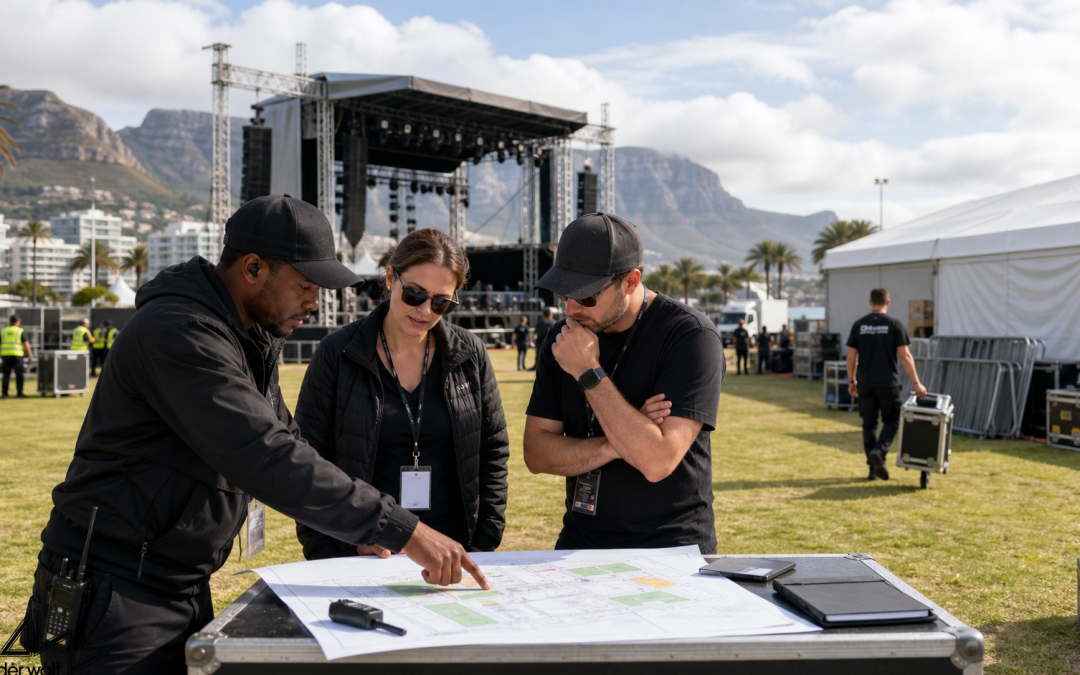
South African Event Contingency Planning: Weather, Safety, and Logistics
A practical guide for brands, agencies and venues planning outdoor or mixed-format events in South Africa. It covers weather, permits, power, transport, local procurement, safety, budgeting and realistic timelines to keep productions on track.
Outdoor and experiential events in South Africa demand more than creative concepts and stylish branding. The country’s diverse climates, variable power availability, and complex permitting landscapes require a structured contingency approach. A well-defined plan helps protect people, protect budgets, and protect reputations when the unexpected occurs. This piece outlines practical steps, clear distinctions between best practice and verification, and the role DERWALT can play in coordinating end-to-end production across multiple local suppliers and venues.
Why robust contingency planning matters for SA events
South Africa experiences a range of weather patterns and seasonal challenges across provinces. Coastal venues contend with wind, humidity and sea salt; inland venues may face sudden thunderstorms, hail or heat stress. While forecasts from the South African Weather Service can guide early decisions, plans must accommodate last-minute changes. At the same time, licensing, safety requirements and venue rules differ by municipality, often affecting access times, load-in windows, and crowd management expectations. A robust contingency plan reduces risk to attendees, crew and sponsors, and helps protect the event’s schedule and budget.
Build a risk register and critical path
Start with a risk register that identifies categories such as weather, power, traffic and transport, access, safety, supply chain delays, and venue restrictions. For each risk, define probability, potential impact, triggers, and a responsible owner. Link each risk to a critical-path task (load-in, rehearsals, main show, strike) and assign decision-making thresholds (e.g., “if rain forecast exceeds 60%, trigger rain plan”). This practice makes tough calls faster and more transparent for sponsors and clients alike.
Establish a communications and decision tree
Clear, predefined lines of communication save precious minutes when time is short. Create a simple decision-tree that explains who approves weather-related changes, power changes, or venue modifications, and how to notify all stakeholders (staff, crew, contractors, venues and clients). In practice, a single on-site operations lead, a safety lead, and a client liaison are often essential roles, with regional coordinators for transport, logistics and procurement. Documentation of decisions and changes helps protect contracts and ensures continuity if staff changes occur.
Getting the basics right: permits, safety, and local procurement
Every SA event relies on a combination of permits, safety compliance and reliable local sourcing. These elements are the backbone of on-site efficiency and risk control. Early engagement with authorities and venues reduces last-minute bottlenecks and cost escalations.
Permits, compliance and venue coordination
Municipal permits, traffic plans and temporary structures approvals vary widely by locale. Secure required permissions well in advance, and build in time for amendments. Engage the venue’s operations team early to understand site-specific restrictions such as noise curfews, vehicle access windows, and waste management requirements. An auditable trail of approvals helps with budgeting and client reporting.
Local procurement and supplier coordination
Rely on reputable local suppliers for temporary structures, electrical equipment, staging, and AV. Local sourcing reduces transit risk, supports faster lead times, and facilitates easier service-level alignment if a vendor hierarchy changes. Create a single sourcing plan with clear SLAs, delivery windows, and backup vendors. Where possible, align procurement with standards and safety benchmarks defined by national bodies to simplify compliance across multiple sites.
On-site safety culture and OH&S alignment
Safety is a core driver of event success. Align with national OH&S best practices and adapt them to the event context. This includes risk assessments, signposting, crowd management plans, emergency procedures, first-aid provisioning, and clear egress routes. Training for crew on site-specific hazards (electrical safety, working at height, rigging standards) reduces the likelihood of incidents and improves response times if incidents occur.
Weather planning and climate realities in South Africa
Weather is one of the most unpredictable variables for outdoor events. Summer storms, gusty winds along coastlines, and temperature swings between venues like Cape Town, Johannesburg, and Durban require adaptive strategies. Rely on SAWS for forecast updates and incorporate weather contingencies into the schedule. It’s prudent to plan for both short-notice delays and longer postponement scenarios, especially where key performances or attractions must be redeployed or rescheduled without compromising audience experience.
Regional variations and seasonality
Understanding the regional climate helps shape every aspect of the plan—from tent sizing and wind-bracing to hydration strategies and shade provision. In coastal cities, wind load calculations for lightweight structures are essential. In inland areas, heat mitigation (cooling zones, misting fans, hydration stations) can dramatically improve attendee comfort and staff performance. Build weather-triggered triggers into the production schedule so decisions feel rational, not reactive.
Power, transport, and on-site logistics in SA contexts
Power reliability varies across South Africa. A robust plan often includes a mix of power sources, redundancy, and careful load management. Transport access can constrain load-in windows, parking, and passenger movement during peak times, especially in urban centers or crowded public venues.
Power strategy in a load-shedding environment
Develop a power plan that considers peak load, duration of power cuts, and the mix of electrical equipment required for stage, AV, lighting and run-of-show needs. Coordinate with venue power where possible and secure reliable generators with calculated fuel needs, silent operation options for premium spaces, and safe fueling procedures. Include noise-control measures and emission considerations to comply with local by-laws and environmental expectations.
Transport, access, and traffic management
Access plans should reflect expected attendee volumes, vehicle routes, and emergency access. Engage with local transport authorities and, if needed, arrange private shuttle services or drop-off zones to minimize congestion. Pre-plan deliveries during defined windows to avoid conflicts with public events or citywide traffic restrictions. Contingency plans should address late changes to road closures or parking availability.
Talent, labour and timelines: working with local crews
Local crews bring knowledge of site conditions and stakeholder expectations. Build relationships with trusted agencies and ensure clear scope definitions, fair labour practices, and safety training aligned with the complexity of the production. Buffer times for crew changes, rigging, and set changes reduce the risk of schedule overruns and compromise in guest experience. A culture of briefings, daily huddles, and debriefs helps teams respond quickly to evolving conditions on the day.
Scheduling buffers and rehearsal windows
Set aside extra time between key moments—setup, sound checks, rehearsals, and event transitions. In SA contexts, where external factors can compress or extend windows, this practice becomes a differentiator for on-time show delivery and quality control.
Budgeting for risk and contingencies
Contingency budgeting is essential for SA productions. Include allowances for weather adjustments, last-minute vendor changes, extra transport legs, additional security or crowd management resources, and a reserve for unforeseen permitting or venue-holding costs. A practical approach is to embed a risk contingency within every major line item—rather than a single umbrella fund—so changes are traceable and justifiable to sponsors and internal stakeholders.
Transparent costing, combined with staged approvals and regular financial reconciliations, helps ensure the project remains aligned with client expectations even when plans shift. This is where end-to-end production management, including procurement coordination and on-site logistics, adds real value by keeping teams aligned and informed throughout the production lifecycle.
DERWALT approach: integrated production management for South African activations
DERWALT specialists focus on end-to-end activation delivery—from strategy and creative brief through on-site execution and post-event evaluation. Our approach emphasizes proactive risk mitigation, local supplier coordination, and a transparent production timeline. By coordinating technical planning, content creation support, and on-site logistics, we help brands deliver memorable experiences while staying aligned with budgets and timeframes. We draw on vetted local partners and maintain production discipline that reduces surprises and keeps your activation on track from concept to completion.
Sources
- South African Weather Service — South African Weather Service
- PLASA — Professional Audio, Lighting and Staging Association
- Standards South Africa — Standards South Africa
- IAVM — International Association of Venue Managers
Ready to plan your next experiential activation with DERWALT?
Get in touch to explore how DERWALT can design, plan, and deliver your next activation, from strategy and content to on-site production and logistics. We offer end-to-end event production and supplier coordination tailored to South Africa’s unique landscape.
Recent Comments