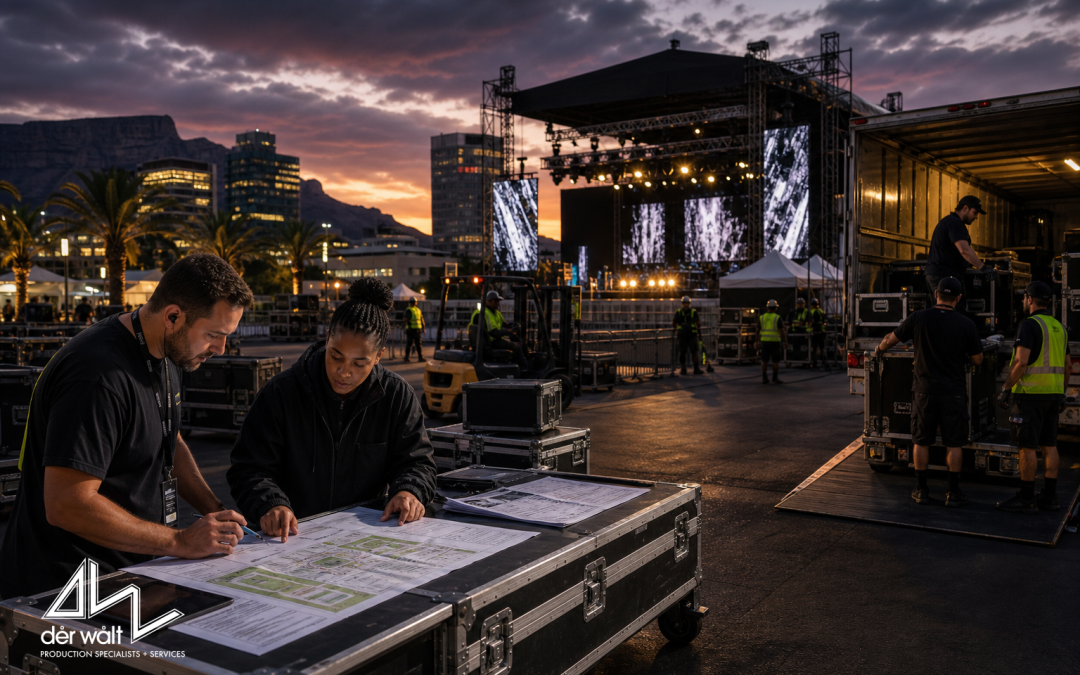
Practical South Africa Event Logistics for Brand Activations and Experiences
A practical guide for brands, agencies and venues planning experiential activations in South Africa. From venue selection and procurement to weather planning and safety, learn actionable steps to tighten timelines, control costs and deliver memorable experiences.
South Africa’s events landscape is vibrantly diverse, balancing world-class venues with unique public spaces and a complex procurement environment. For brands and agencies, success hinges on aligning creative intent with pragmatic logistics—bridging the gap between a vivid concept and a reliable, compliant, production-ready plan. This article unpack practical, South Africa-specific considerations across venue choice, procurement, transport, safety, budgeting and a resilient production calendar. It emphasizes actionable steps you can implement early, before ramping into design decisions or on-site execution. DERWALT specialises in end-to-end experiential marketing and event production, and the guidance here reflects the kinds of planning disciplines that underwrite successful SA activations without relying on any single vendor or project.
Understanding the SA landscape: venues, procurement and transport
In South Africa, you’ll encounter a spectrum of possible venues—from large convention centres and hotel conference facilities to private estates, outdoor public spaces and temporary structures. Each option carries different implications for power, water, load-in logistics and safety. When selecting a venue, think beyond aesthetics: assess access to power, drainage in outdoor spaces, shelter and shade for guests, and the capacity to handle crowd flow. Consider proximity to transport hubs, parking, and emergency services. For city-centre activations, map alternate routes and loading zones to minimise disruption during peak hours, and plan for potential road closures with the relevant city or municipal authorities well in advance.
Procurement in SA often hinges on a network of local suppliers and transformation considerations. Engaging local, BBBEE-conscious suppliers can streamline invoicing, VAT handling and compliance, while also supporting enterprise development goals. Build a short-listed supply chain early—lighting, sound, video, rigging, staging, power, and décor—so you can compare quotes on a like-for-like basis and avoid last-minute substitutions. In many cases, your preferred supplier list will require formal procurement processes, written scope of work, and clear service-level agreements. Plan for lead times that reflect local availability, especially for specialty equipment or larger rigs.
Transport and access require careful coordination. Map a clear route for load-in and load-out, including parking allocations, crane access if needed, and congestion considerations for urban centres. If your activation runs in multiple sites or cities, standardise baselines for crew transport, fuel, and per diems so you can compare proposals consistently. Where air or intercity travel is involved, factor in flight delays and the time needed for equipment harmonisation at each site. For off-site shoots or remote venues, secure reliable courier and rental networks in advance to minimise the risk of last-minute shortages.
Choosing the right venue and supplier network
- Power resilience: require sufficient generator capacity, automatic transfer switches, fuel plans and on-site safety controls for refuelling.
- Water, sanitation and climate control: check on-site water supply, sanitary facilities and heating/cooling options, especially for outdoor activations.
- Access and flexibility: ensure loading bays, lift access, and the ability to stage set builds and rigging without disrupting the public or other tenants.
- Safety and security: evaluate existing security provisions, emergency exits, crowd-management potential, and barriers suitable for your guest density.
- Local content and relationships: prioritise SA-based suppliers where possible to reduce lead times and simplify compliance, while ensuring quality through references and a documented safety record.
Weather planning and risk management
South Africa’s climate varies by region and season. Outdoor activations in summer can contend with heat, thundery showers, or gusty winds, while coastal cities may experience humidity and sudden changes in weather. Build contingency plans into the production timeline: shaded areas, misting or cooling stations, waterproof covers for electronics, and robust shelter from sun or rain. Always have an on-site weather monitoring plan, a rain decision matrix, and clearly defined shutdown-and-evacuation procedures. If you rely on public spaces, verify permit conditions that specify weather contingency requirements and closure criteria, and communicate these to clients and crews.
Safety, compliance and labour considerations
Deliberate safety planning is not optional; it’s a foundation for success in SA markets. Begin with a formal risk assessment and a safety management plan that covers every phase—from load-in to load-out. Appoint a competent health and safety lead on site and ensure all suppliers align with your safety standards. Where large crowds are anticipated, plan a crowd management strategy that includes entry control, wayfinding signage, restricted areas, and medical provisions. In South Africa, compliance with national standards and local regulations helps minimise risk and avoid enforcement actions that could derail a project.
Labor considerations are particularly important. Engage reputable local crews, ensure fair working conditions, and confirm that all temporary staff receive appropriate inductions and safety briefings. Align on shift patterns, breaks, accommodation if teams are travelling between sites, and escalation routes for on-site issues. Insurance is essential; verify that all subcontractors hold adequate liability cover and that your event’s exposure aligns with your policy framework.
Permits and rights management should be threaded through the planning timeline. Depending on venue type and activities (e.g., amplified sound in public spaces, liquor licensing, mascots or pyrotechnics), you may need municipal approvals or licenses. Build a permit calendar early, assign responsibility for applications, and track approvals to avoid late-stage delays. As you assemble the risk register, distinguish practical guidance from verifiable requirements so stakeholders understand what is a recommended best practice versus a mandatory regulatory obligation.
Budgeting and timelines for SA productions
Budget discipline is essential in South Africa’s often tight production windows. Begin with a transparent cost framework that captures venue hire, venue-specific charges (like utilities or access fees), production equipment, power and backup systems, transport, accommodation, catering, and on-site safety provisions. Build in a contingency—common practice is to reserve a percentage of the budget for unforeseen costs, given factors such as weather, last-minute procurement changes, and permit delays. Seek quotes in local currency and confirm payment terms early with suppliers to reduce cash-flow risk. Don’t underestimate the cost of labour compliance and on-site management; a dedicated production manager or safety lead can prevent expensive mid-project changes and rework.
Procurement in SA also benefits from early alignment on supplier terms, including delivery windows, equipment readiness, and service-level commitments. Where possible, prefer modular, scalable setups that can be repurposed for multiple activation formats, helping you spread costs across campaigns. If you’re working across multiple sites, standardise build elements and technical specifications to simplify procurement, testing, and contingency planning.
Implementation blueprint: a 12-week production calendar
Below is a practical blueprint you can adapt to a typical SA activation. It balances concept development with on-site readiness, ensuring you have time for risk assessment, permits, supplier onboarding and rehearsals.
- Weeks 1–2: Confirm concept scope, draft budget, select venue categories, and begin supplier outreach. Initiate safety and permitting targets; set up a project management cockpit with clear responsibilities.
- Weeks 3–4: Issue formal RFPs or quotes to core suppliers; begin initial site survey visits; start risk register and security plan. Lock provisional dates for load-in and load-out; align with city traffic plans if needed.
- Weeks 5–6: Finalise design briefs, power strategy, and contingency options. Confirm permits, insurance, and legal counsel inputs if required. Begin rehearsals planning and scheduling.
- Weeks 7–8: Install base infrastructure (power, rigging, stage, AV), deploy testing schedules and technician rosters. Run safety briefings and induction sessions for all staff.
- Weeks 9–10: Execute technical rehearsals, run-throughs with performers or brand ambassadors, and refine crowd management and signage. Validate transport logistics and crew shifts.
- Weeks 11–12: Final on-site checks, contingency drills, load-in and tech rehearsals, and go-live readiness. Establish clear handover documentation for post-event evaluation and debriefs.
Sources
- ISO 20121: Sustainable event management — ISO
- Event safety — Health and Safety Executive (HSE)
- IAVM — International Association of Venue Managers
- Event Safety Alliance — Event Safety Alliance
Contact DERWALT for experiential marketing and event production support
Ready to activate your brand with precision and local know-how? DERWALT offers end-to-end experiential marketing and event-production services, including strategic planning, production management, supplier coordination and risk-aware logistics across South Africa. Contact us to discuss your activation, event strategy or production needs, and how we can help you deliver a safe, compliant and memorable experience.
Recent Comments