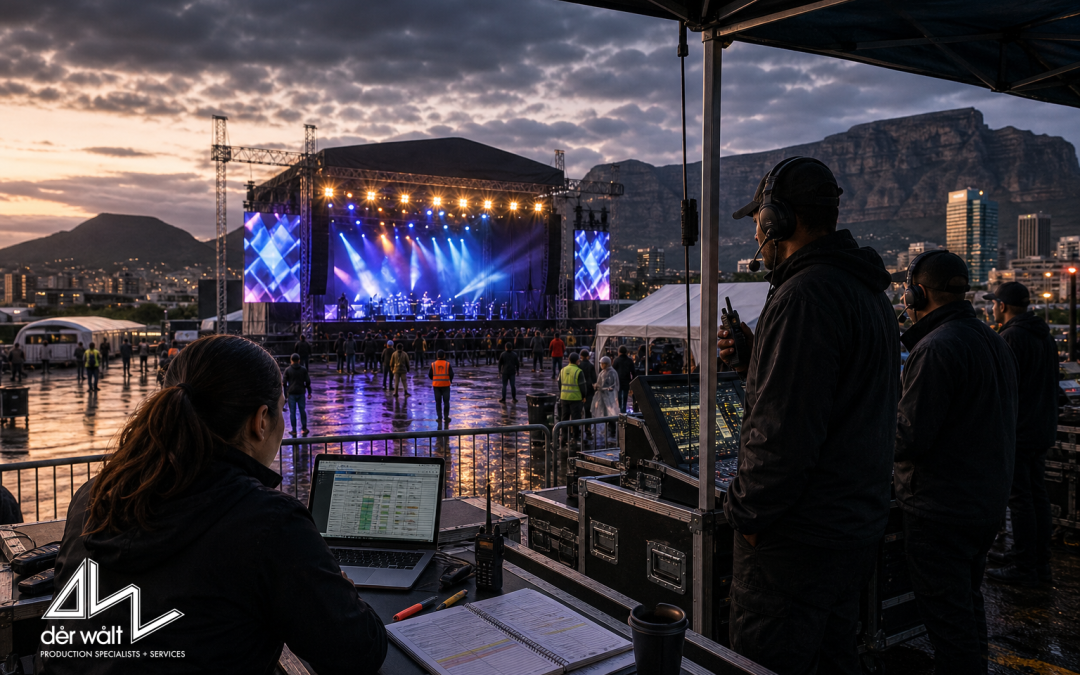
Planning Resilient Experiential Campaigns in South Africa’s Event Landscape
A practical guide for brands and agencies to plan resilient experiential campaigns in South Africa, addressing procurement, safety, weather, transport, and budget realities for venues, production teams and event organisers.
In South Africa’s vibrant experiential marketing scene, unpredictability is part of the job. Weather can shift in minutes, power reliability varies, and procurement timelines can stretch due to local governance and supplier lead times. The most successful activations rise above these realities by embedding resilience into every phase, from concept to on-site delivery. This article lays out a practical framework for brands, agencies, venues, and production teams to plan activations that travel well across South Africa’s diverse cities and climates while staying within budgets and timelines.
Why resilience matters in South Africa’s experiential programs
Resilience isn’t a luxury; it’s a requirement when delivering immersive experiences. A resilient program anticipates disruptions—whether a sudden rain shower on the coast, a power outage in a venue, or a delay in the supply chain—and provides options that preserve the audience experience. For South African activations, resilience also means accommodating local procurement rules, labour practices, and the realities of multi-city logistics. Well-designed risk management and contingency planning reduce the chance of a failed moment and keep the story of the brand intact, even when conditions change.
From concept to reality: a practical pre-production timeline
A realistic pre-production plan maps milestones against a credible calendar. Start with objectives and audience journeys, then align creative, technical, and safety leads early. Build in buffers for procurement, venue coordination, and transport planning. Use a phased approach: discovery and brief, concept validation, supplier selection, permits and contracts, technical run-throughs, and final rehearsals. Rigid timelines degrade under SA realities; flexible schedules with clearly defined decision points perform better. Share a single source of truth—an internal production plan—and keep stakeholders updated with short, digestible briefs.
Phase 1: discovery and objective setting
Define what success looks like in measurable terms: engagement depth, data capture, or earned media value. Map customer journeys from arrival to exit, identifying moments that evoke emotion and opportunities to showcase the brand narrative. Clarify safety requirements and accessibility needs from the outset to prevent last-minute redesigns.
Phase 2: supplier and venue readiness
Shortlist preferred suppliers for core capabilities (AV, staging, power, carpentry, catering) and run formal procurement checks. In South Africa, use the Central Supplier Database (CSD) to vet suppliers and ensure alignment with public procurement norms. Confirm venue capabilities, load-in/load-out windows, power availability, and emergency exits. Build flexibility into floor plans to accommodate weather contingencies or audience flow changes without compromising the experience.
Procurement and supplier management in SA
Procurement for experiential campaigns in South Africa blends creativity with compliance. Shortlisted suppliers should be evaluated not only on cost but on reliability, safety records, and ability to meet timelines. Establish service-level agreements (SLAs) with clear roles and escalation paths. Where possible, contract with multiple approved vendors to mitigate supply delays or labour disruptions. Maintain open channels with procurement teams and use transparent processes to avoid last-minute scope changes that can derail budgets and schedules.
Leverage the Central Supplier Database
The Central Supplier Database helps verify suppliers and align with public procurement standards. It supports local procurement goals by making it easier to identify vetted, compliant providers for short-notice activations. Integrate CSD checks into your pre-qualification workflow and maintain up-to-date supplier records to speed up onboarding for future campaigns.
Permits, transport and site access
Permitting and access are often the most time-sensitive components of regional activations. Depending on the venue and city, you may need permits for occupancy, amplified sound, or temporary structures, as well as traffic management and crowd control approvals. Engage with venue management and local authorities early to confirm requirements, timelines, and any curfews or noise ordinances. Plan transport logistics with a focus on reliability: stagger arrivals, secure wrap times, and identify back-up routes in case of road incidents. On-site access should consider loading zones, parking, crew welfare, and safety briefing points for quick and efficient operations.
Planning for permits and compliance
Treat permits as a project in themselves. Create a checklist that includes document submissions, lead times, and responsible owners. In SA, ensuring compliance with labour, safety, and venue requirements reduces risk and speeds up approvals. Keep permits digital and centrally accessible to prevent misfiled forms or lost approvals during critical moments of production.
Power, safety, and risk management
Power reliability can vary by location and season. Plan for this by specifying power requirements early, renting generators with appropriate capacity, and establishing load management strategies. Separate high-draw systems (lighting, AV, stage machinery) and ensure fuel availability, refueling schedules, and safe storage. On-site safety is non-negotiable: appoint a competent safety lead, conduct risk assessments, develop an incident response plan, and train crew and talent on emergency procedures. Follow industry best practices for crowd management, access control, and clear egress routes. International event-safety standards, as well as guidance from SA industry bodies and the local government, should inform your plan.
On-site safety roles
Define roles such as safety officer, first-aid lead, and on-site marshal. Run a pre-event safety briefing that covers evacuation routes, equipment hazards, and communication protocols. Ensure staff wear visible PPE where required and that all lifting and rigging are performed by qualified personnel. Document and implement a simple incident reporting process to capture near-misses and learn from them for future activations.
Weather and environmental contingencies
Urban and coastal South Africa are particularly exposed to weather variability. Use the South Africa Weather Service to monitor forecasts and prepare a robust weather plan. Simple contingencies can include sheltered audience zones, wind-rated structures, water barriers for rain events, and indoor alternatives or adjacent venues as backups. Communicate the plan to staff and clients so everyone knows the fallback options if conditions change. Weather should be integrated into floor plans, technical rehearsals, and logistics planning from the outset.
On-site operations and audience experience
On-site execution requires tight coordination among the client, DERWALT’s production team, venue staff, and suppliers. Create a single, mobile-friendly run of show (ROS) that captures timing, responsibilities, and contingencies. Use clear signage and multilingual communication where appropriate to accommodate SA’s diverse audience. Build redundancy into critical components (power, connectivity, and content backups) so a single failure does not derail the activation. Pre-brief the client on what to expect and what will shift if timelines slip, so trust remains intact even under pressure.
Measuring success and capturing learnings
End-to-end activations benefit from post-event reviews that quantify outcomes against the original objectives. Gather data on audience engagement, lead generation, content performance, and operational efficiency. Compare forecasted costs with actuals to improve budgeting accuracy for future campaigns. Share learnings across your internal teams and, where appropriate, with suppliers so improvements become part of your next activation’s DNA.
Sources
- South Africa Weather Service — South Africa Weather Service
- Central Supplier Database — National Treasury, South Africa
- IAEE — International Association of Exhibitions and Events
- SABS — South African Bureau of Standards
Ready to elevate your experiential program?
DERWALT delivers end-to-end experiential marketing, activation and event-production support across South Africa. From concept through on-site delivery, we coordinate production management, supplier coordination, risk planning, and logistics to create compelling brand activations. Contact us to discuss your next activation.
Recent Comments