Plan a Compliant, Safe South African Event: Permits, Safety and Logistics for 2026
A comprehensive, practical guide for brands, agencies, venues and production teams planning events in South Africa. Learn about permits, safety compliance, weather contingency planning, procurement and logistics to deliver a smooth experience.
Understanding the South African event landscape: permits, safety and procurement
Events in South Africa sit at the intersection of local regulation, safety standards, and complex logistics. Every city and town can have its own by-laws about noise, traffic, venue use and temporary structures. Practical planning begins with a risk-based mindset: identify the regulatory touchpoints early, understand the expectations of authorities and communities, and build a timeline that aligns with procurement cycles, supplier lead times and weather realities. The guidance below blends general best practice with South African context and references reputable sources to help decision-makers distinguish what can be acted on now from what may require verification in your jurisdiction.
Permits and approvals: start early and map responsibilities
Permit requirements vary by municipality, event size, and site type. Typical triggers include road closures or partial closures, noise control, liquor licensing (if applicable), and use of public space or private venues with special conditions. A practical approach is to map authorities you will likely engage at the outset: local municipality or city council, traffic management units, fire services, and any provincial or national bodies relevant to the venue. In South Africa, the regulatory landscape also intersects with environmental, health and safety obligations. Do not rely on a single source of truth; verify requirements with the specific site and jurisdiction and document all approvals in a single project file.
Recommendation logic: build a phased permit plan that mirrors your production timeline (for example, a 16–20 week window for larger events). Push early siting decisions to avoid late changes that ripple through power, staging, transport and staffing. Keep a single point of contact for permits within your team to prevent miscommunication across agencies. This approach aligns with established safety planning practices used in regulated event environments globally and supports easier compliance review if questions arise during approvals.
Safety planning and compliance: structure, roles and risk assessment
Every event should start with a risk assessment addressing venue layout, crowd movement, access control, medical provisions, fire safety, and contingency plans for weather or infrastructure failures. South Africa’s Occupational Health and Safety Act (OHSA) provides the framework for worker safety in the workplace, including temporary events. Appoint a qualified safety officer or safety team, conduct site-specific risk assessments, and ensure staff receive briefings on emergency procedures, communication protocols, and incident reporting. Don’t underestimate the value of a clear incident command structure and a documented communications plan that reaches volunteers, staff, and contractors across shifts.
Practical actions you can implement now:
- Develop a site-specific emergency response plan with marked muster points and clearly posted routes for egress.
- Assign trained safety officers to key zones (production, crowd management, medical, and stage/performance areas).
- Establish a medical and first-aid strategy, including a clearly labeled access point for ambulances or rapid response teams.
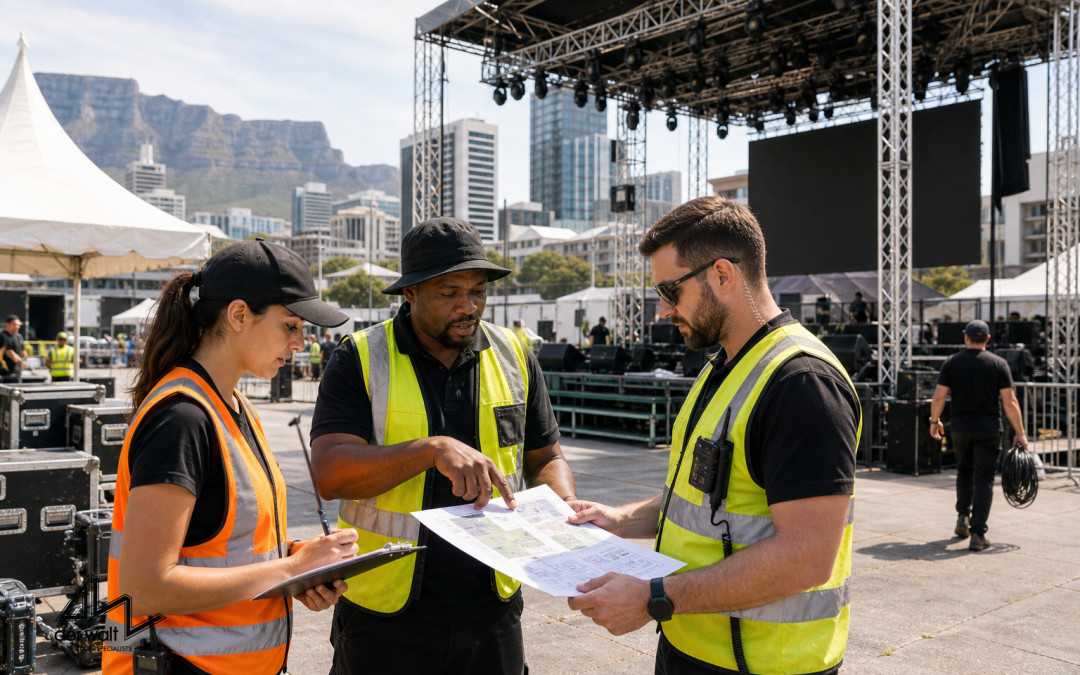
- Conduct a walk-through with security, venue staff, and suppliers to validate ingress/egress, load-in/load-out routes, and back-of-house safety.
Weather contingency planning: SA climate realities and practical mitigations
South Africa experiences diverse weather patterns. Summer thunderstorms can disrupt outdoor components; heat waves require hydration and shade; wind can affect large structures or rigging. Build your plan around reliable forecast data and create flexible contingencies: weather-proof coverings, shade structures, sidewalls for tents, rainwater drainage, and a ready backup plan for indoor or sheltered spaces. The South African Weather Service provides forecasts and weather alerts that you can use to trigger contingency actions in your production schedule (for example, delaying outdoor build until safer conditions are forecast).
Key actions to institutionalize weather readiness:
- Pre-purchase or rent weather-resistant equipment (tents, canopies, ballast, sidewalls) with proper anchoring for wind loads.
- Prepare cooling and hydration stations to mitigate heat-related risks for staff and attendees.
- Have a documented go/no-go protocol for outdoor activities when lightning or heavy rain is forecast.
Logistics, transport and access: moving people, PPE, power and contingency
Crowd flow, parking, pedestrian routes and public transport access can make or break an event experience. Map the site for audience ingress/egress, staff circulation, and supplier deliveries. Ensure clear signage, accessible routes, and coordination with local transport authorities for parking or road-use permissions. Power supply is a frequent risk factor: confirm electrical load requirements with suppliers, plan for backup generators with adequate fuel, and verify electrical safety compliance (including cabling and temporary distribution boards) in line with local standards and broader safety guidelines.
Budgeting and procurement: local suppliers, timelines and compliance
Procurement in South Africa involves navigating supplier lead times, delivery constraints and regulatory requirements. Build a procurement calendar that aligns with your permit approvals and build schedules. When sourcing locally, verify that suppliers have the necessary licenses, qualifications and insurance, and maintain a transparent process that records price comparisons, terms and conditions, and payment schedules. Where applicable, consider diverse procurement requirements such as B-BBEE considerations or other local policy frameworks that may influence vendor selection. Always confirm contract terms in writing and secure appropriate indemnities and insurances for venue, equipment, and staff.
Practical timelines and on-site playbooks
12–16 weeks out: foundations and approvals
Confirm venue terms, initial site assessment, and major permits. Lock key suppliers for core elements (power, stage, sound, lighting, rigging) and begin safety planning. Initiate discussions with traffic authorities or venue management about access, parking, and crowd management concepts. Begin insurance procurement and draft risk assessments for the event team and contractors.
8–12 weeks out: design, procure and coordinate
Develop the run of show (ROS) and staging plans; align with security and medical providers; confirm road closures if needed. Lock in generators and power distribution plans, and verify electrical safety measures with the electrical contractor and SABS standards where applicable. Finalize the site map, signage plan, and accessibility considerations. Start rehearsals or run-throughs for major production segments if possible.
4–6 weeks out: final confirmations
Finalize permits, liaise with the municipality and police or traffic authorities for site access and emergency routes. Confirm contingency plans for weather, power, and medical services. Complete staffing rosters and safety briefings; distribute incident response guidance to all contractors and staff. Begin last-mile procurement and confirm delivery windows for all equipment and materials.
On-site: execution with clarity and safety
During production, maintain clear communications across teams, with a single source of truth for the ROS and a core chain of command for incidents. Conduct a pre-show safety check, verify that crowd management plans are in place, and ensure that all temporary structures meet safety standards. Maintain a log of all incidents and corrective actions, and ensure that medical and security teams stay aligned with the incident command structure.
DERWALT capabilities: end-to-end experiential marketing and event production fit for South Africa
DERWALT specializes in experiential marketing, brand activations, and full-spectrum event production. Our approach covers strategy, production management, technical planning, stage and show production, logistics, supplier coordination, content creation and end-to-end delivery. We focus on practical, compliant execution within South Africa’s regulatory and operational context, helping brands and agencies deliver immersive experiences while managing risk, budgets and timelines. If your event requires a structured production plan, robust safety and risk management, and efficient vendor coordination, DERWALT offers a collaborative partner capable of coordinating across all disciplines to meet your objectives.
Sources
- Event Safety Guide (HSG195) — Health and Safety Executive
- South African Weather Service — South African Weather Service
- National Disaster Management Centre (NDMC) — National Disaster Management Centre
- South African Bureau of Standards (SABS) — SABS
Contact DERWALT
Ready to plan a compliant, safe and immersive activation or event? Reach out to DERWALT for strategic guidance, production management, and end-to-end event delivery that aligns with your brand goals and local South African requirements.
Recent Comments