How to Plan a Safe, On-Time Live Activation in South Africa
A practical, SA-focused guide for brands, agencies and venues to design, budget, and execute safe, compliant live activations. It covers weather planning, permits, transport, labour, procurement, and production timelines with realistic South African context.
South Africa’s events sector is vibrant and complex. A successful activation requires more than a great concept; it demands disciplined pre-production, robust safety planning, and reliable logistics. This guide covers practical steps for planning a live activation in the SA context—covering venue considerations, procurement, weather resiliency, transport, labour, safety, and production timelines. It’s written for brands, agencies, venues and production teams who need a clear framework to reduce risk, stay on schedule, and deliver experiences that resonate with local audiences.
Setting your activation scope and choosing the right venue
Start with a precise brief: target audience, engagement goals, and the type of activation (immersive, experiential, product demonstration, or test-drive). Translate this into picklists for venue capabilities, space, and technical capacity. In South Africa, venue selection often drives permit requirements, insurance needs, and access logistics, so involve the venue’s operations team early and request a written staging plan.
Venue considerations should include: load-in/load-out access, power supply, stage and rigging capacity, and sheltered areas for inclement weather. Coastal or open-air sites may require wind-rated structures and additional anchor points. If you’re evaluating large public activations, consider accessibility and crowd-flow design to minimize bottlenecks and ensure emergency egress remains clear at all times.
Permits, approvals and local rules
In South Africa, large events typically involve multiple permits and approvals. These can include municipal event permits, road-closure authorisations, health and safety compliance, noise control, and food or alcohol service permissions. Permit timelines vary by city and venue, so initiate conversations with the relevant authorities as soon as the concept is defined. Build a document trail that records permit applications, timelines, responsible contacts, and escalation points. Because processes differ across municipalities, assign a dedicated permit liaison in your production team to monitor progress and respond quickly to requests for additional information.
Budgeting, procurement and supplier selection
Budgeting for an activation in SA requires accounting for local labour costs, supplier reliability, and transport or fuel fluctuations. Local sourcing offers benefits in lead times, logistical simplicity, and community impact—so identify a shortlist of vetted local partners early (AV, rigging, staging, electrical, catering, security). Vet suppliers for safety records, insurance coverage, and proof of compliant electrical equipment. Build service-level agreements (SLAs) that specify delivery windows, responsibilities, and penalties for missed deadlines.
When planning procurement, factor in potential delays in equipment availability, especially for high-demand periods or peak seasons. Confirm coordination points between suppliers to avoid single points of failure (e.g., lighting, sound, and power generation). If your activation relies heavily on lighting or power, specify backup options and a contingency plan for load shedding scenarios common in many SA regions. Budget for on-site contingency funds (typically 5–10% of the total budget) to cover last-minute changes, emergency needs, or weather-related adjustments.
Weather planning, climate resilience and contingency measures
SA weather can be highly local and seasonal. Thunderstorms are common in summer in many parts of the country, while heat in the interior can stress attendees and equipment. Coastal venues may experience sea breezes that affect sound propagation and tent stability. Build a weather-robust plan that includes shelter options (tents with appropriate wind ratings, indoor fallback spaces), cooling strategies (mist fans, shade structures, hydration stations), and a clear decision-making protocol for weather-related disruptions. Leverage local forecasts from the South African Weather Service (SAWS) and maintain a dedicated weather monitor during the lead-in and event days. Having a pre-agreed threshold for postponement, relocation, or early wrap is essential to protect attendees, staff, and equipment.
Practical actions include inventorying weather-sensitive assets (sound rigs, lighting, video screens) and assigning on-site personnel to monitor wind speeds, rain arrival times, and temperature fluctuations. Ensure that all rigging points, tents, and stages have current calibration and safety documentation. Communicate expected weather impacts to partners and attendees through clear signage and pre-event briefings.
Transport, access, and logistics in South Africa
Transportation planning in SA must account for traffic patterns, public transport access, parking logistics, and the potential impact of load shedding on service providers. Coordinate with local authorities and venue management to create clear ingress/egress routes for attendees, staff, and vendors, and implement a dedicated logistics staging area that minimises overlaps between public access and production operations. In urban locations, plan for peak-hour constraints, road closures, and potential delays in courier and supplier deliveries.
Power reliability is a recurring challenge in some SA markets. Plan for on-site backup power (generators, battery systems) and ensure fuel storage complies with safety standards. For a multi-day activation, stage a separate energy plan that maps consumption, critical loads, and transition times between power sources. If your activation uses vehicles or mobile units, confirm access routes and parking zones, and establish a clear loading zone with time limits and security monitoring to minimise disruption for local residents and neighbouring businesses.
On-site production and safety: people, power and emergency management
On-site safety is non-negotiable. Develop a dynamic risk assessment that reflects the evolving site conditions, crowd numbers, and the specifics of the activation. Designate a safety officer or safety team with defined authority to pause production if hazards arise. Create an integrated emergency response plan that includes medical support, evacuation procedures, and communication protocols with local authorities. Ensure signage is clear, multilingual where appropriate, and that crowd management strategies keep egress routes free from obstruction.
Electrical safety is a core area of focus. Use certified, inspected electrical equipment and adhere to best practices for temporary power distribution. Separate high- and low-voltage circuits, use weatherproof connections, and maintain spill-control measures for any fuel-based generators. Where possible, obtain electrical equipment tested to SANS or equivalent standards, and maintain a robust fire-safety plan with extinguishers, fire-watch activity during critical moments, and staff trained in incident response.
Practical tips for safer, smoother production
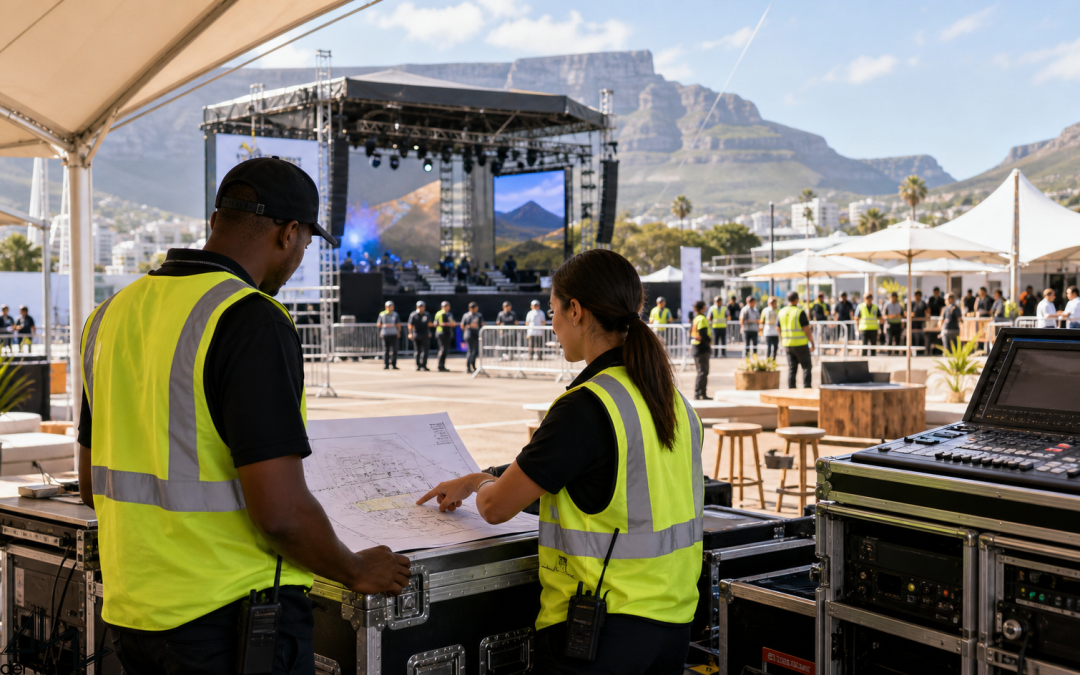
– Insist on a pre-event site walk with the venue, production partners, and security to confirm access points, tent locations, and casualty routes.
– Establish a single point of contact (SPOC) for each major vendor to reduce miscommunication and ensure timely decision-making.
– Implement a 24/7 on-site control room during load-in and showtime windows to monitor power, audio levels, video feeds, and safety alarms.
– Create a staged backup plan for critical moments—sound checks, lighting cues, and video playback—so the show can proceed with minimal disruption if a component fails.
Post-event wrap-up, data and continual improvement
After-action reviews are essential for future activations. Capture lessons learned from logistics, safety incidents (if any), and attendee feedback. Document what worked well and where times and costs deviated from the plan. Using a simple, shareable post-event report helps inform future productions, improves supplier performance, and strengthens stakeholder confidence. In SA, maintaining transparent records also supports regulatory compliance and future permit applications.
Sources
- Event safety and risk management for events — Health and Safety Executive (UK)
- South African Weather Service — SA Weather forecasting and climate data
- South African Bureau of Standards (SABS) — Standards and product safety
- Department of Employment and Labour (South Africa) — Occupational health and safety framework
Let DERWALT bring your activation to life
Ready to plan and execute your next experiential marketing, activation or end-to-end event production in South Africa? Contact DERWALT to discuss how our end-to-end capabilities in production management, logistics, safety planning, and content creation can help you deliver compelling, compliant and on-time experiences.
Recent Comments