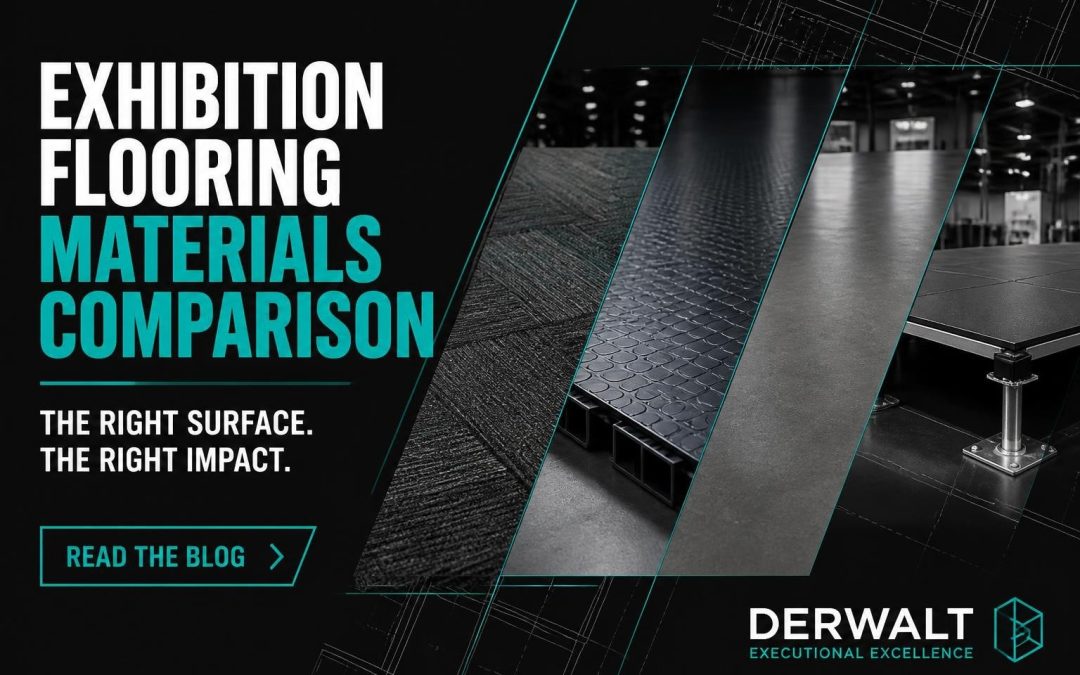
Exhibition flooring represents a critical yet often underestimated element in live event production and brand activation. While exhibitors focus on visual displays and messaging, the foundation beneath attendees' feet directly influences visitor comfort, brand perception, and overall event execution. Strategic flooring selection affects budget allocation, installation timelines, technical requirements, and post-event logistics. For production companies managing comprehensive brand experiences, understanding material properties, installation methodologies, and cost implications separates amateur execution from professional delivery.
Material Categories and Performance Characteristics
Exhibition flooring encompasses several distinct material categories, each offering specific performance profiles suited to different activation requirements. The selection process demands alignment between brand positioning, venue constraints, budget parameters, and technical specifications.
Carpet and Textile Solutions
Carpet remains the dominant choice for trade show productions across South Africa and international markets. Exhibition-grade carpet delivers sound absorption, visual warmth, and cost efficiency. Standard cord carpet provides basic coverage at entry-level pricing, while premium options include printed graphics, custom colors, and enhanced durability specifications.
Carpet tiles offer modular installation advantages:
- Quick deployment with interlocking or adhesive-backed systems
- Damage management through single-tile replacement
- Storage efficiency for repeated activations
- Pattern flexibility enabling branded designs
Traditional expo flooring options demonstrate the breadth of carpet specifications available, from basic coverage to high-traffic commercial grades. Material density, backing construction, and fiber composition directly impact performance longevity and maintenance requirements during multi-day exhibitions.
Rigid Surface Materials
Hard surface flooring creates premium positioning statements and accommodates specific technical requirements. Vinyl, laminate, and wood composite materials deliver visual impact but demand careful specification against venue regulations and load-bearing capacities.
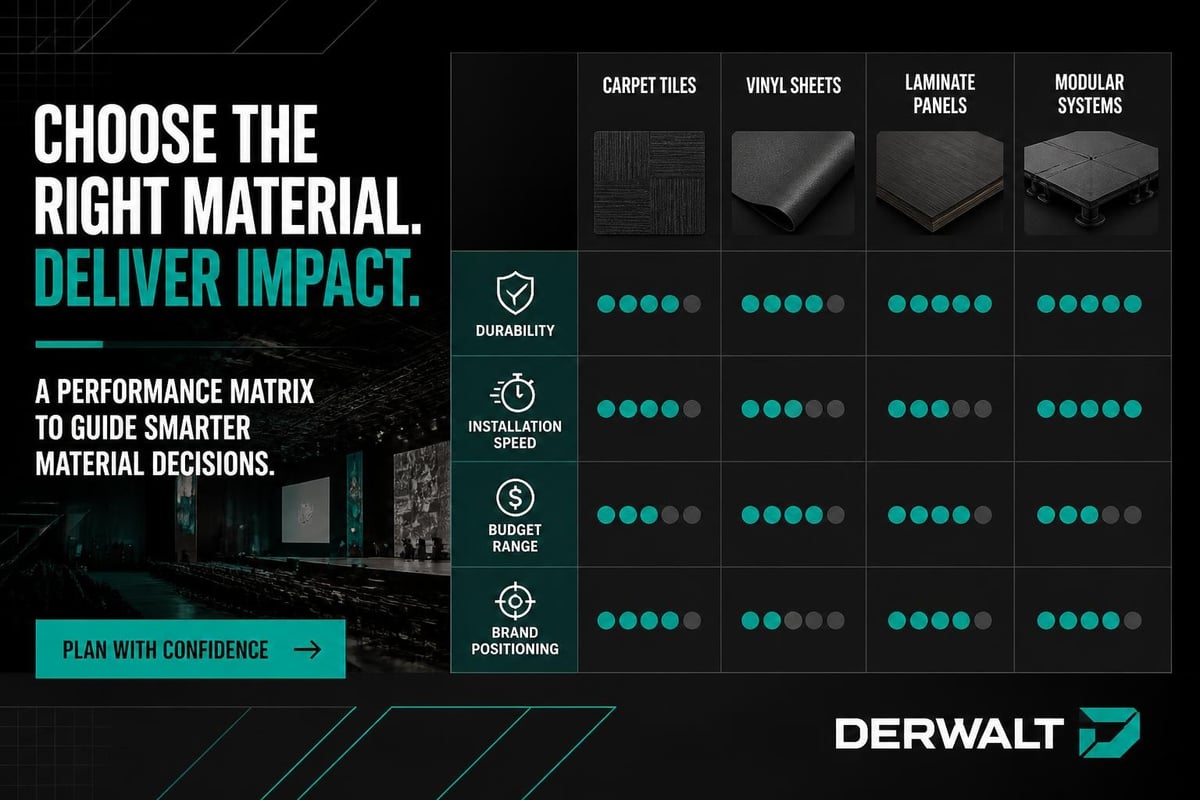
| Material Type | Installation Time | Durability Rating | Budget Category | Best Application |
|---|---|---|---|---|
| Cord Carpet | Fast | Medium | Economy | Large-scale coverage |
| Carpet Tiles | Fast | High | Mid-Range | Modular exhibitions |
| Vinyl Sheet | Medium | High | Mid-Range | Branded graphics |
| Laminate Panels | Slow | Very High | Premium | Executive spaces |
| Raised Systems | Slow | Very High | Premium | Cable management |
Understanding which materials work best for exhibition floors requires analyzing venue specifications, load requirements, and installation constraints before material commitment.
Modular and Interlocking Systems
Modular flooring systems deliver reusability advantages crucial for brands executing multiple activations annually. Interlocking tiles manufactured from rubber, foam, or engineered plastics offer tool-free installation and damage-resistant properties.
These systems excel in specific contexts:
- Outdoor activations requiring weather-resistant surfaces
- Product demonstrations needing cushioned standing areas
- High-traffic zones demanding impact absorption
- Multi-venue campaigns where transport efficiency matters
The variety of exhibition flooring materials available enables precise matching between activation objectives and surface performance requirements.
Strategic Planning Considerations
Exhibition flooring decisions cascade through budget allocation, timeline management, and technical coordination. Production intelligence demands early specification to prevent last-minute complications and cost overruns.
Budget Architecture
Flooring costs represent 8-15% of total exhibition budgets in typical activations. Strategic planners separate direct material costs from installation labor, transportation logistics, and disposal expenses.
Material procurement follows three pricing tiers. Economy carpet ranges from R45-R85 per square meter. Mid-range modular systems and branded carpets cost R120-R280 per square meter. Premium raised flooring and custom installations exceed R350 per square meter before installation labor.
Installation labor varies significantly by complexity. Basic carpet laying costs R15-R35 per square meter. Modular system assembly requires R40-R75 per square meter. Complex raised platforms with integrated cabling demand R150+ per square meter in skilled installation.
Timeline Integration
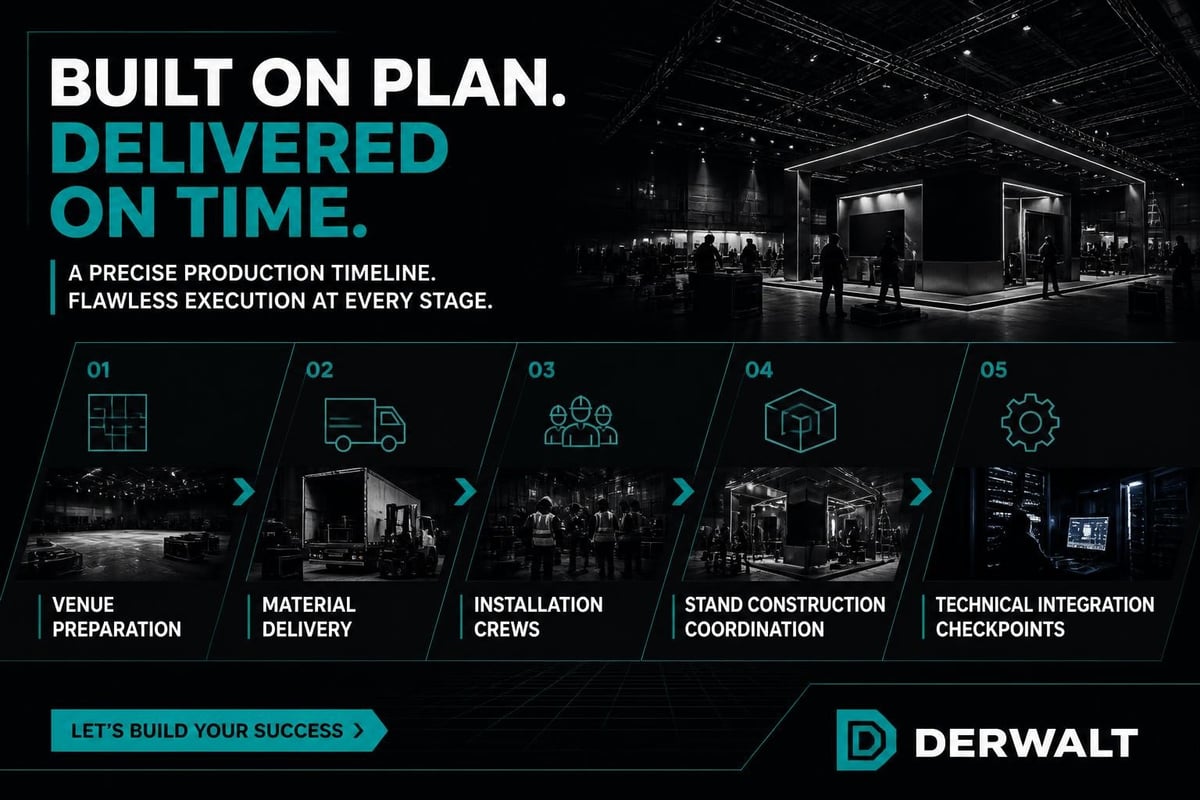
Flooring installation occupies critical path positions in successful event production schedules. Large exhibitions require 24-48 hours for complete floor coverage before stand construction begins.
Standard timeline sequences follow this pattern:
- Day 1: Venue access, surface preparation, material delivery
- Day 2: Primary flooring installation across main zones
- Day 3: Detail work, stand-specific flooring, technical integration
- Day 4: Quality inspection, corrections, handover to exhibitors
Compressed schedules demand modular systems enabling rapid deployment. Extended timelines accommodate complex installations requiring adhesive curing or platform construction.
Technical Specifications and Compliance
Exhibition flooring must satisfy venue regulations, fire safety standards, and accessibility requirements. South African venues enforce SANS 10400 compliance for public assembly spaces, affecting material flammability ratings and slip resistance specifications.
Floor coverings influence visitor impressions from first entry, making technical compliance and aesthetic quality equally important.
Fire safety ratings require documentation for all textile and foam-based materials. Look for Class A or Class 1 fire ratings on specification sheets. Venues typically mandate flame-retardant certificates before installation approval.
Load-bearing capacity becomes critical with raised flooring systems. Standard exhibition floors support 350-500 kg per square meter, but heavy machinery displays or multi-level constructions require structural calculations and reinforcement.
Accessibility standards dictate surface transitions, ramp gradients, and tactile indicators for visually impaired visitors. Non-slip ratings must meet wet and dry coefficient standards specified by venue operators.
Brand Positioning Through Surface Selection
Exhibition flooring communicates brand values before visitors engage with displays or staff. Surface choices signal budget commitment, attention to detail, and market positioning.
Visual Hierarchy and Perception
Floor covering choices reflect brand image through material quality, color selection, and installation precision. Entry-level cord carpet suggests budget constraints or temporary presence. Custom-printed carpets demonstrate brand investment and planning foresight. Raised platforms with integrated lighting signal premium positioning and technical sophistication.
Color psychology applies equally to horizontal surfaces. Dark flooring creates intimate, focused environments suited to technology demonstrations. Light surfaces expand perceived space and suit consumer product showcases. Branded color matching requires material samples tested under exhibition lighting conditions.
Sustainable Material Strategies
Environmental responsibility influences material selection for brands prioritizing sustainability messaging. Eco-friendly exhibition materials include recycled-content carpet tiles, cork surfaces, and bamboo composite panels.
Sustainable flooring strategies include:
- Reusable modular systems eliminating single-use waste
- Recycled content materials reducing virgin resource consumption
- Low-VOC adhesives improving indoor air quality
- Takeback programs ensuring post-event material recovery
Communicating sustainability efforts requires proper documentation and certification visibility during exhibitions.
Installation Methodology and Risk Management
Professional installation prevents common failures: seam separation, bubble formation, edge curling, and premature wear. Production management protocols establish quality standards and accountability structures.
Crew Qualification and Supervision
Exhibition flooring demands specialized skills distinct from residential or commercial installation. Temporary installation techniques, rapid deployment methods, and multi-material coordination require experienced crews. DERWALT builds comprehensive production systems that include supplier management, technical delivery, and risk mitigation-ensuring flooring installation integrates seamlessly with overall event experiences rather than operating as isolated elements.
Qualified installation teams demonstrate:
- Venue familiarity understanding specific floor conditions and restrictions
- Material expertise handling diverse products with appropriate techniques
- Timeline discipline meeting sequential installation deadlines
- Problem resolution addressing substrate issues and dimensional discrepancies
Quality Control Protocols
Professional production management implements inspection checkpoints throughout installation phases. Pre-installation substrate evaluation identifies moisture, slope, or surface defects requiring remediation. Mid-installation monitoring verifies seam alignment, adhesive coverage, and pattern matching. Final inspection confirms edge security, traffic flow functionality, and cleaning completion.
Quality control process showing substrate preparation verification, material installation monitoring, seam inspection procedures, and final acceptance criteria for exhibition flooring systems
Documentation includes photographic records of substrate conditions, material batch numbers, and completion timestamps. This evidence proves valuable for warranty claims, client reporting, and future activation planning.
Material Selection Framework
Choosing appropriate exhibition flooring requires systematic evaluation against multiple criteria weighted by activation priorities. Production intelligence frameworks structure these decisions through objective assessment rather than subjective preference.
Evaluation Criteria Matrix
| Criterion | Weight Factor | Evaluation Method | Decision Impact |
|---|---|---|---|
| Budget Constraint | High | Cost per sqm comparison | Material category selection |
| Installation Timeline | High | Labor hour calculation | System complexity limit |
| Reusability Requirement | Medium | Activation frequency analysis | Modular vs. disposable |
| Brand Positioning | Medium | Market perception research | Quality tier selection |
| Technical Integration | Medium | Cable/utility requirements | Raised vs. surface mount |
| Sustainability Goals | Low-Medium | Environmental certification | Material sourcing criteria |
Strategic planners apply weighted scoring to candidate materials, generating objective recommendations aligned with client priorities.
Common Selection Scenarios
Corporate exhibition stands typically specify mid-range carpet tiles or branded carpet for professional appearance at controlled budgets. These applications prioritize clean aesthetics, sound absorption, and brand color matching.
Product launch activations often require premium surfaces-raised flooring with integrated lighting, high-gloss laminates, or custom-printed vinyl-creating visual impact justifying elevated investment.
Multi-day consumer events demand durable, easy-clean surfaces capable of handling high traffic volumes. Carpet tiles with stain resistance treatments or sealed vinyl surfaces minimize maintenance requirements.
Outdoor brand activations necessitate weather-resistant materials: rubber interlocking tiles, treated wood decking, or specialized outdoor carpet with drainage backing.
Understanding how to select appropriate stand materials ensures flooring choices align with overall design intent and functional requirements.
Logistics and Post-Event Management
Exhibition flooring logistics extend beyond installation, encompassing storage, transportation, cleaning, and disposal or recovery. These operational elements directly affect total cost of ownership and environmental impact.
Storage and Transportation Planning
Reusable flooring systems require proper storage preventing damage between activations. Rolled carpet demands climate-controlled warehousing avoiding moisture absorption and mildew formation. Modular tiles need organized stacking systems maintaining edge integrity. Transportation logistics factor material weight, volume, and fragility into vehicle selection and handling procedures.
Material volume calculations prevent transportation shortfalls. Standard exhibition carpet ships in 2-meter width rolls, requiring length calculations based on stand dimensions plus 10% waste allowance. Tile systems ship in carton quantities requiring precise area calculations and packaging coordination.
Cleaning and Maintenance Protocols
Multi-day exhibitions require daily cleaning maintaining appearance and hygiene standards. Carpet vacuuming removes surface debris but high-traffic areas may need spot cleaning or extraction. Hard surfaces require appropriate cleaning agents avoiding damage to printed graphics or protective coatings.
Various flooring options present different maintenance requirements affecting operational planning and staffing.
End-of-Event Recovery
Post-event flooring removal follows reverse installation sequences with additional considerations for material condition assessment and disposal routing. Reusable materials undergo cleaning, damage evaluation, and warehouse return. Single-use materials require proper waste management-recycling where possible, landfill diversion programs, or donation to appropriate organizations.
Material recovery rates vary significantly by type. Quality carpet tiles achieve 70-85% reuse across multiple activations with proper handling. Basic cord carpet rarely justifies cleaning and storage costs, proceeding directly to disposal. Modular systems regularly achieve 95%+ reuse when properly maintained.
Advanced Applications and Emerging Technologies
Exhibition flooring continues evolving through technological integration and innovative material development. Forward-thinking production companies monitor these advances for competitive differentiation and enhanced brand experiences.
Integrated Technology Platforms
Raised flooring systems increasingly incorporate technical infrastructure beyond traditional cable management. LED lighting integration, sensor embedding, and interactive floor projection transform surfaces into engagement platforms.
Pressure-sensitive tiles detect foot traffic patterns, triggering content changes or data collection. Projection-mapped surfaces enable dynamic graphics synchronized with booth presentations. Embedded charging stations provide visitor amenity within floor structures.
Material Innovation Trends
Sustainable material development produces exhibition flooring from recycled ocean plastics, agricultural waste products, and bio-based polymers. These innovations address environmental concerns while maintaining performance standards.
Antimicrobial treatments applied to carpet and vinyl surfaces reduce pathogen transmission-a heightened concern following global health events. Self-cleaning coatings minimize maintenance requirements during extended exhibitions.
Modular customization platforms enable rapid color changes and graphic updates within reusable tile systems, extending material lifecycle while maintaining brand currency.
Cost Optimization Strategies
Strategic flooring management balances quality requirements against budget realities through systematic cost control and value engineering. Production intelligence identifies savings opportunities without compromising brand presentation or safety standards.
Value Engineering Approaches
Material substitution analysis evaluates equivalent-performance alternatives at lower price points. Premium carpet tiles may yield to mid-range options in low-visibility areas while maintaining specification in primary visitor zones. Phased installation reduces rental periods by installing only essential areas during initial setup, completing secondary zones closer to opening.
Supplier negotiation leverages volume commitments, multi-event contracts, and off-peak scheduling for preferential pricing. Regional material sourcing reduces transportation costs and enables faster emergency replacement.
Lifecycle Cost Analysis
Total flooring cost extends beyond initial procurement to include installation, maintenance, storage, and disposal across multiple activations. Reusable systems justify higher upfront investment through extended lifecycle value.
Break-even calculations determine activation frequency where modular systems surpass disposable materials economically. Typically, three or more annual activations favor investment in quality reusable flooring.
Depreciation planning spreads capital investment across expected usage cycles, accurately reflecting per-event costs in budget proposals and financial reporting.
Exhibition flooring decisions affect every dimension of brand activation success-from first impressions and visitor comfort to budget performance and environmental responsibility. Strategic material selection, professional installation management, and intelligent lifecycle planning separate exceptional activations from adequate executions. DERWALT delivers production intelligence that integrates flooring specification within comprehensive brand experience systems, ensuring every surface element supports strategic objectives while maintaining budget discipline and operational excellence.
Recent Comments