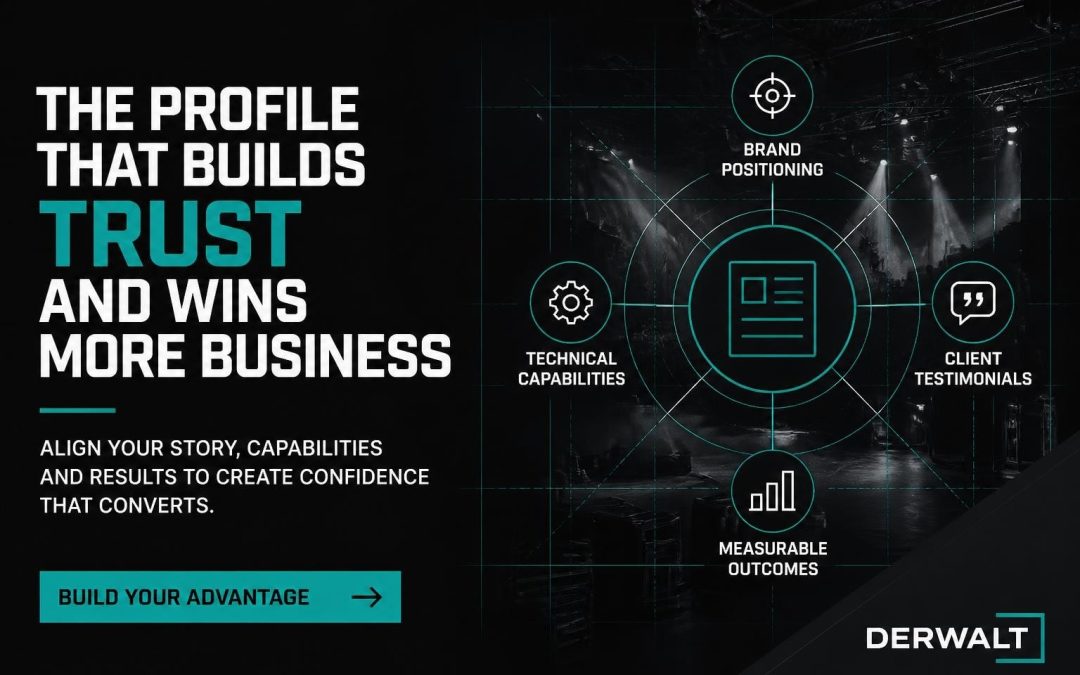
A well-structured event company profile serves as the operational bridge between your production capabilities and client confidence. In 2026, corporate decision-makers evaluating event partners demand more than glossy imagery and vague promises. They require evidence of production intelligence, technical competence, risk management frameworks, and proven delivery systems. Your event company profile must communicate strategic value while demonstrating the operational rigor that separates professional production houses from basic event suppliers.
Strategic Purpose of an Event Company Profile
An event company profile functions as a conversion document that validates your firm's ability to execute complex brand experiences. This is not a creative portfolio or a service menu. It is a strategic instrument that addresses client concerns about budget control, technical planning, supplier management, and on-site execution.
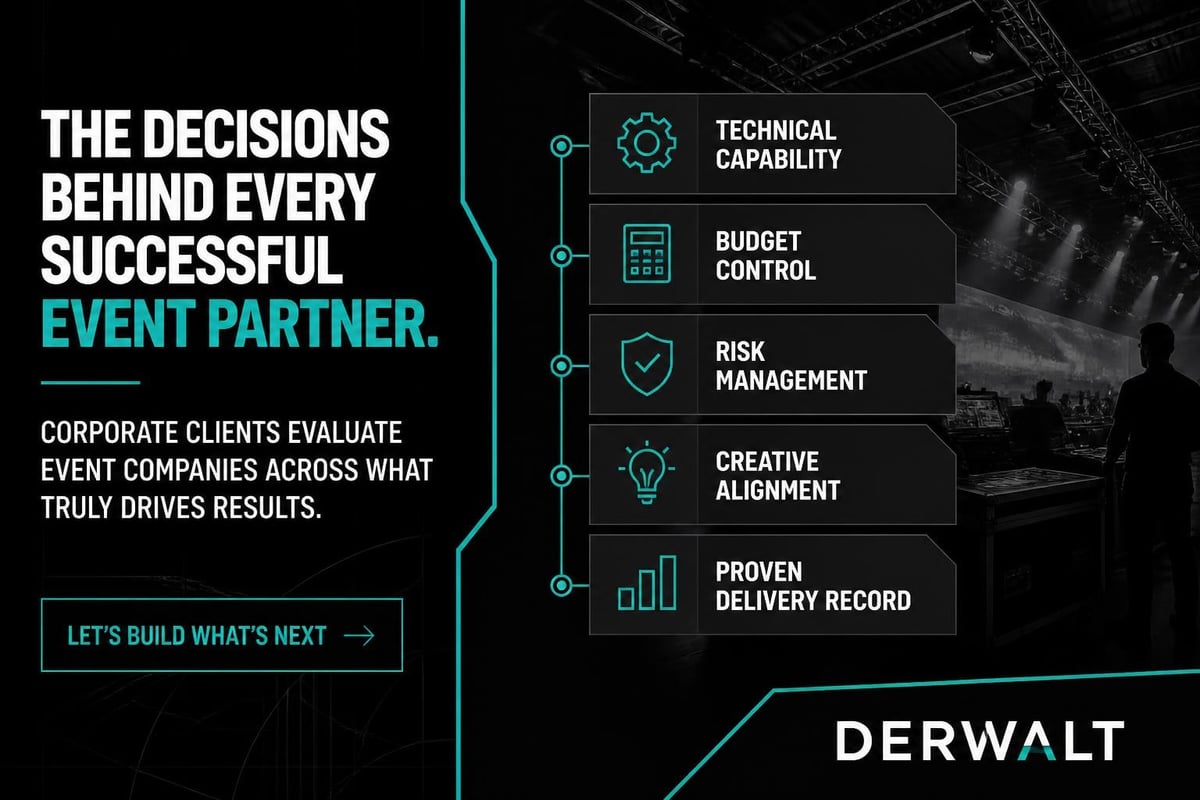
The profile must answer three critical questions: Can this company understand our brand objectives? Do they possess the technical infrastructure to deliver at scale? Will they protect our budget and mitigate operational risk? Every section of your profile should provide evidence that builds affirmative answers to these questions.
Positioning Beyond Generic Event Suppliers
Most event companies describe themselves using identical language: creative, passionate, innovative, full-service. These terms carry no strategic weight. Your event company profile must differentiate through specificity. Detail your production methodologies, explain your technical planning processes, and quantify your delivery record.
Clients evaluating multiple providers need concrete differentiators. A profile that outlines your supplier management protocols or budget control systems immediately signals operational maturity. This approach aligns with effective company profile strategies that prioritize business value over marketing language.
Core Components of a Strategic Event Company Profile
Building a credible event company profile requires systematic inclusion of specific elements that address client evaluation criteria. Each component must serve a strategic purpose in the decision-making process.
Company Overview and Market Position
Your opening section establishes credibility through clarity. State your core competency, geographic reach, and market position without embellishment. Specify whether you focus on brand activations, corporate events, product launches, or experiential marketing campaigns.
Include founding year, leadership structure, and operational scale. Clients need to assess whether your capacity matches their requirements. A three-person boutique agency and a 50-person production house both have valid market positions, but transparency about scale prevents mismatched expectations.
Technical Capabilities and Infrastructure
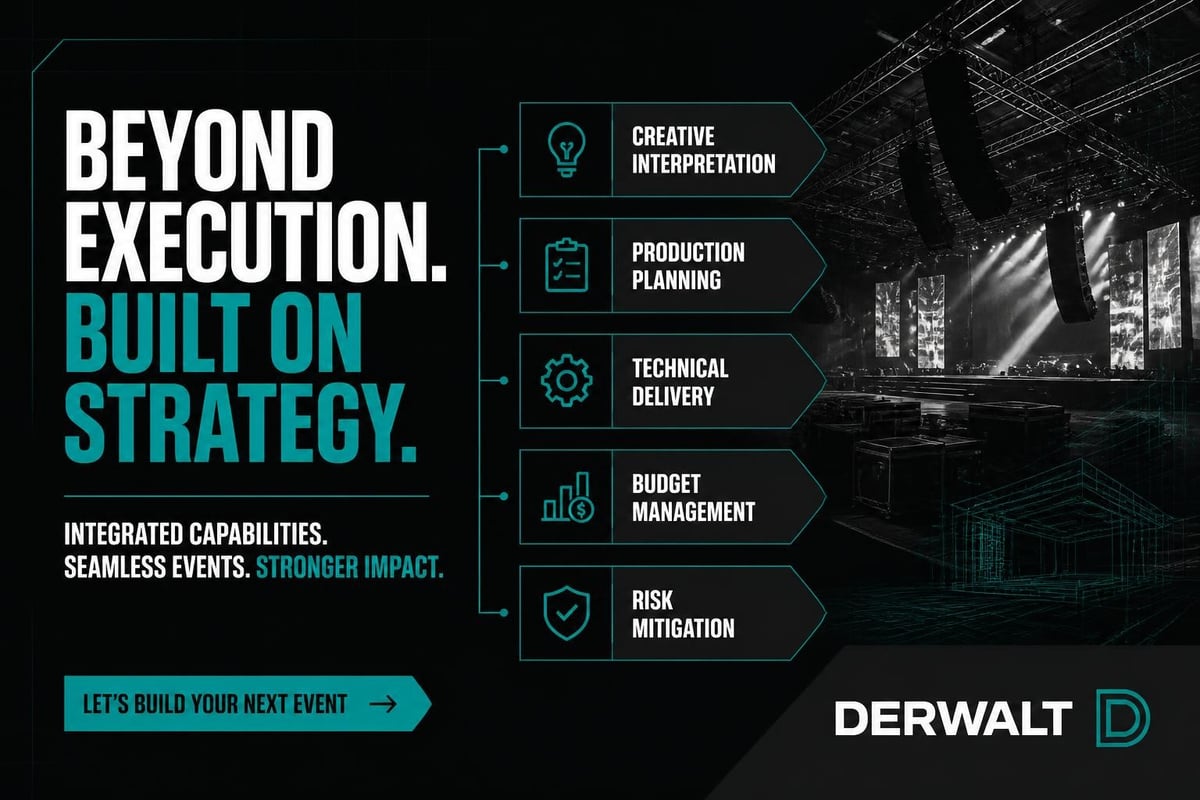
This section separates professional production companies from event coordinators. Detail your technical planning capabilities, equipment inventory, supplier network, and operational systems. Clients evaluating experiential marketing partners need to understand your production infrastructure.
| Capability Area | Strategic Value | Client Benefit |
|---|---|---|
| Production Management | End-to-end project oversight | Single accountability point |
| Technical Planning | Venue layouts, power, rigging | Risk reduction, safety compliance |
| Supplier Network | Vetted, reliable partners | Quality consistency, budget control |
| Creative Execution | Brand interpretation to build | Strategic alignment with objectives |
Include specific examples: "Our production team manages 120+ supplier relationships across lighting, audio, staging, rigging, and fabrication." Quantification builds confidence. Generic statements like "comprehensive services" provide no decision-making value.
Service Delivery Methodology
Describe how you execute projects from brief to post-event analysis. Clients need to understand your operational process before committing budgets. Break down your methodology into clear phases:
Discovery and Strategy: How you interpret brand objectives and define success metrics
Creative Development: Your process for translating strategy into experiential concepts
Production Planning: Technical drawings, timelines, budget allocation, and risk assessment
Execution Management: On-site coordination, contingency protocols, and real-time problem-solving
Post-Event Analysis: Measurement frameworks and performance reporting
This structured approach demonstrates production intelligence rather than reactive event coordination. Clients can visualize how your systems protect their investment and deliver measurable outcomes.
Building Credibility Through Evidence
An effective event company profile replaces claims with proof. Every assertion about capability must be supported by verifiable evidence that builds client confidence in your delivery record.
Case Studies and Project Portfolio
Select 3-5 representative projects that demonstrate range, scale, and problem-solving capacity. Each case study should follow a consistent structure:
- Client objective and challenge
- Strategic approach and creative solution
- Production complexity and technical requirements
- Execution details and risk management
- Measurable outcomes and client feedback
Focus on projects that reflect your target client profile. If you pursue corporate brand activations, showcase those experiences rather than social events. Your portfolio should signal market specialization and technical depth.
Client Testimonials and References
Third-party validation carries more weight than self-promotion. Include specific testimonials that address operational concerns: budget adherence, problem-solving under pressure, technical competence, and stakeholder management. Generic praise like "great to work with" provides minimal value.
Structure testimonials to highlight business outcomes: "DERWALT delivered our product launch 8% under budget while increasing attendee engagement by 34% compared to our previous event." Quantified results demonstrate accountability and performance measurement. You can review additional testimonials for reference examples.
Communicating Production Intelligence
Your event company profile must convey operational sophistication that distinguishes strategic production partners from tactical vendors. This requires translating technical competence into business language that resonates with decision-makers.
Budget Management and Financial Transparency
Address cost concerns proactively. Explain your budget development process, cost control mechanisms, and financial reporting protocols. Clients need confidence that you will protect their investment through disciplined financial management.
Detail how you structure quotes, manage contingencies, and track expenditures. Transparency about financial processes builds trust. Many event companies avoid budget discussions in their profiles, creating uncertainty that delays decisions.
Risk Mitigation and Compliance
Corporate clients face reputational risk with every brand experience. Your event company profile should detail your risk management framework: safety protocols, insurance coverage, contingency planning, and regulatory compliance.
Specify certifications, safety training programs, and backup systems. Mention your approach to weather contingencies, technical failures, and supplier defaults. This level of operational detail signals professional maturity and reduces client anxiety about execution risk. HubSpot’s company profile examples often highlight how businesses address client concerns directly.
Differentiating Through Strategic Frameworks
Generic event company profiles describe services. Strategic profiles explain systems. The distinction determines whether you compete on price or value.
Production Intelligence as a Core Offering
DERWALT's approach exemplifies this strategic positioning. Rather than listing services like "event management" or "creative design," we position ourselves as delivering production intelligence for brand experiences. This framework encompasses creative interpretation, strategic planning, budget control, technical delivery, supplier management, risk mitigation, on-site execution, and post-event learning.
This systematic approach transforms event production from a tactical service into a strategic capability. Clients don't simply hire vendors to execute tasks; they partner with organizations that build the operational systems behind successful brand experiences.
Integration Across Touchpoints
Your event company profile should demonstrate how you deliver through-the-line production capabilities. This means coordinating every element from concept development through final reporting within a unified system. Integration reduces friction, eliminates coordination gaps, and ensures consistent brand execution.
Explain how your teams collaborate across creative, technical, and operational functions. Clients value single-source accountability over fragmented vendor relationships that create management overhead and increase risk.
Format and Distribution Considerations
The structural design of your event company profile affects both comprehension and conversion rates. Strategic formatting enhances credibility and facilitates decision-making.
Document Structure and Accessibility
Create multiple profile formats for different contexts:
- Executive Summary (2 pages): Core capabilities, differentiation, and contact information for initial inquiries
- Comprehensive Profile (8-12 pages): Full capabilities, methodology, case studies, and technical detail for formal evaluations
- Digital Profile: Website-based version with multimedia elements, project galleries, and downloadable resources
- Presentation Deck: Visual format for capability presentations and pitch meetings
Each format should maintain consistent messaging while adapting content depth to the evaluation stage. Indeed’s company profile guidance emphasizes this multi-format approach for different stakeholder needs.
Visual Design and Brand Consistency
Your profile's visual presentation communicates operational standards. Professional design, consistent typography, high-quality photography, and clear information hierarchy signal attention to detail that clients expect in event execution.
Avoid template-heavy designs that look generic. Your event company profile should reflect the same creative standards you apply to client work. However, prioritize clarity over creativity. Decision-makers need information architecture that supports evaluation, not designs that obstruct comprehension.
Industry-Specific Profile Elements
Event production encompasses diverse specializations. Your event company profile must reflect your specific market position while addressing universal client concerns about delivery capability.
Sector Expertise and Specialization
If you focus on specific industries, demonstrate sector knowledge. Detail relevant regulations, audience expectations, and technical requirements unique to those markets. A company specializing in pharmaceutical product launches faces different compliance requirements than one producing music festivals.
Include industry certifications, partnership credentials, and specialized technical capabilities. Clients seeking concept creation for live events value partners who understand their specific operational context.
Geographic Coverage and Local Expertise
Specify your operational regions and local partnerships. Event production requires venue knowledge, supplier relationships, and regulatory familiarity specific to each market. Companies evaluating providers need clarity about geographic capabilities and local operational capacity.
For organizations like DERWALT operating across South African markets, detail your presence in Johannesburg, Cape Town, Durban, Pretoria, and other key cities. Explain how you maintain quality consistency across dispersed locations through standardized processes and vetted local partnerships.
Updating and Maintaining Your Profile
An event company profile is not a static document. Market conditions, capabilities, and client expectations evolve continuously. Regular updates maintain relevance and accuracy.
Performance Metrics and Evolution
Add recent projects quarterly to keep your profile current. Update technical capabilities as you expand infrastructure or develop new competencies. Refresh testimonials to reflect recent client experiences and emerging service areas.
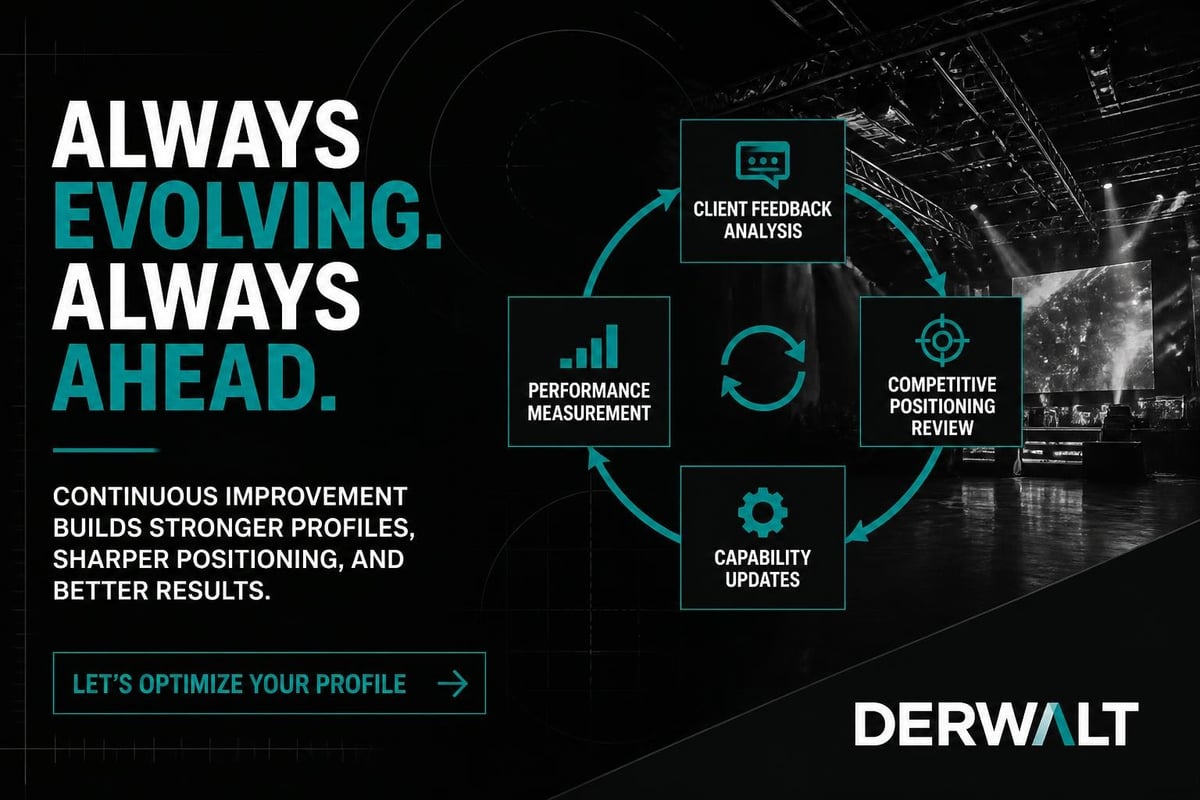
Track which profile sections generate the most client questions. If prospects consistently ask about specific capabilities not adequately covered, expand those sections. Your profile should evolve based on actual decision-making needs, not assumptions about what clients value.
Competitive Differentiation Analysis
Review competitor profiles annually to identify market positioning gaps. If every company in your market emphasizes creativity, consider positioning around operational reliability and budget discipline. Strategic differentiation emerges from addressing client needs competitors overlook.
Study event company profile examples across industries to identify formatting innovations and content strategies. However, avoid copying competitors. Your profile must reflect authentic capabilities and genuine market position.
Converting Profile Readers into Clients
Your event company profile serves acquisition objectives. Every element should guide readers toward engagement while building confidence in your delivery capability.
Clear Calls to Action
Include specific next steps throughout your profile. After case studies, invite readers to discuss similar challenges. Following capability descriptions, offer technical consultations or venue assessments. Make engagement frictionless by providing multiple contact methods and response time commitments.
End your profile with a clear invitation: "Schedule a production planning consultation to discuss your brand activation requirements." Vague closings like "contact us to learn more" lack strategic direction. Specify the value of engagement and the outcome of that first conversation.
Measurement and Optimization
Track profile performance through engagement metrics. Monitor which versions generate the most inquiries, which sections receive the most attention, and which case studies prompt follow-up discussions. Digital profiles enable A/B testing of messaging, structure, and calls to action.
Analyze the correlation between profile distribution and conversion rates. Determine whether comprehensive profiles or executive summaries generate higher-quality leads. Optimize based on actual performance data rather than subjective preferences about content or design.
Integration with Broader Marketing Systems
Your event company profile does not function in isolation. It connects to your broader business development ecosystem through strategic integration with digital platforms, sales processes, and client relationship systems.
Digital Ecosystem Alignment
Your profile should reinforce messages across your website, capability presentations, proposals, and client communications. Inconsistency between profile positioning and other touchpoints creates confusion and reduces credibility. Ensure that your core website messaging aligns with profile content.
Create content pathways that move readers from profile to deeper resources. Link to detailed service pages, project galleries, thought leadership content, and consultation scheduling. Your profile serves as a gateway to comprehensive information, not a standalone document.
Sales Process Integration
Train your business development team to leverage profile content during client conversations. Specific case studies, technical specifications, and methodology descriptions should inform proposal development and capability presentations. Your profile becomes a knowledge repository that ensures consistent, accurate representation across all client interactions.
Use profile updates as business development opportunities. When you add significant capabilities or complete notable projects, distribute updated profiles to existing clients and active prospects. Regular updates demonstrate growth and maintain top-of-mind awareness.
A strategic event company profile transforms how corporate clients perceive your organization, shifting evaluation from price comparison to value assessment. By emphasizing production intelligence, operational systems, and measurable outcomes rather than generic service descriptions, your profile builds the confidence required for high-value partnership decisions. DERWALT applies this philosophy across every client engagement, delivering 360º event production that integrates creative vision with operational rigor. Contact us to discuss how our production intelligence approach can elevate your next brand experience.
Recent Comments