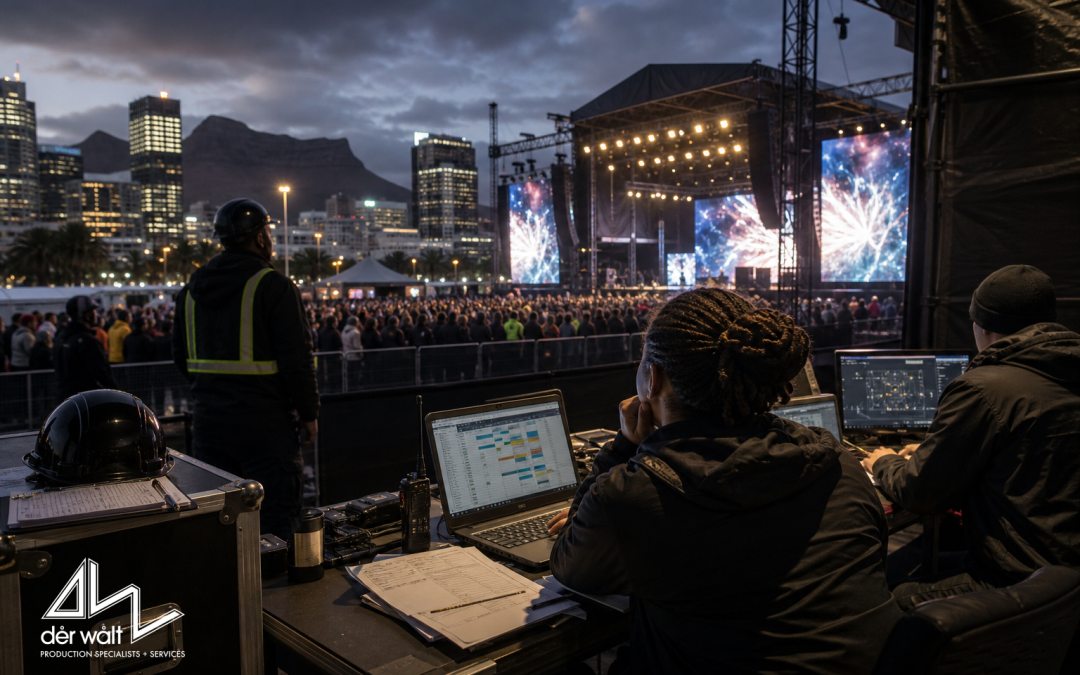
Delivering South Africa–Ready Experiential Activations on Tight Timelines for Brands
An actionable, SA-focused guide for brands, agencies and venues planning end-to-end experiential activations. Learn practical procurement, permits, weather contingency and transport considerations, with a clear playbook to keep projects on time and within budget.
Strategic planning for South Africa experiential activations
Every successful activation starts with a clearly defined objective, a realistic schedule and a transparent budget. In South Africa, where procurement cycles, permitting and logistics can add friction, it’s essential to align stakeholders early. Create a single, living master plan that captures scope, milestones, and decision owners. Map critical paths for production, creative development, supplier onboarding, and on-site execution, and build in a minimum 15–20% contingency for weather, transport delays and last‑minute changes. Be explicit about where you can flex on scope and where you must lock in commitments to avoid budget creep.
In practice, this means setting measurable success criteria (e.g., attendance targets, audience engagement metrics, and on-site conversion rates) and translating them into activity-level tasks. Use a phased approach: concept validation, design, procurement, build, rehearsals, and live execution. Each phase should have gate reviews with sign-off from the client and internal teams. This discipline reduces late surprises and helps teams adapt to South Africa’s diverse markets and logistics realities.
Clarifying local constraints and opportunities
Realistic planning requires acknowledging local constraints: venue capabilities, access windows for load-in, public transport availability, and labour norms. South Africa’s event landscape often involves multi-city coordination, which increases complexity but also expands reach. Build a regionalization mindset into your plan: identify core must-haves that travel with the activation, and components that can be localized to each site without compromising brand integrity. This balance supports faster procurement and smoother on-site delivery while preserving the activation’s consistency.
Local procurement and supplier coordination
Rely on a robust local vendor ecosystem to reduce lead times and support responsive on-site management. Start with a validated vendor map that includes AV providers, stage-build specialists, signage, rigging, power distribution, and on-site catering or experiential merchandise partners. In South Africa, payment terms, VAT handling, and local tax compliance can differ from international norms, so clear contracting and invoicing expectations are essential. Build preferred partnerships with a few trusted, BBBEE-aware suppliers to streamline procurement and improve reliability and diversity outcomes.
Practical steps you can implement:
- Request detailed lead times early (including signature approvals, artwork proofs, and permit-ready documentation).
- Use multi-quote comparisons for major line items, but lock in critical components (structural design, electrical safety, and primary AV) as early as possible.
- Set explicit acceptance criteria for each supplier deliverable and embed penalties or credits for late or non-conforming work.
Transparency around payment schedules helps cash flow for smaller SA suppliers and reduces friction during critical build phases. Factor in potential VAT/VAT-201 changes and ensure purchase orders (POs) align with supplier terms. If your activation travels between cities, consider a single-region procurement lead to coordinate multiple site orders and ensure consistent technical standards across venues.
Permits, licensing and risk management
Public events in SA require careful regulatory planning. This typically involves venue-specific approvals, crowd management plans, noise control compliance, and potential road closure permissions when you’re working near public spaces or major arterial routes. Engage early with the venue, municipal authorities, and security partners to establish a compliance map. A formal, site-specific risk assessment is not optional—it’s a live document that should be updated as plans evolve.
Key safety levers include: a dedicated safety officer on-site, clear emergency evacuation routes, first aid stations staffed by qualified personnel, and robust communication protocols (radio discipline, muster points, and incident reporting). Verify electrical systems against South African standards and ensure all temporary installations meet structural and fire-safety requirements. This is also a good moment to pre‑evaluate crowd flow dynamics, ingress/egress points, and accessibility for people with disabilities.
While these guidelines are generally applicable, always verify with the relevant authorities and venue management to confirm current requirements and any site-specific conditions. Industry guidelines from reputable bodies can inform your approach, but local verification is essential for SA events.
Venue selection and transport planning in SA cities
Choosing the right venue is a cornerstone of a successful activation. Consider not only capacity, acoustic comfort and backstage access, but also proximity to highways, public transport hubs, and emergency services. In densely populated SA cities, traffic congestion and limited loading zones can derail schedules. Build a transport plan that includes staggered worker arrivals, dedicated parking for crews and vendors, and clear routes for delivery vehicles to minimize on-site conflicts.
For outdoor activations, factor in wind speeds, shade, and sun exposure. A windy afternoon can impact rigging and sound design, while heat can degrade battery life and content playback. Always confirm weather-related contingencies with both the venue and production partners, and have a back-up plan for data protection and AV redundancy.
Budget-conscious planners should also consider venue-friendly options that reduce transport and accommodation costs. Multi-site activations can benefit from a central production hub and modular content that travels well between venues. When possible, select venues that provide integrated services—power, rigging, and loading docks—to streamline build schedules and minimize the risk of miscommunication across disparate suppliers.
Weather and contingency planning
South Africa’s climate is diverse, with summer thunderstorms and seasonal heat in many regions. Weather uncertainty can impact outdoor stages, LED screens, and battery-dependent systems. Leverage the South African Weather Service (SAWS) for credible, site-specific forecasts, and establish a formal weather-contingency plan. Practical options include weather-resilient stage configurations, waterproof covers for equipment, a rapid-stage tarpaulin deployment protocol, and backup power arrangements to protect critical systems during a weather event.
Build a decision tree for weather events: thresholds for postponement, partial cancellations, or full cancellation. Communicate these thresholds with clients and venue management, so you avoid ad-hoc decisions that disrupt timelines and budgets. Documented contingency plans also support smoother supplier renegotiations should weather force changes in scope or dates.
Production timeline and budget management
With timing and cost under control, you enhance the likelihood of a successful activation. A practical timeline breaks down to pre-production, procurement, build, rehearsals, and live performance. Establish procurement milestones aligned with supplier lead times, and assign owners for each deliverable. Use visual dashboards to monitor progress and flag potential delays early. In SA, it’s prudent to include additional lead time for permits, image rights clearance for content, and potential travel between cities.
Budget discipline is equally important. Create a core budget with line items for design, production equipment, staging, sound, lighting, video, content creation, staffing, travel, and contingency. In South Africa, consider local wage norms, daily allowances for crews, and accommodation costs when assignments require overnight stays away from home base. A practical approach is to set a flexible contingency, usually 10–20%, applied to high-risk items such as permit fees, transport surcharges, and last‑minute technical changes.
Documentation matters. Maintain clear scopes of work (SOWs), defined acceptance criteria, and sign-off points. Align payment milestones with delivery milestones to support cash flow for local suppliers, and ensure VAT and tax compliance across jurisdictions where your activation travels.
DERWALT capabilities for end-to-end delivery
DERWALT operates with a philosophy of end-to-end event delivery, combining strategic planning, production management, and on-site execution. Our capabilities cover activation strategy, technical planning, stage and show production, logistics, supplier coordination, content creation and full event delivery. In practice, that means acting as a single point of responsibility to harmonize creative intent with production reality, managing risk, and delivering a seamless experience for audiences and brands alike. While this article outlines practical steps, the specifics of any engagement depend on project scope, venue constraints, and client objectives. We emphasise practical collaboration with local partners to ensure feasibility and reliability in the South African context.
Sources
- South African Weather Service — Weather planning and alerts
- South African Bureau of Standards (SABS) — Electrical safety and standards
- Department of Employment and Labour — Occupational Health and Safety (OHSA) and workplace safety guidance
- Health and Safety Executive (UK) – Event safety — International event-safety guidance
- Event Safety Alliance — Global event-safety best practices
Contact DERWALT for experiential marketing and event-production support
If you’re planning a South Africa–based activation and want a partner with end-to-end capabilities in experiential marketing, activation strategy, production management, and on-site delivery, reach out to DERWALT. We tailor scalable solutions to fit your objectives, timeline, and budget, working with trusted local suppliers and venues to ensure a smooth, compliant, and impactful activation from concept to completion.
Recent Comments