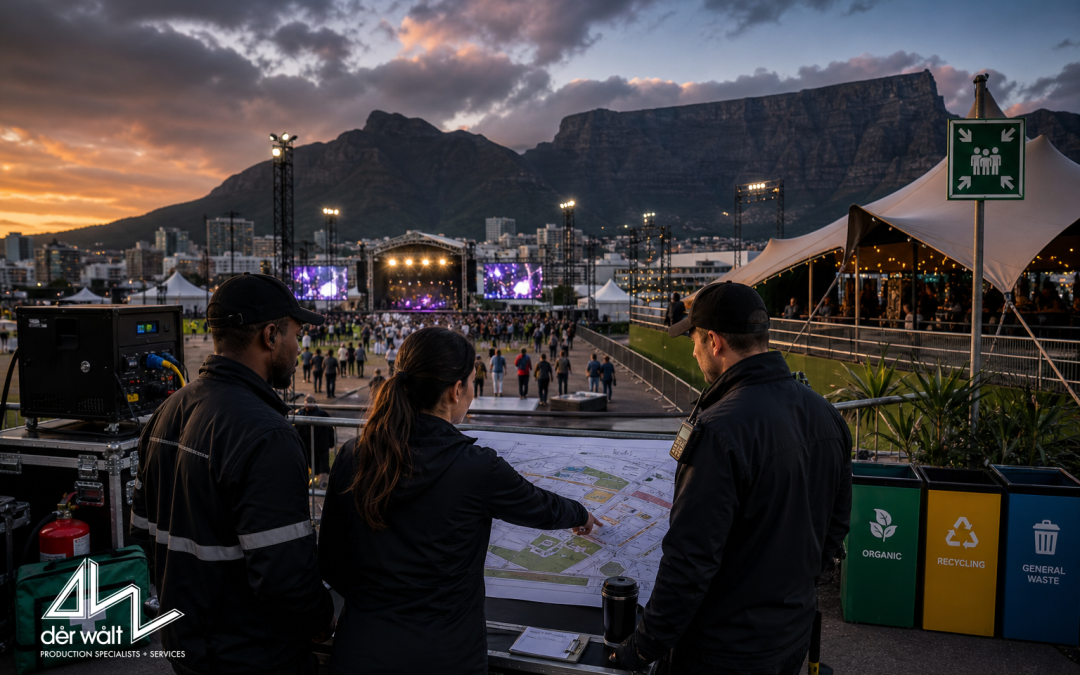
Plan a Safe, Sustainable Outdoor Brand Activation in South Africa
A practical, step-by-step guide for brands and agencies delivering outdoor activations in South Africa. Learn to balance safety, permits, power, sustainability, and logistics for a successful live experience.
Primary search intent: How to plan a safe, sustainable outdoor brand activation in South Africa with practical steps, local considerations and a clear checklist.
Direct answer: Begin with a formal risk assessment, secure permits, and craft a sustainability and power plan. Then design a safety-first workflow, including site layout, crowd management, emergency procedures, and clear responsibilities.
Planning foundation: risk assessment, permits, and governance
- Risk assessment and method statements: conduct a formal hazard analysis identifying crowd flow, equipment placement, electricity, fire safety, weather exposure, and access for emergency services.
- Event safety plan: translate the risk assessment into an on-site plan with defined controls, emergency procedures, medical presence, and communications protocols.
- Roles and responsibilities: appoint an Event Safety Manager (or equivalent), a Production Manager, Security lead, and a Medical lead. Ensure all team members are briefed and have a clear chain of command.
- Permits and permissions: verify street-closure requirements, noise and entertainment permits, liquor licensing where applicable, and any venue-specific constraints (coverage hours, load-in/load-out times, parking restrictions).
Site design, crowd management, and safety essentials
- Ingress/egress and crowd pathways: design two or more clearly marked entry/exit points, with dedicated routes for staff, vendors, and emergency services.
- Accessibility: ensure wheelchair-accessible routes, viewing platforms, and clear sightlines for signage and screens.
- Emergency access: maintain unobstructed lanes for ambulances, fire services, and security responders; plan for sheltering or evacuation if needed.
- First aid and medical readiness: position first-aid stations in visible, staffed locations; ensure staff know where to escalate injuries.
- Electrical and fire safety: segregate power equipment, maintain safe clearances around generators, and have fire extinguishers and spill kits on site.
Power, energy and sustainability planning
- Power strategy: determine whether you can leverage grid power, rely on generators, or combine both. Create a load schedule with peak and standby requirements, and identify critical loads (lights, AV, sound, communication devices).
- Generator safety: place generators away from attendees, with secure fuel storage, proper ventilation, and spill containment. Train staff on startup/shutdown procedures and refueling safety.
- Energy efficiency: opt for LED lighting, low-watt AV, and smart power management to reduce consumption and heat. Consider solar charging for back-up devices or smaller deployments.
- Waste and materials: implement a waste management plan with clearly labeled recycling and compost streams. Use reusable or recyclable branding materials where possible to reduce landfill impact.
Sustainability as a performance metric
Sustainability isn’t a checkbox—treat it as a core performance metric. It affects your budget, timeline, and the audience’s perception of the brand.
- Procurement with purpose: source locally where feasible to support local suppliers and reduce transport miles. Verify supplier certifications for safety and environmental standards.
- Waste minimization: provide clearly marked bins, place signage that explains sorting, and coordinate with waste contractors on removal timing and processing streams.
- Brand materials: prefer reusable structures, modular staging, and non-toxic furnishings. Avoid single-use plastics, and plan for end-of-life disposal or recycling of props and fixtures.
- Transport plans: promote public transport, shuttle services, or carpooling; stagger crew arrivals to reduce traffic impact and emissions.
Weather contingency and resilience
Weather is a constant variable in SA. South Africa’s diverse climates—from coastal fog to inland heat and thunderstorms—demand robust contingency planning.
- Weather monitoring: establish a live monitoring plan with SAWS (South African Weather Service) forecasts and alerts. Predefine trigger thresholds for delaying, pausing, or evacuating the event.
- Open-air structures: design marquees and tents with adequate wind loads and anchoring; have wind-rated alternatives in case of severe weather warnings.
- Heat management: provide shade, hydration stations, misting options, and cooling zones to protect attendees and staff from heat stress.
- Evacuation and shelter: prepare clearly marked assembly points and a fast, safe shelter option if weather deteriorates or danger arises.
Vendor and supplier coordination
Effective coordination with trusted partners ensures safety, quality, and on-time delivery. Build clear contracts and on-site communication plans with all vendors and contractors.
- Contract clarity: outline safety responsibilities, delivery windows, check-in processes, compliance obligations, and who signs off on installation and removal.
- On-site communication: implement a simple radio/phone protocol, designated briefing times, and a single point of contact during load-in and showtime.
- Local partnerships: engage South African suppliers for power, lighting, sound, staging, and security where possible to support local industry and reduce lead times.
Timeline, budgeting, and contingency planning
Realistic timelines and budgets reduce the risk of last-minute changes. Build in contingency for permits, weather-related delays, and supply chain interruptions—and document every assumption in a master budget and schedule.
- Phased milestones: align procurement, permitting, design sign-offs, and crew training with clearly defined dates and owners.
- Contingency reserve: allocate a reasonable contingency for safety enhancements, equipment replacements, and weather-related adjustments.
- Documentation: keep a single source of truth for approvals, changes, and risk mitigation actions accessible to the core team.
Common mistakes and practical considerations
- Underestimating permits and approvals: permit processes can take longer than anticipated, especially for road closures or large crowd events.
- Inadequate weather planning: lack of contingency can force impulsive decisions that compromise safety or budget.
- Ignoring sustainability: branded materials often end up as waste; plan for reuse, recycling, and responsible disposal.
- Gaps in on-site communications: without a clear chain of command, incidents can escalate quickly.
- Overreliance on paid power: if generator power fails, it can disrupt the entire activation; consider energy redundancy and fuel management.
FAQ
What permits are typically required for outdoor activations in South Africa?
How can I reduce waste at large events?
What should I consider for power supply and generator safety?
How do I plan for crowd safety and emergency response?
What is ISO 20121 and why is it relevant?
Sources
- ISO 20121: Sustainable events management — International Organization for Standardization
- South African Weather Service — SAWS
- Event safety guidance — Health and Safety Executive (UK)
- IAVM – International Association of Venue Managers — Venue and event safety best practices
DERWALT CTA
Ready to deliver a safe, sustainable outdoor activation? Contact DERWALT to discuss your event strategy, production planning, and end-to-end activation capabilities. We help brands and agencies turn ambitious concepts into exceptional live experiences.
Recent Comments