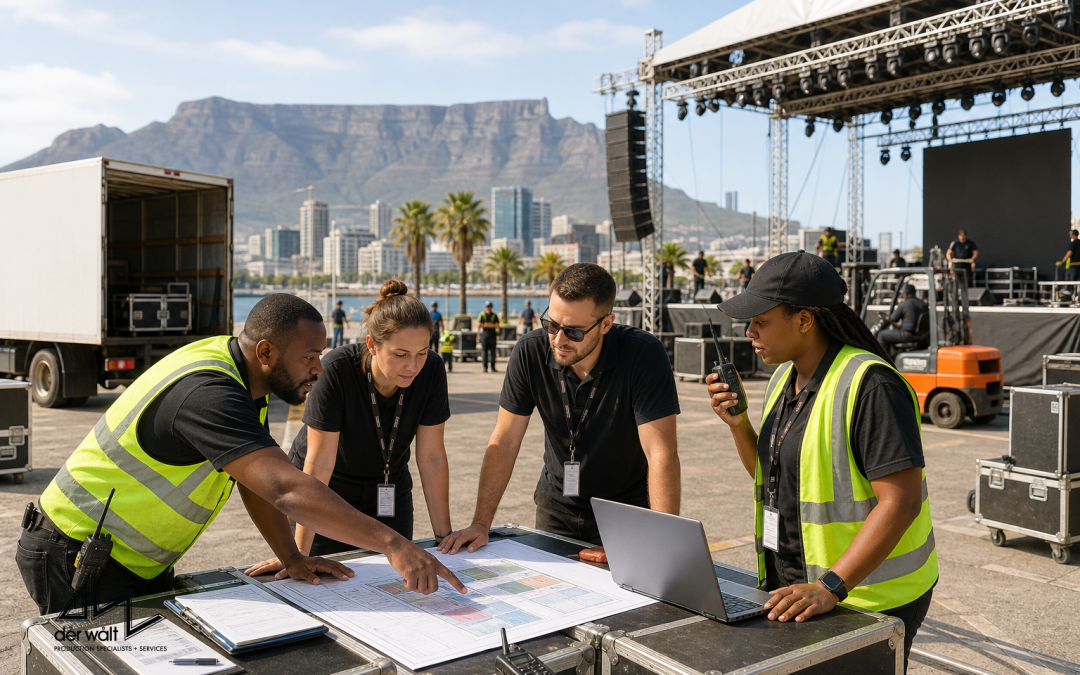
How to Plan Safe, Efficient Logistics for Large-Scale Experiential Events in South Africa
A practical, SA‑specific guide to structuring logistics for large experiential activations. It covers risk assessments, permits, weather planning, transport, supplier coordination, safety, and sustainability to keep events on schedule and within budget.
The primary search intent is: how to build a comprehensive, compliant logistics plan for large experiential events in South Africa that minimizes risk, stays on schedule, and manages costs effectively. A practical answer: start with a formal risk assessment, couple it with SA‑context planning (weather, road networks, permits, labour), and codify a live operations playbook that covers transport, access, safety, and supplier coordination.
What a robust SA logistics plan looks like in practice
A robust plan combines risk assessment, operational design, and a clear line of sight across all moving parts. In South Africa, that means integrating local weather patterns, road infrastructure, labour considerations, and permit requirements into a single, trackable plan. It also means aligning with international standards for safety and health management while staying compliant with regional regulations.
Key components of a practical logistics framework
1) Formal risk assessment anchored in safety standards
Begin with a documented risk assessment that identifies hazards across inception, build, on‑site operations, and break‑down. Use a health and safety management framework such as ISO 45001 to structure controls, accountability, and continuous improvement. The goal is to reduce risk to an acceptable level and to have mitigation steps ready for every major activity.
2) Weather and climate contingency planning
South Africa’s weather can be variable, especially in shoulder seasons. Build contingencies for heat, rain, wind, and lightning. Use local weather services (for example, the South African Weather Service) to inform decision points, such as load‑in timing, outdoor sound levels, and sheltering plans. Document alternatives for power, seating, and crowd movement if conditions change.
3) Permits, road closures and local approvals
Large activations typically require permissions from local authorities, traffic management, and, where relevant, security services. Map required permits early and assign a permit liaison who tracks approvals, deadlines, and conditions. Failing to secure or mismanaging permits is a common risk area that can delay or derail a project.
4) Transport, access, and crowd-flow design
Design routes for entry, exit, vehicle staging, and service access that minimize bottlenecks. Create separate lanes or zones for VIPs, press, vendors, and emergency access. In urban SA environments, align with traffic police and municipal by‑laws, and plan for peak times to avoid gridlock.
5) Supplier coordination and procurement timing
Lock critical vendors early and establish a single, current master contact list with on‑site responsibilities. Use tiered lead times for equipment, power, sound, and lighting. Plan for on‑site storage, delivery windows, and contingency replacements to avoid last‑minute substitutions.
6) On‑site safety management and incident response
Assign a dedicated safety lead and establish a site safety plan, daily safety briefings, and an incident command structure. Ensure medical staffing, first‑aid stations, and a clear reporting process. Align with ISO 45001 principles to maintain a safe working environment for staff and contractors.
7) Communications, control room, and show-day operations
Set up a central operations/control room with defined channels, roles, and escalation paths. Include real‑time updates on weather, transport, power, and crowd movement. A single source of truth speeds decision‑making and reduces miscommunication during critical moments.
8) Sustainability, power and noise management
Plan power reliability with generator redundancy and fuel logistics, or incorporate sustainable alternatives where feasible. Implement waste management and recycling streams, and monitor noise impact in line with local regulations and community expectations.
9) Budget, timeline, and change control
Create a phased timeline with critical path milestones and explicit budget buffers for risk events (weather delays, permit hold‑ups, supplier lead times). Establish a formal change control process so scope changes are approved and documented.
Step-by-step practical guide for a typical SA activation
- Define objectives and risk tolerance for the activation.
- Develop a logistics map: site layout, access points, service corridors, and staging areas.
- Draft a realistic schedule with build, rehearsal, event, and strike timelines.
- Identify required permits and begin approval processes early; assign a primary liaison.
- Design traffic and crowd management plans, with clear entry/exit routes and emergency egress.
- Confirm all critical suppliers; establish on‑site contact roles and delivery windows.
- Prepare a site safety plan, medical response, and incident reporting workflow.
- Set up a control room, communication protocols, and a run‑of‑show (ROS) document.
- Plan power, backup power, and sustainability measures; create a waste plan.
- Test, rehearse, and refine: run through load‑in, show cues, and emergency drills.
Practical tips to avoid common pitfalls
- Underestimate lead times for gear and permissions—lock in dates early and build in buffer.
- Neglect weather contingency—plan outdoor contingencies and shelter options from day one.
- Overlook community impact—coordinate with neighbours and local residents to minimise disruption.
- Skip formal safety documentation—document controls, training, and incident reporting to satisfy auditors.
- Fail to align all stakeholders—establish a governance structure with clear authority and escalation paths.
How to measure success in logistics planning
Use a mix of leading and lagging indicators. Leading measures include on‑time deliveries, adherence to access plans, and safety drill completion. Lagging indicators include actual incident counts, schedule slippage, budget variance, and post‑event debrief outcomes. A post‑mortem should capture lessons learned and feed into the next cycle of planning.
FAQ
How early should logistics planning begin for large SA events?
As early as possible in the project lifecycle, ideally during concept development and the early design phase, with a formal logistics plan established before venue booking.
What permits are typically required for SA events?
Requirements vary by municipality and event type, but commonly include venue approvals, traffic management, public safety, and sometimes health and environmental clearances. A dedicated permit liaison helps manage this process.
How can I manage transport effectively in busy South African cities?
Designate separate routes and staging areas for deliveries, staff, and attendees; coordinate with local authorities for road closures or restrictions; and build buffer times into the schedule to accommodate typical urban traffic.
How do I ensure safety and compliance with international standards in SA?
Adopt a Safety Management System aligned with ISO 45001 and implement a site safety plan, trained safety officers, incident reporting, and regular drills to meet both local requirements and international best practices.
What role does weather play in planning and how do we respond?
Weather drives timing, power needs, and shelter strategies. Use reliable local forecasts, establish trigger points for mode changes (e.g., moving indoors, delaying build), and ensure alternate power and cover are in place.
Sources
- ISO 45001: Occupational Health and Safety Management Systems — International Organization for Standardization
- Event Safety Guide — UK Health and Safety Executive
- Mass Gatherings Toolkit — World Health Organization
- National Disaster Management Centre — South Africa
- South African Weather Service — SA Government
- NFPA 101: Life Safety Code — National Fire Protection Association
Ready to elevate your experiential program?
DERWALT provides end-to-end event production, production management, logistics, supplier coordination and on-site technical planning to help brands and agencies deliver safe, seamless experiences. Reach out to explore how we can support your next activation.
Take the next step with DERWALT
For expert planning, logistics and production management that align with South African realities and global best practices, contact DERWALT to discuss your experiential marketing, activation or event production needs.
Recent Comments