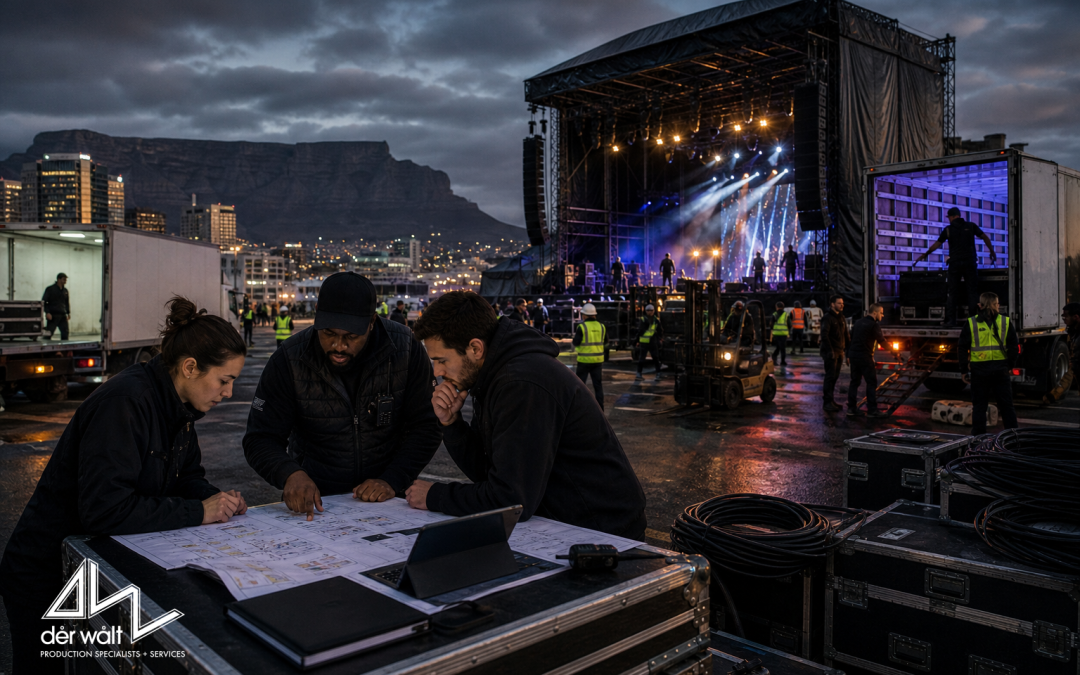
A Practical Logistics Playbook for Large-Scale Brand Activations in South Africa
The primary aim is clear: plan a phased, risk-aware logistics strategy that aligns permits, transport, venue access, safety, and sustainability for South African activations. This guide delivers a concrete, field-ready approach.
The fastest way to manage complex activations is to implement a phased logistics plan, anchored by a single source of truth: shared calendars, a central risk register, and a local supplier map that accounts for SA-specific permits, transport, and weather.
Context: Why SA-specific logistics matter for large activations
South Africa presents a dynamic mix of urban and rural venues, variable weather, and diverse local supply chains. Permitting processes, road-access constraints, and public-safety considerations can vary by city, municipality, and even street. A successful activation anticipates these realities from day one, reducing last-minute delays and cost overruns.
Beyond mechanics, the experience matters. In many SA activations, access windows, loading zones, and courier routes interact with peak traffic, commuter patterns, and public transport schedules. Aligning production schedules with local realities helps protect timelines and budgets while improving audience experience.
Practical guidance: A phased logistics playbook
Phase 1 — Define scope, success metrics and governance
- Clarify objectives, audience size, duration, and footprint (stage size, power load, number of exhibitors, etc.).
- Establish a single governance model: a core deliverables list, a master budget, and a single “source of truth” (SSoT) for calendars, risk registers, and supplier contacts.
- Assign roles with clear decision rights. In SA, designate a local lead for permitting, traffic coordination and safety compliance.
Phase 2 — Build the single source of truth (SSoT)
- Create a shared calendar covering load-in, build, rehearsals, show days, and load-out windows. Include supplier arrival times and gate access specifics.
- Develop a central risk register outlining hazards, likelihood, impact, and mitigations; review weekly with all stakeholders.
- Maintain a local supplier map with contact details, service scopes, lead times, and contingency alternatives close to the venue.
Phase 3 — Permits, permissions and access planning
- Identify required permits early: road closures, street use, temporary structures, and noise controls. Engage the host city or municipality for guidance.
- Coordinate access routes for goods and crews, including loading bays, elevator access, and parking. In SA, ensure alignment with security and traffic management plans.
- Plan for contingencies, including weather-related access restrictions or last-minute venue changes.
Phase 4 — Venue access, transport and load-in/out logistics
- Map every ingress/egress point and assign gate controllers, security checkpoints, and forklift or crane capabilities if needed.
- Develop a transport plan that covers supplier vehicles, equipment, and consumables. Define preferred routes, staging areas, and timing windows to minimize traffic disruption.
- Coordinate with venue power: electrical distribution, generator requirements, fuel management, and load-shedding resilience where applicable.
Phase 5 — On-site staging, production setup and run of show
- Pre-wire and pre-test critical systems (power, comms, lighting) in a controlled environment before on-site installation where possible.
- Stage management should run rehearsals with a time-phased schedule, ensuring the crew knows exact move timings and handoffs.
- Establish clear communication channels (radio, crew lists, contact trees) for rapid decision-making on event days.
Phase 6 — Safety, risk management and emergency planning
- Conduct a formal risk assessment (hazards, likelihood, severity, and mitigations) prior to build. Revisit after any design change or weather alert.
- Develop an emergency response plan including evacuation routes, muster points, medical support, and nearest hospital information.
- Review safety standards with suppliers, including working at heights, electrical safety, and crowd-control protocols aligned with local requirements.
Phase 7 — Sustainability and responsible procurement
- Incorporate waste-minimization strategies: reusable or modular elements, recycling stations, and supplier take-back programs for bulk materials.
- Prefer energy-efficient lighting, low-emission transport options, and responsible sourcing for materials where feasible.
- Document sustainability outcomes to support future RFIs and demonstrate accountability to brand values and stakeholders.
Phase 8 — Budgeting, contingencies and timeline management
- Allocate a realistic contingency (typically 10–15%) for SA-specific factors such as last-minute permit changes, traffic disruptions, and weather-related delays.
- Track costs in real-time against the master budget using the SSoT. Update forecasts weekly and adjust scopes as needed to stay within target.
- Schedule buffers around critical milestones (build, tech rehearsals, and show days) to protect quality and reduce risk of overrun.
Phase 9 — Supplier coordination and contractor management
- Contractors should share a single interface for scope, schedule, and safety expectations. Require pre-qualification where appropriate.
- Hold joint planning sessions to align dependencies—power, staging, catering, security, and transport—reducing hand-off failures on site.
- Require a site-specific safety plan from every on-site contractor and verify compliance at daily briefings.
Phase 10 — On-site coordination and post-event debrief
- Execute the plan with daily briefings, real-time risk reviews, and rapid decision-making authority for the on-site team.
- Capture learnings in a post-event debrief and update the SSoT for continuous improvement across future activations.
Common mistakes and key considerations
- Underestimating permit lead times or access constraints can derail build schedules; start early and maintain line-of-sight with authorities.
- Ignoring local transport realities, such as peak-hour congestion and road-work: build realistic arrival windows and backup routes.
- Treating safety as an afterthought; integrate it into every phase, from design to debrief.
- Over-complicating the logistics with too many dependencies; aim for a lean SSoT with clear ownership and accountability.
- Neglecting sustainability yields higher risk of waste and missed opportunities for responsible procurement.
FAQ
What permits are typically required for a large activation in SA?
Permits vary by city and scope but commonly include road-use, temporary structures, public gathering or noise-related permissions, and compliance with municipal safety regulations.
How can I keep logistics from spiraling out of control with multiple suppliers?
Use a single source of truth (calendar, risk register, supplier map) and designate a dedicated logistics manager to coordinate all contractors and maintain open lines of communication.
What are best practices for on-site safety and emergency planning?
Conduct formal risk assessments, maintain clear evacuation and muster points, brief all staff daily, and ensure on-site access to first aid and emergency contact information.
How do I build a sustainable activation plan?
Prioritize reusable elements, waste separation, energy-efficient systems, and supplier commitments to responsible sourcing and end-of-life material handling.
How long should planning take for a large SA activation?
Allow several months for complex activations, with explicit milestones for permits, design freezes, supplier onboarding, and load-in rehearsals; buffer time is essential in SA’s diverse operating environment.
Sources
- OSHA — Occupational Safety and Health Administration — U.S. Department of Labor
- Health and Safety Executive (HSE) — UK
- Event Safety Alliance — United States regional guidance
- International Association of Venue Managers — Global venue operations resources
- ISO 20121: Event sustainability management systems — International Organization for Standardization
Ready to elevate your brand activation?
DERWALT offers end-to-end experiential marketing, activation and event-production support, including strategy, production management, logistics, supplier coordination, content creation and on-site delivery. Reach out to discuss your next activation in South Africa or nearby markets.
Recent Comments