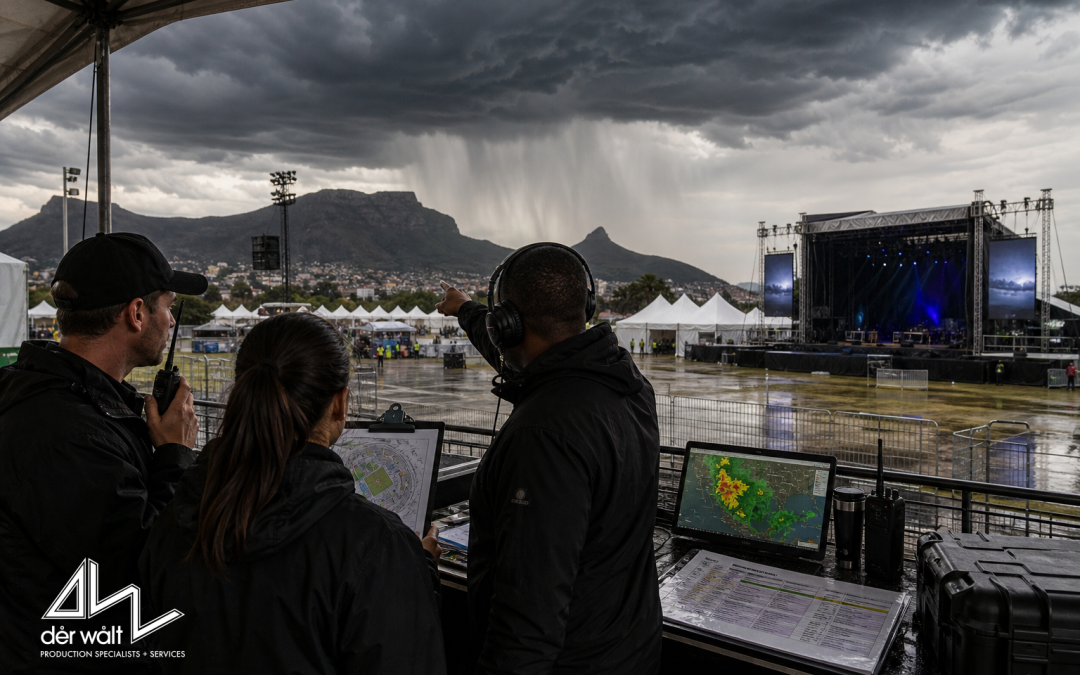
Weather Contingency Planning for South African Outdoor Events: Safe, On-Track Activations
A practical guide for SA brands, agencies and venues to build a scalable weather contingency plan for large outdoor activations. It covers risk assessment, forecasting, shelter strategy, staffing, and supplier coordination.
Direct answer: Create a formal weather contingency plan from project kickoff that defines risk thresholds, assigns a weather lead, and establishes trigger actions (delay, relocate, shelter, evacuate), anchored by trusted forecasts and local authority guidance.
Context: South Africa’s outdoor-event climate and risk factors
South Africa presents a diverse, often volatile climate for outdoor activations. Summer thunderstorm activity, heat waves, high winds along coastal corridors, and sudden rain can disrupt productions and threaten safety. The most effective contingency plans acknowledge these realities up front and build resilience into every phase of planning—design, staffing, logistics, and communication. Local weather patterns can shift quickly, so forecasting accuracy, site-specific risk awareness, and a clear decision-making chain are essential.
Practical guidance for weather-contingent event planning
1) Establish a formal weather risk framework
Start with a simple risk matrix that links weather hazards (rain, lightning, wind, heat) to impact (delay, safety risk, power interruption, guest experience). Define thresholds for actions such as “delay start,” “pause activities,” “spectator shelter-in-place,” and “evacuation.” These thresholds should be set with your production, engineering, and safety teams and validated by local authorities and venue management.
2) Build a reliable weather-monitoring plan
Assign a dedicated Weather Lead who monitors forecasts from trusted sources, including the South African Weather Service. Use multiple forecast horizons (short-term updates and trend analysis) and set up a real-time weather dashboard for on-site staff. Establish communication protocols to escalate decisions quickly as conditions evolve.
3) Design for weather resilience in structure and layout
Choose wind-rated structures and certified shelter options; ensure all rigging, tents, and staging are anchored and inspected by qualified engineers or riggers. Build in redundancy where feasible—backup power, alternative shelter routes, and a plan to repurpose indoor space if weather worsens. Consider site drainage and non-slip surfaces to reduce slip hazards during rain.
4) Shelter, power, and site logistics
Plan for immediate crowd shelter areas with clear signage and lighting. Ensure power continuity for essential functions (communication, lighting, medical). Pre-stage equipment for rapid deployment (tents, sidewalls, flooring, heaters or cooling as needed) and identify safe egress routes that remain accessible during disruptions.
5) Staffing, training, and communications
Train on weather protocols, evacuation routes, and message hierarchies. Use PA announcements, digital screens, and staff radios to convey changes. Run a short rehearsal or drill focused on weather-triggered actions to minimize response time during actual events.
6) Budgeting, contracts, and timelines
Account for weather contingency costs in the event budget, including shelter capabilities, staffing surges, and potential venue changes. Include weather-related termination, delay, or relocation terms in supplier and contractor agreements. Build buffers into critical timelines to absorb weather-driven schedule shifts without compromising safety.
7) Permits, approvals, and coordination with authorities
Inform local authorities, security, traffic management, and the venue about weather plans and required actions. Ensure permits allow for temporary sheltering, crowd management adjustments, and stage/power changes. Maintain easy access to meteorological forecasts to support timely compliance with any regulatory advisories.
Implementation checklist: steps to launch and run a weather contingency plan
- Appoint a Weather Lead and align roles across production, safety, and operations.
- Define weather-related decision thresholds with documented triggers and responsible owners.
- Establish a forecast source (e.g., SA Weather Service) and a on-site monitoring routine.
- Create flexible site designs (tents, shelters, indoor back-up spaces) and confirm engineering approvals.
- Pre-brief suppliers and staff on weather procedures and communication plans.
- Include weather contingencies in contracts and build schedule buffers.
- Test the plan with a weather drill and adjust based on feedback.
Common mistakes and important considerations
- Underestimating lightning and wind risks; always have explicit evacuation and shelter plans.
- Making weather decisions in a vacuum—avoid delays without a clear escalation path and authority.
- Ignoring local regulations or permits when altering site layouts or evacuation routes.
- Failing to budget for weather contingencies or to include weather terms in supplier contracts.
- Relying on a single forecast source—cross-check with multiple reputable sources and on-site observations.
FAQ
When should a weather contingency plan be created?
Ideally from project kickoff, with ongoing refinements as venue, scale, and forecast risks become clearer.
What should be included in a weather contingency plan?
A risk assessment, trigger-based actions, forecast sources, roles and responsibilities, shelter and power strategies, signage and communications, and contract terms related to weather.
How do you communicate weather changes to attendees?
Use a layered approach: on-site PA, digital displays, event apps or SMS opt-ins, and trained staff at key access points to direct guests safely and calmly.
What triggers typically prompt delays or evacuations in SA outdoor events?
Triggers are defined in your plan and should consider local risk factors such as lightning proximity, storm intensity, winds, and crowd density, aligned with local regulations and venue guidelines.
How should budgets reflect weather contingency needs?
Include explicit line items for shelters, staging adaptations, staffing surges, alternative venues, and potential contract renegotiations or cancellations.
Sources
- South African Weather Service — Weather forecasting and warnings for South Africa
- Occupational Health and Safety Act, 85 of 1993 — Government of South Africa
- International Association of Venue Managers (IAVM) — Industry safety and operations guidance
- Event Safety Alliance — Weather and safety best practices
- ISO 20121: Event Sustainability Management — Standards for sustainable event planning
Ready to plan with DERWALT?
DERWALT specializes in experiential marketing, activation strategy, and end-to-end event production. If you’re planning a weather-resilient outdoor activation or need a robust contingency workflow, our team can help design, test, and execute your plan with safety, efficiency and creativity in mind. Get in touch to explore how we can support your next SA event.
Recent Comments