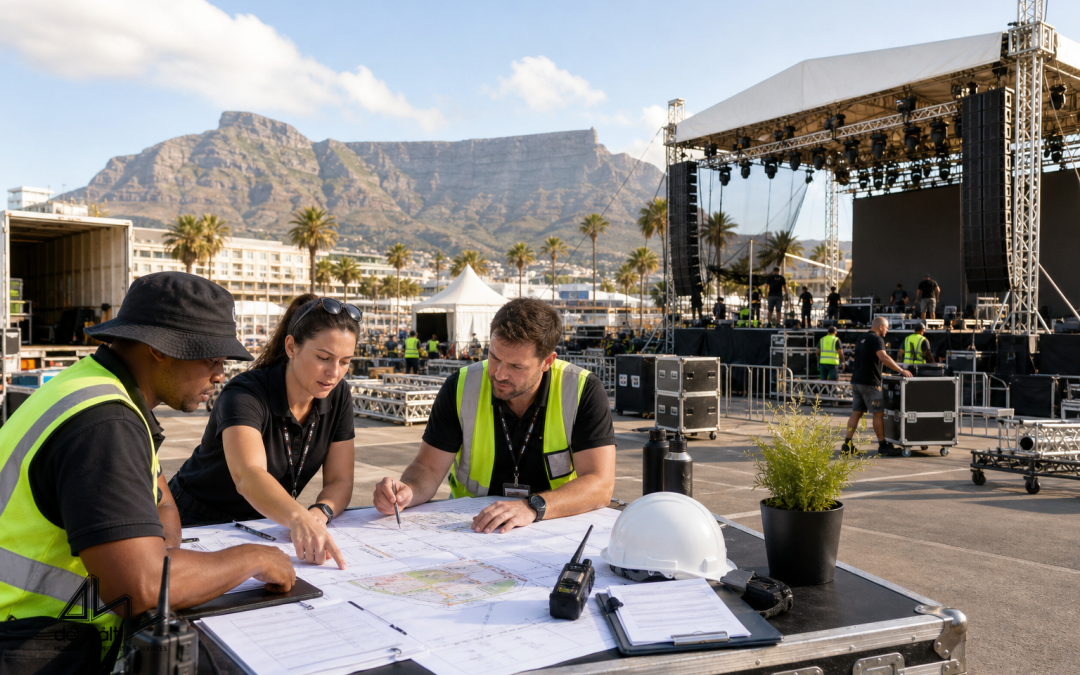
How to Plan Safe, Sustainable Large-Scale Events in South Africa
Learn a practical, risk-informed approach to planning large-scale experiential activations in South Africa. From safety and permits to weather contingency and local supplier coordination, this guide outlines a clear, actionable plan for successful productions.
Direct answer: To deliver a safe, sustainable large-scale activation in South Africa, begin with a formal risk assessment aligned to ISO 45001 (occupational health and safety management) and ISO 20121 (event sustainability), secure the necessary local approvals, and implement a phased production plan with robust weather contingency and supplier coordination.
Context and scope
Large-scale live activations require more than a compelling concept. In South Africa, success hinges on clear safety protocols, compliant permitting, practical logistics, and sustainable procurement. ISO 45001 provides a framework for health and safety management, while ISO 20121 guides sustainability throughout an event’s lifecycle. Local realities—such as weather patterns, transport access, and labor norms—shape how these international standards are applied on the ground. This article outlines a practical, field-ready approach that brands, agencies and venues can adapt without reinventing the wheel.
Practical guidance for safe, sustainable delivery
- Start with a formal risk assessment and safety management plan
- Define hazard IDs for each phase: site preparation, load-in/load-out, on-site operations, performances, and break-down.
- Assign accountability: a named safety lead, a site operations manager, and a medical response lead.
- Document controls: engineering controls for structures, fall protection, electrical safety, crowd flow, and emergency procedures.
- Reference standards: ISO 45001 for health and safety management and ISO 20121 for sustainability throughout the event lifecycle.
- Secure permits, approvals and compliant structures
- Identify required permits early—local municipal approvals, venue-specific authorisations, and safety inspections for temporary structures.
- Verify load-in/load-out routes and access, including vehicle classifications, parkland restrictions, and hours of operation.
- Ensure temporary structures (scenic elements, stages, tents) meet structural, fire, and egress standards.
- Plan site and logistics with a local lens
- Map ingress/egress for attendees and staff, including accessibility considerations.
- Develop a logistics playbook with dock schedules, storage zones, and clear vendor access routes.
- Coordinate transport options, parking, and commuter flow to minimize congestion and delays.
- Power, rigging, and technical production
- Assess energy demand—procure reliable power distribution, backup gensets, and fuel considerations with a refueling plan.
- Plan cable management, stage lighting, sound, and special effects with redundancy and fault tolerance.
- Confirm load-in sequence and on-site electrical safety procedures for all crews.
- Crowd safety, site operations and medical readiness
- Design crowd movement plans leveraging proven queuing, staggered entry, and clear wayfinding.
- Establish a medical post, first responders on site, and easy access for emergency vehicles.
- Train staff and volunteers on emergency procedures, communications, and incident reporting.
- Weather contingency and climate resilience
- South Africa’s weather can shift quickly; implement contingency spaces (misting, shade, shelters) and a plan for heat or rain events.
- Schedule key moments to avoid peak heat or storms, and provide rapid shelter options for attendees and crew.
- Stock weatherproofing materials and adjust technical plans if conditions deteriorate.
- Sustainability and procurement
- Prioritize local suppliers and materials where feasible to support the economy and reduce transport emissions.
- Implement waste management plans (recycling, composting, and minimization) and target reductions in single-use items.
- Document energy usage and procurement choices to support ISO 20121 reporting and future improvements.
- Vendor coordination, contracts and timelines
- Establish clear SLAs, responsibilities, and communication channels with all suppliers, from rigging crews to catering.
- Align lead times with production milestones; include risk allowances for weather, permit delays, or equipment shortages.
- Schedule rehearsals and tech runs to validate timing, safety checks, and contingency procedures.
Checklist: a practical, action-oriented plan
- Define objectives and success metrics (safety performance, audience experience, sustainability targets).
- Complete a formal risk assessment and safety management plan early in the project.
- Identify and secure all required permits and approvals with enough lead time for contingencies.
- Develop a comprehensive site plan covering load-in, power, crowd flow, and emergency access.
- Specify power distribution, backup power, and electrical safety measures for all on-site activities.
- Prepare a weather contingency plan with shelter options and flexible scheduling.
- Draft a sustainability plan addressing waste, energy, and local procurement.
- Coordinate with all vendors through clear contracts, timelines and on-site point persons.
Common mistakes and considerations
- Underestimating permitting timelines or under-allocating resources for unexpected delays.
- Overlooking temporary structure safety and egress calculations, leading to crowded or unsafe spaces.
- Failing to align power planning with on-site electrical safety and redundant systems.
- Neglecting weather contingencies or failing to provide on-site shelter and hydration for attendees and crew.
- Not documenting sustainability outcomes or failing to engage local suppliers to reduce footprint.
FAQ
What permits and approvals are typically needed for a large SA event?
Permits usually cover venue authorisations, temporary structure safety, noise, road closures, and crowd control. Start the permitting process early and coordinate with the venue and local authorities.
How should safety risk assessments be structured for South African events?
Use a structured framework that identifies hazards, assesses risk (likelihood and consequence), implements controls, assigns ownership, and documents emergency procedures. Align the framework with ISO 45001 and tailor it to local regulations.
What are practical steps for contingency planning against SA weather?
Prepare shelter options, shade, and cooling or warming solutions; build a flexible schedule; have standby power and rapid response teams ready; rehearse weather-related protocols with the crew.
How can brands measure the sustainability of an activation?
Track energy use, waste diversion rates, water consumption, and local sourcing. Apply ISO 20121 guidelines to document performance and opportunities for improvement in future events.
What role does supplier coordination play in large-scale events?
Strong supplier coordination ensures on-time delivery, safety compliance, and coherent execution. Use clear contracts, defined SLAs, and a single on-site point of contact to reduce risk.
Sources
- ISO 20121: Event sustainability management systems — International Organization for Standardization
- ISO 45001: Occupational health and safety management — International Organization for Standardization
- Event safety: HSE guidance for events — Health and Safety Executive (UK)
Ready to bring your next activation to life with DERWALT?
From experiential marketing and brand activations to end-to-end event production and logistics, DERWALT partners with you to deliver safe, sustainable, and memorable live experiences. Get in touch to discuss your next activation.
Recent Comments