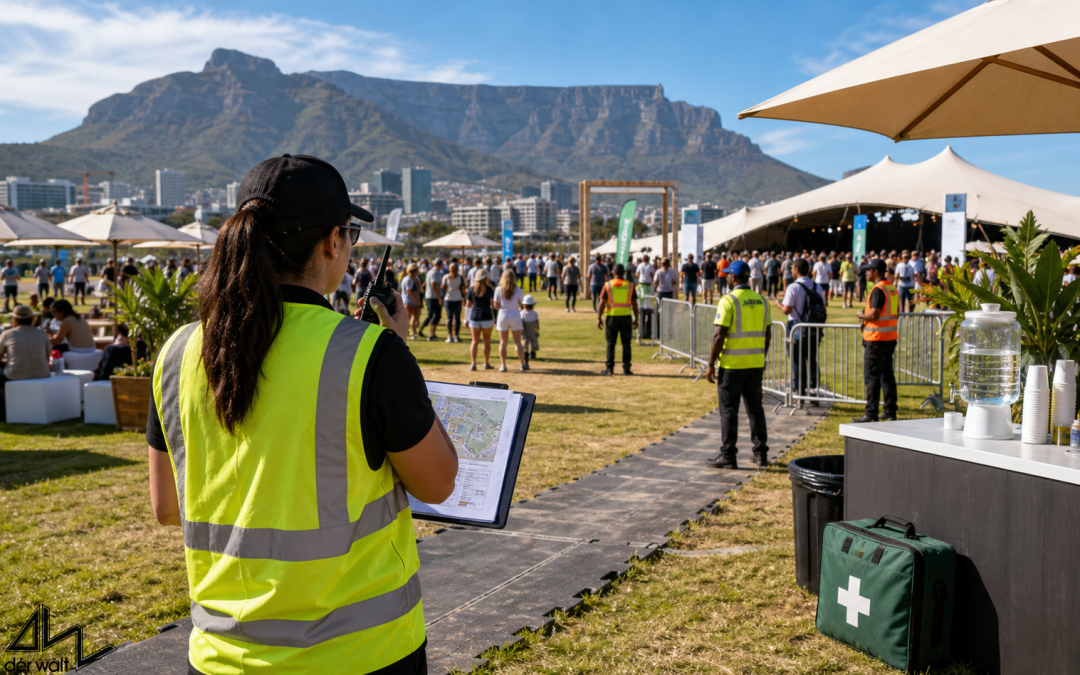
How to Plan Safe, Weather-Resilient Outdoor Activations in South Africa
A practical, SA-focused guide to planning safe, weather-ready outdoor activations. Learn how to structure risk assessments, permits, crowd safety, and on-site operations to deliver memorable experiences without compromising safety.
The direct answer: start with a formal hazard identification and risk assessment, secure required permits, and build a weather-resilient site and operations plan with clear roles, emergency procedures, and tested workflows.
Direct answer
In South Africa, the foundation of any outdoor activation is a structured risk assessment (hazard identification and risk assessment, or HIRA), followed by permits, site design that supports safe movement, and robust weather contingency planning. These elements must be backed by clear on-site roles, communications, and emergency response procedures that are rehearsed with the team.
Why this matters in South Africa
SA weather can be highly variable—high heat and sun exposure, sudden storms, and wind events can affect safety and comfort. Public venues, city streets, and rural sites each present different access, crowd flow, and emergency-response realities. A weather-resilient plan reduces risk and helps protect attendees, staff, and vendors while keeping timelines intact.
Practical framework for SA outdoor activations
Use a structured framework that teams can apply from briefing to teardown. The steps below combine risk management with practical, on-the-ground tactics suitable for diverse South African settings.
1) Hazard Identification and Risk Assessment (HIRA)
Definition: HIRA is a systematic process to identify potential hazards, assess the likelihood and severity of harm, and implement controls to reduce risk. “Hazard” means anything with the potential to cause harm; “controls” are measures to minimize that harm.
- Gather a cross-functional team (production, safety, medical, security, logistics, and client representatives).
- List all phases of the event: site setup, show days, intermissions, breakdown.
- For each phase, identify hazards (e.g., heat, dehydration, trip hazards, electrical risk, crowd surges, weather changes, access for emergency services).
- Evaluate risk levels and specify controls (engineering controls, administrative procedures, PPE, training).
- Document responsibilities and a plan to monitor and adjust during the event.
Tip: revisit and revise the HIRA as site conditions change or new hazards emerge.
2) Permits, road closures and site permissions
SA events often require local authority permissions and sometimes road closures or street-use agreements. Start early, map the exact footprint, and coordinate with municipal offices, transport authorities, and the local police service and EMS where relevant.
- Obtain a formal event permit or approval from the host venue or municipality.
- Clarify disabled- and pedestrian-access routes, vendor loading zones, and public liability considerations.
- Ensure compliance with local noise regulations, curfew restrictions, and safety standards.
Documented approvals reduce last-minute delays and support successful coordination with security and emergency responders.
3) Site layout, crowd management, and accessibility
A well-planned site layout minimizes contact risk and improves attendee experience. Consider these essentials:
- Entrances and exits with clear sightlines and minimal bottlenecks.
- Wide, unobstructed walkways and clearly marked egress routes.
- Strategic placement of medical posts, water stations, shaded zones, and cooling options in hot weather.
- Accessibility for people with disabilities, including accessible viewing areas and restrooms.
- Segregated staff and vendor areas with controlled access and appropriate signage.
4) Weather contingency planning
Weather is a dominant risk. Prepare for heat, thunderstorms, rain, and wind. Your plan should cover prevention, monitoring, and response.
- Weather monitoring: assign a dedicated person or service to track conditions and issue warnings.
- Heat management: hydration points, shaded terraces, misting zones, sunscreen, and cooling tents.
- Lightning and wind: establish a safety threshold (e.g., suspend activities when lightning is within X kilometers or winds exceed Y m/s) and a clear evacuation route.
- Contingency spaces: designate indoor or covered areas where activities can pivot quickly.
- Communications: pre-scripted messages for guests and staff via PA and digital channels.
5) On-site safety management and operations
Efficient on-site safety relies on people, processes, and equipment working together with rehearsed routines.
- Roles and responsibilities: safety lead, crowd marshal supervisors, medic/first-aid lead, communications lead, and logistics coordinator.
- Two-way radio or reliable comms plan, with backups (mobile phones, loudspeakers).
- Daily safety briefings, tool-box talks, and site walkthroughs with staff and vendors.
- Clear muster points and emergency assembly areas; ensure access for emergency vehicles.
- First aid posts staffed by trained professionals; ambulance liaison plan for rapid transport if required.
6) Communications, signage and guest experience
Communication is a safety tool as well as a guest-service feature.
- Visible signage with directions, hazard warnings, and accessibility information.
- Public-address scripts for weather changes, emergency announcements, and schedule shifts.
- Real-time updates via event app, social channels, and digital displays where available.
7) Supplier coordination, contracts and budgets
Pre-event coordination reduces latency and risk during live operation.
- Clear scope definitions in contracts (delivery windows, power supply, backups, and on-site crew levels).
- Contingency budgets (typically 5–15% of total budget) for weather-related delays, extra staffing, and emergency services.
- Pre-hire critical roles (security, medical, QA inspectors) and lock in backup vendors for power, lighting, and sound.
8) Training, rehearsal and run-of-show
Practice reduces real-world risk.
- Staff and vendor induction focusing on safety procedures and route maps.
- Rehearsals for key moments (entrances, crowd flow, emergency drills) with timed cues.
- Checklists for setup, dailies, and teardown to ensure consistency.
9) Documentation, insurance and post-event review
Documentation supports accountability and continuous improvement.
- Maintain a site-specific safety plan, HIRA, permits, and liaison contact lists accessible to the core team.
- Verify appropriate insurance coverage for providers, venues, and activities.
- Conduct a post-event debrief to capture lessons learned and update plans for future activations.
Common mistakes and how to avoid them
- Underestimating weather impact and not building a weather contingency early in the planning phase.
- Neglecting accessibility and inclusive design, which can slow evacuation or emergency response.
- Failing to verify permits, leading to last-minute delays or closure of the site.
- Inadequate staff training or unclear command structures—causes confusion during incidents.
- Poor coordination with emergency services or security teams.
FAQ
What is a Hazard Identification and Risk Assessment (HIRA) for events?
A HIRA is a structured process to identify hazards, assess risk levels, and define controls to reduce harm during an event.
Do outdoor activations in SA require permits or road-use approvals?
Many SA events require local authority permissions and, in some cases, road-use approvals. Check with the hosting municipality early in planning.
How should weather be integrated into the event plan?
Include real-time weather monitoring, predefined thresholds for suspending activities, and ready-to-deploy cooling, shelter, and indoor alternatives.
What should a safety plan include?
A safety plan should cover roles and responsibilities, emergency procedures, first-aid arrangements, crowd management, communications, site layout, and backups for critical systems.
How can brands measure safety readiness before and during an activation?
Use checklists, rehearsal outcomes, near-miss reporting, incident logs, and post-event debriefs to assess and improve safety readiness.
Sources
- NFPA – National Fire Protection Association — NFPA
- Health and Safety Executive (HSE) — UK Government
- International Association of Venue Managers (IAVM) — Venue Safety Resources
- South African Weather Service (SAWS) — Weather preparedness guidance
Call to action
Ready to deliver unforgettable, safe experiential activations? Contact DERWALT to discuss end-to-end event strategy, production management, and on-site safety planning for your next activation.
Recent Comments