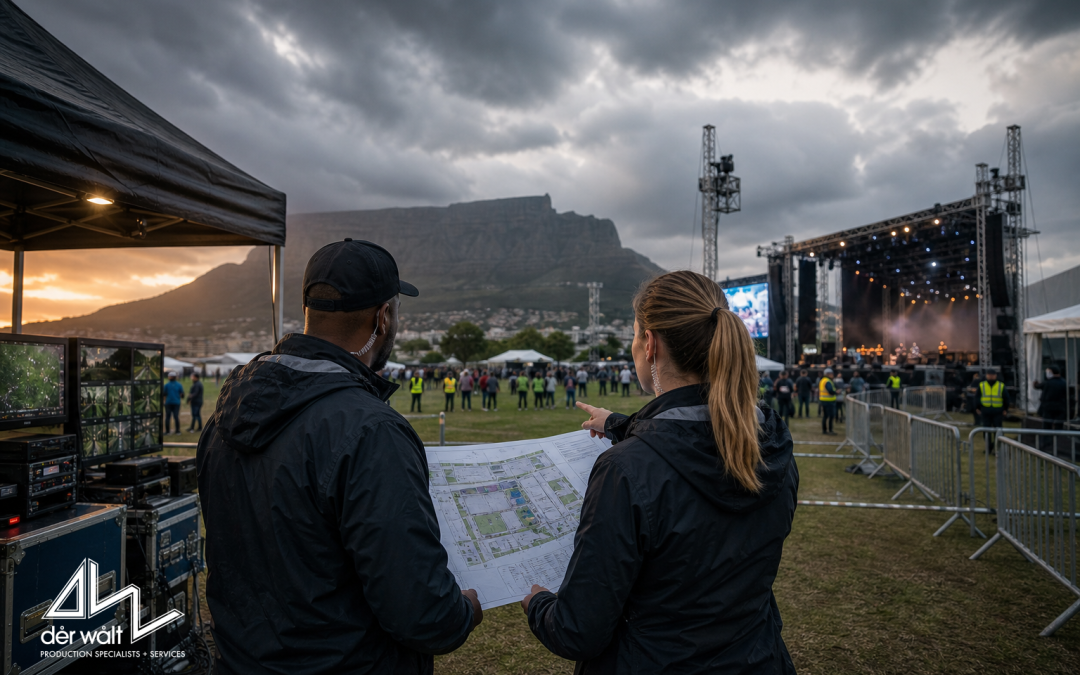
Planning Safe Outdoor Events in South Africa: A Practical Guide
This guide delivers a practical framework for planning safe, compliant outdoor events in South Africa. It covers risk assessment, weather contingency, local procurement, transport planning and emergency response to help brands and venues deliver memorable activations.
Outdoor events in South Africa come with unique safety, weather and logistics considerations. A structured approach helps protect attendees, staff and partners while keeping production timelines and budgets intact. The guidance below offers a practical framework for brands, agencies, venues and production teams planning activations, experiences or brand moments in the SA context. It distinguishes practical steps from verifiable requirements and highlights where legal counsel or local authorities should be consulted.
A practical framework for safe, compliant outdoor events
Legal and standards context
Event planners should anchor their work in generally applicable health and safety principles and, where relevant, local regulations. In South Africa, organisations routinely align with the principles of the Occupational Health and Safety Act and general safety best practices when operating events. Many teams also adopt international standards for sustainability and risk management, such as ISO 20121, which provides a framework for event sustainability management and integrated risk planning. While ISO standards are voluntary unless adopted as part of a formal management system, they offer a robust reference for structure, documentation, and continuous improvement. Always verify any national or local permit requirements with the relevant municipality or authority and seek legal counsel for SASREA- or permit-specific obligations where applicable to your event type.
Practical risk assessment steps
Begin with a comprehensive risk assessment that covers site hazards, attendee flows, equipment safety, electrical risks, weather impacts, and incident response. A practical approach includes: listing all potential hazards; assessing the likelihood and impact; implementing controls (engineering, administrative, or PPE); assigning clear responsibilities; and scheduling regular reviews as plans evolve. Documented risk registers and pre-event briefings help ensure everyone understands operational limits and escalation paths. Remember that risk assessment is an ongoing process: weather developments, supplier changes, or layout adjustments require re-evaluation before each activation phase.
Weather-aware planning for South Africa
Weather data and contingency budgeting
South Africa experiences distinct seasonal patterns and localized microclimates. Weigh historical weather data and real-time forecasts during the planning window, especially for summer thunderstorms, heat waves, or sudden rainfall. Use trusted meteorological sources (for example, the South African Weather Service) to inform contingency budgets and safety decisions. Contingency planning should consider protected spaces, rain or wind provisions for stages and equipment, and flexible scheduling to accommodate weather disruptions. Build time buffers into load-in and load-out windows to avoid cost overruns when weather forces postponements or detours in the program.
Site and venue planning in the SA context
Power, connectivity and site services
Power reliability is a common constraint for outdoor activations. Identify primary and backup power sources early, with a clear plan for fuel supply, generator placement, noise control, and fuel spill prevention. Plan for distribution safety and electrical codes compliance, including cable management, weatherproofing, and walk-through areas that keep cables out of pedestrian zones. Ensure robust connectivity for communications, scoreboards or live feeds, with consideration for data security and interference in crowded environments. Availability of water, restrooms, shade and cooling zones should be integrated into the site plan from the outset.
Access, crowd flow and emergency egress
Efficient ingress and egress reduces bottlenecks and enhances safety. Map entry points, service routes, load-in lanes and emergency egress with appropriate signage and lighting. Consider accessibility for attendees with mobility needs, families with prams, and service staff. Temporary structures, barricades and staging should be designed for quick reconfiguration in response to changing crowd dynamics or weather. A well-planned site layout supports efficient security screening, vendor access and spectator experience while meeting health and safety expectations.
Procurement and local suppliers
Sourcing strategy and BBBEE considerations
Local procurement is central to efficiency and support of regional economies. Develop a supplier matrix early that prioritises local manufacturers and service providers for audio-visual, lighting, power, staging, fencing and concession services. When appropriate, align procurement with BBBEE goals, preferred supplier programs and ethical sourcing practices. Build lead times into the project timeline that reflect SA supplier realities—custom rigging, lighting rigs, and large-scale structures often require extended lead times and on-site delivery coordination. Establish clear contracts with service-level expectations to reduce ambiguity during production shifts or weather-driven changes.
Equipment safety and electrical standards
Electrical safety remains a top risk at outdoor events. Verify that all electrical installations, cabling, distribution boards and generators comply with local safety standards and are installed by qualified personnel. Regular inspections, ground-fault protection, weatherproof enclosures, and dry/runaway risk controls reduce hazards. Maintain an up-to-date equipment inventory and ensure that all gear is suitable for outdoor exposure (dust, moisture, temperature variations). A simple, documented check prior to load-in can prevent many common issues that derail a production schedule.
Transport, traffic management and access
Parking, shuttles and signage
Transport planning should align with venue access, attendee flows and local traffic patterns. Coordinate with municipal authorities or traffic management services for road closures, parking layout, shuttle services and pedestrian signage. Clear, multilingual signage and dedicated staff help attendees reach venues quickly and safely while minimizing conflicts with local traffic. Plan drop-off zones and accessible transport options so that mobility-impaired guests can participate without difficulty.
Coordination with authorities and site access
Proactive liaison with local police, emergency services and the venue’s management is essential. Share site plans, emergency contact lists and muster point locations well in advance. Establish a single point of contact for safety and operations during the event window to avoid communication gaps that could delay critical decisions when time is tight.
Emergency response and incident management
Communication, muster points and service liaison
Effective incident response hinges on clear communication and defined roles. Pre-event briefings should cover alarm signals, PA announcements, radio communications, and the location of muster points. Maintain a live incident log and ensure emergency services are aware of venue layouts, access routes and any special hazards associated with temporary structures or outdoor equipment. Regular drills for staff and volunteers help validate plans and improve reaction times on the day.
DERWALT’s practical approach to end-to-end event planning
Discovery, design and delivery
DERWALT supports brands and venues through an end-to-end process: from discovery and risk assessment alignment to program design and on-site delivery. Our approach emphasizes practical risk controls, supplier coordination, and robust production management to keep activations on track. We emphasise local procurement, clear timelines, and safety-first thinking, while ensuring the creative vision remains achievable within budget and schedule constraints. By integrating production planning with logistics and content creation, we help reduce last-minute changes and keep teams aligned as the event unfolds.
Debrief and continuous improvement
Post-event review is essential to capture learnings for future activations. Debriefs help refine risk registers, update supplier performance, and optimize transport and site layouts based on real-world experience. This continuous improvement mindset aligns with international best practices and supports better outcomes for subsequent productions.
Sources
- ISO 20121: Event sustainability management system — ISO
- South African Weather Service — Government of South Africa
- Event safety guidance — UK Health and Safety Executive
- International Association of Venue Managers (IAVM) — Industry association
Ready to plan your next activation with DERWALT?
DERWALT offers end-to-end event strategy, production management, and supplier coordination to deliver safe, memorable experiences in South Africa. Contact us to discuss your activation goals and timelines.
Recent Comments