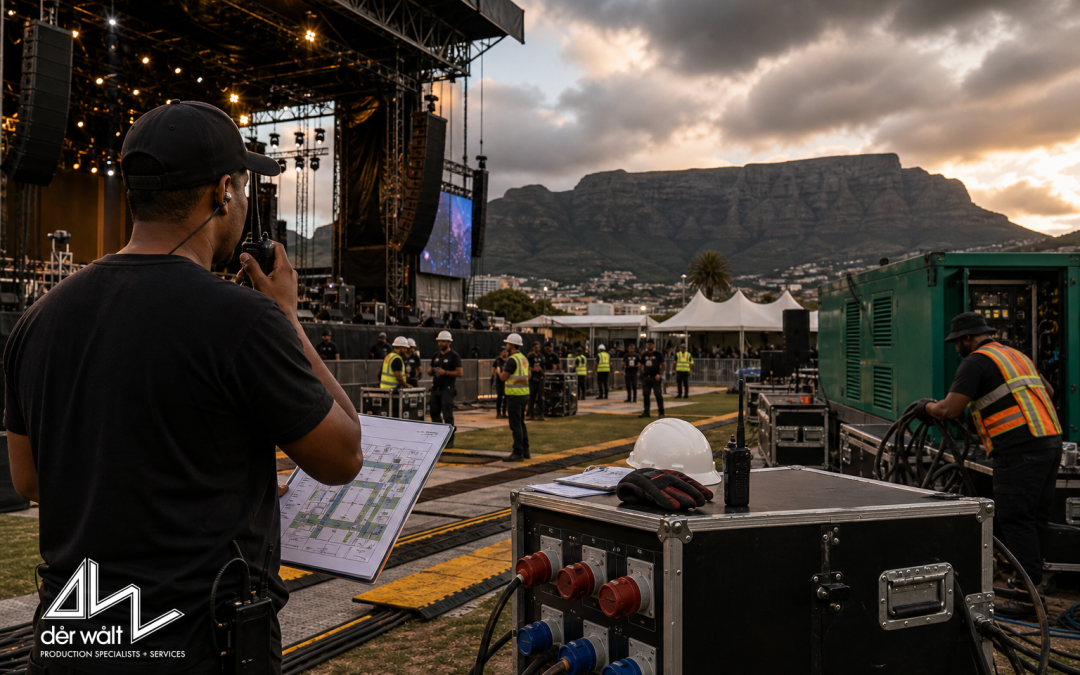
Practical Guide to Safe, Efficient Outdoor Event Production in South Africa
A practical, SA-focused guide for brands, agencies and venues planning outdoor events. Learn weather contingency, power management, safety compliance, local procurement, transport logistics and realistic production timelines.
South Africa’s outdoor events landscape is dynamic and diverse, from music festivals and city activations to corporate showcases. Planning and delivering a high-quality experience requires a disciplined approach to safety, power, weather, transport and procurement—while staying within budget and timelines. This guide provides practical, SA-relevant guidance for brands, agencies, event organisers, venues, production teams and decision-makers. It distinguishes actionable best practices from general statements that should be verified against local regulations and venue-specific requirements.
Foundations: risk, permits and timelines
Begin with a site-sensitive risk assessment that covers crowd dynamics, stage and electrical safety, weather exposure, transport routes, and emergency procedures. A simple risk register should be updated as the plan evolves, with clear owners for mitigation actions and deadlines. In South Africa, organisations should align with national health, safety and labour expectations, and consult municipal or provincial authorities for event-specific permits and compliance requirements. Treat safety as a design constraint—every element should be assessable for risk and amenable to mitigation.
Practical guidance: establish a baseline site plan (layout of stage, audience, access points, rider areas, staff zones) early, and use it to drive supplier lead times, power distribution planning and safety commitments. Build in a production buffer for weather delays, permit approvals and delivery windows. Even with strong relationships with suppliers, unexpected lead times happen; a 10–20% contingency in critical line items is prudent for SA events with multiple stakeholders.
Weather and venue planning in South Africa
Weather is a decisive factor for SA outdoor events. Seasonal variability means a robust contingency is essential. The South African Weather Service provides region-specific forecasts and climate norms that can inform tenting strategies, shade, hydration stations and wind-bracing requirements. Factor in heat risk, sun exposure and sudden rain, as well as late-afternoon thunderstorms in some regions. For venues, ensure the site plan includes weatherproofing options—validated by wind ratings for tents or marquees, waterproof floors for performance areas and appropriate drainage for rain events.
Practical actions: select weather-rated temporary structures and flooring with independent wind-load testing. Pre-install rain covers and sheltered walkways for crew and attendees. Schedule outdoor activities with temperature and wind considerations in mind, offering cooling zones and water stations in hot conditions. Always have a weather-related decision tree: at what wind speed or rainfall threshold do you pause loading, adjust the program, or evacuate? Document the decision points and ensure staff are briefed.
Power, distribution and technical planning
Power reliability is a frequent constraint in SA events. Plan for a resilient power solution that includes generation, distribution, and contingency backups. Carry out a load calculation early, classify critical loads (sound, lighting, cameras, communication), and size generators and distribution boards accordingly. Use distribution boards with residual current devices (RCDs) and ensure proper separation of live areas from spectators. Implement a power continuity plan that covers fuel management, refuelling logistics, and on-site monitoring for noise and emissions.
Practical guidance: source electrical equipment and cabling from reputable local suppliers or rental houses. Verify equipment is compliant with safety standards (SABS) and that cable runs are protected to avoid trip hazards and water ingress. For outdoor events in SA, consider a mix of mains-backed systems and generators for critical loads to manage load shedding realities and avoid total blackout during peak moments. Develop a clear on-site power map showing ring circuits, point-by-point loads, and emergency cutoff points. Document the contingency plan for generator downtime, including backup fuel and a quick-restart procedure.
Safety, compliance and on-site operations
Safety is non-negotiable. Under the Occupational Health and Safety Act and related regulations, employers and organisers must manage risks to workers and attendees. Build a site safety plan with roles for a safety officer, first aid, crowd management and incident reporting. Provide personal protective equipment (PPE) for crew, ensure safety briefings for all contractors, and conduct on-site safety walks. Include egress routes, crowd densities, seating arrangements (where applicable) and accessible design to accommodate all guests. Establish clear evacuation procedures and muster points, and rehearse emergency protocols with staff and security teams.
Relevant SA-facing considerations: confirm all work at height, rigging and electrical work complies with regulations and has documented permit-to-work procedures where required. Coordinate with local authorities for traffic management plans if the event affects public roads. For transparency and accountability, maintain a documented incident reporting process and a post-event debrief to capture lessons for future events.
Logistics, transport and access
Logistics in SA require careful coordination of freight, crew movement, and guest access. Build a transport plan that addresses crew shifts, equipment delivery windows, and access constraints at the venue. Local ports and airports may have specific requirements, and certain venues require vehicle access restrictions or curfews. Plan for vehicle marshals, clear signage, and secure areas for loading and unloading. Where possible, work with local logistics partners who understand regional transport corridors and peak traffic times.
Practical tip: create separate delivery lanes for gear and for guests, and ensure that loading routes avoid conflicting with public access. Use dedicated parking for crew and exhibitors when feasible, and coordinate shuttle services or rideshare zones to minimize on-site congestion. Maintain a real-time on-site logistics dashboard (or a shared document) so stakeholders can track arrivals, equipment checks and task completion throughout setup and showtime.
Sustainability and local procurement in SA
Local procurement is not only a procurement preference; it can reduce transport time, support local business and improve risk management by shortening the supply chain. Engage South African suppliers for build materials, audio-visual equipment, lighting and staging where possible, and document procurement decisions to support BBBEE and local economy goals. Establish pre-event supplier briefings and ensure all contractors understand waste management, recycling and responsible disposal. Consider the environmental footprint of temporary structures and aim to reuse or repurpose where feasible, benchmarking against international and local sustainability guidelines.
Incorporate a waste-management plan with clearly labeled recycling streams, litter pickup, and responsible disposal post-event. If your client or venue requires sustainability reporting, prepare a simple, auditable trail of procurement sources, material reuse and waste outcomes. Local partnerships can also streamline permits and power planning during the build and breakdown phases.
Budgeting, contracts and realistic timelines
A realistic SA event budget accounts for currency fluctuations, supplier availability, and the possibility of weather-driven changes. Build in a contingency for contingency—budgeters often underestimate the cost impact of last-minute changes, re-prints, last-minute equipment rental, or additional safety measures. Create a timeline that aligns with procurement lead times, permit approvals, and venue accessibility windows. Remember that lead times for specialized equipment (lighting rigs, high-end audio, large-scale staging) may be longer in peak seasons, so lock these early. Maintain a formal contracts workflow with clear deliverables, service levels, risk responsibilities and cancellation terms.
Practical templates and on-site checklists
Develop reusable templates to streamline planning and on-site execution. Useful items include a site plan, power distribution map, risk register, emergency contact list, crowd management plan, and a run-of-show. A consolidated production schedule (Gantt-style) helps align internal teams, suppliers and the venue. On-site, use a daily safety briefing, equipment checks, and a pre-show verification checklist to confirm that all systems are ready before doors open. These tools help reduce miscommunication and improve accountability across stakeholders.
Example run-of-show snippet (generic)
Day 1 morning: site handover and rigging inspection; power distribution check; line check for audio and lighting; safety briefing for crew. Afternoon: soundcheck and video check; audience entrance flow test; weather contingency rehearsal. Day 2: doors open; live program with timed cues; post-event wind-down and clean-up. This generic example emphasizes the need for checks and rehearsals aligned with weather, power status and crowd management.
Sources
- South African Weather Service — Government of South Africa
- Department of Employment and Labour — Government of South Africa
- South African Bureau of Standards — SABS
- Brand South Africa — Brand South Africa
- Event Safety Alliance — Event Safety Alliance
Contact DERWALT
Ready to craft an outdoor activation or full-scale event with safe, reliable production, local procurement, and tight timelines? Reach out to DERWALT for experiential marketing, activation and end-to-end event production support that aligns with your brand goals and South Africa’s unique operating environment.
Recent Comments