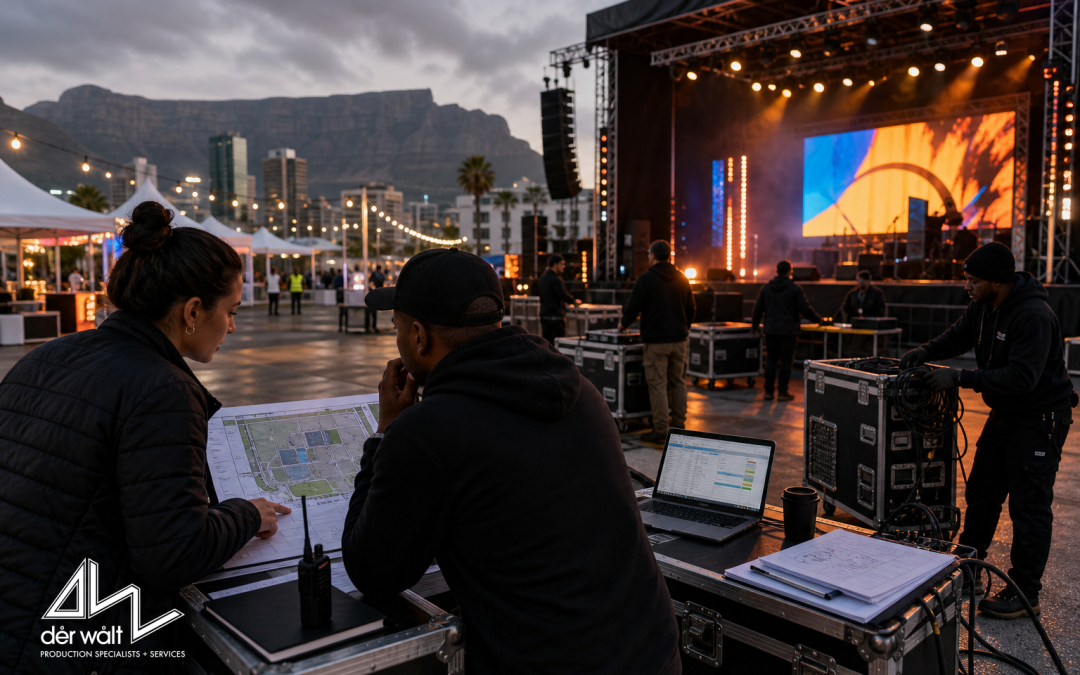
How to Plan Scalable South African Event Activations on Budget
This guide helps brands, agencies and venues navigate South Africa’s unique logistics—from local procurement and weather contingencies to safety compliance and budget pacing—while outlining practical steps for partnering with a full-service production partner.
South Africa’s event landscape combines vibrant audiences with complex logistics. Urban hubs like Cape Town, Johannesburg and Durban offer prime access to attendees, but load-in windows, venue regulations, transport networks and weather patterns differ from one city to the next. For brands and agencies, the goal is to design activations that scale — from a pilot pop-up to a multi-venue activation — without sacrificing safety, quality, or timing. A practical approach starts with a clear footprint, a robust supplier network, and a plan that anticipates disruption and complexity. The following guidance blends industry best practices with South African realities, so you can partner with a capable production partner to deliver immersive experiences while staying on budget and on track.
Defining a scalable activation footprint
Begin with a modular concept: define core elements (stage, AV, power, lighting, branding) that can be scaled up or down depending on venue, audience, and duration. In South Africa, choosing venues requires factoring in access to power, loading docks, security arrangements, and nearby transportation options. For example, a waterfront or urban plaza may offer high visibility and footfall but come with limitations on generator usage, permit requirements, and crowd control. A scalable footprint often relies on modular staging, portable power solutions, and weather-resistant enclosures that can be deployed quickly across multiple sites. Conduct a venue shortlisting exercise that prioritises:
- Power availability and backup – confirm amperage, distribution boards, and on-site generator options with a plan for fuel supply and refuelling logistics.
- Load-in/load-out routes – map truck routes, elevator or ramp access, and peak-volume timings to minimise disruption to venue operations.
- Crowd management and safety zones – design entry/exit flows, queuing space, and emergency staging that aligns with local safety regulations.
- Weather resilience – consider shade, rain covers, wind-rated structures, and temporary flooring that reduces slip hazards on wet surfaces.
In practice, this means collaborating with an experienced production partner who can translate a concept into a scalable plan, including contingency paths for rain, heat, or unexpected equipment downtime. A partner like DERWALT can help wire together the creative brief with technical feasibility, supplier capability, and site-specific risk assessments to ensure consistency across sites without overcapitalising on one-off elements.
Procurement and working with local suppliers in SA
Local procurement is a critical lever for timelines and budget when activations span multiple venues or cities. Start with a formal procurement process that aligns with South African practices and project risk management. A typical approach includes:
RFI, RFP and vendor vetting
Issue a clear request for information (RFI) to identify local suppliers with demonstrated capabilities in areas such as lighting, audio-visual, rigging, power distribution, branding and logistics. Use a follow-up request for proposal (RFP) to collect detailed quotations, installation schematics, and risk mitigation plans. Vet suppliers for:
- Recent experience delivering similar activations, preferably in high-footfall or outdoor environments
- Availability of local crew and management of labour schedules within South African labour frameworks
- Health and safety records, equipment maintenance history, and spares/backup options
- Proof of capability to operate legally in the venues you’re targeting (permits, insurance, safety compliance)
Local content, timing and budget discipline
Prioritise local content where possible to shorten lead times and reduce transport costs. Build a phased procurement plan that aligns with your production calendar, from concept design to on-site execution. Always reserve contingency budgets for last‑minute substitutions, weather-related adjustments, or venue-specific permit requirements. Engage with suppliers early to secure preferred delivery windows, especially during peak seasons or major SA events where demand can outstrip capacity.
DERWALT’s approach emphasises integrated supplier coordination and schedule alignment, ensuring that your chosen vendors operate within a single master timeline. This minimizes the risk of miscommunication, reduces the number of change orders, and helps maintain a predictable production pace across multiple sites.
Safety, compliance and risk planning in South Africa
Safety and regulatory compliance are non-negotiable in South Africa. A proactive risk assessment should accompany every activation plan, covering crowd management, fire safety, electrical safety, and site-specific hazards. Key considerations include:
Legal and regulatory requirements
Understand the basics of occupational health and safety in the SA context. Ensure contractors have appropriate public liability insurance and that electrical installations comply with recognized standards. Where electrical work is involved, verify the use of qualified electricians and that all distribution boards, cabling, and power products meet recognized safety standards. A formal risk assessment should be completed and shared with venue management and local authorities where required.
Perimeter and crowd protection
Plan for controlled entry and exit points, non-slip surfaces, and clear wayfinding. Consider a dedicated safety marshal for large or high-traffic activations and coordinate with local security providers to complement venue staff. Documentation, including site-specific safety plan and emergency response procedures, should be updated as layouts change or as more information becomes available during the project lifecycle.
Weather, climate and contingency planning in SA
South Africa’s climate can vary dramatically by region and season. Summer thunderstorms in coastal cities and heat waves in inland venues can impact electronics, comfort, and audience safety. Practical weather planning includes:
Shelter and protection
Invest in weather-resilient structures, roofed branding, and wind-stable canopies. Ensure stage and rigging are engineered for local wind-speeds and that anchor systems meet safety standards. Have contingency spaces or indoor pavilions ready for fast rain shifts or severe weather alerts.
Power reliability and climate control
Outdoor activations increase demand for reliable power and climate control. Plan for redundant power sources, efficient cooling for AV gear, and secure cable protection to prevent trip hazards in heat.
Weather information should be checked routinely through reliable sources such as the South African Weather Service to inform decisions about wind thresholds, lightning risk, and rain probabilities. The ability to adapt on the day—by shifting audiences, re-sequencing performances, or moving into a covered space—will preserve the activation’s integrity and safety.
Timeline, budgets, and on-site logistics
Creating a realistic production timeline is essential when planning activations across multiple sites. Start with a master schedule that includes:
- Concept development and approvals
- Vendor engagement windows and lead times for equipment hire and transport
- Permits, venue access arrangements, and security coordination
- Production rehearsals, sound checks, and technical run-throughs
- On-site crew shifts, load-in/load-out windows, and contingency buffers
Budgeting should account for multiple contingencies common to SA productions—unexpected permit fees, longer-than-expected freight times due to port or airport delays, and currency fluctuations for imported equipment. A disciplined change-control process helps maintain scope and budget discipline across all sites. It also reduces variation in production quality by ensuring each site adheres to a consistent standard of design, safety, and execution.
DERWALT’s end-to-end production approach is designed to keep complex activations coherent across locations. By synchronising creative, technical planning, and supplier management under one umbrella, we reduce the fragmentation that can occur when multiple teams operate in silos. This harmonisation supports tighter timelines and a more predictable delivery, while still allowing local adaptations as required by city-specific constraints.
Sources
- South African Weather Service — South African Weather Service
- South African Bureau of Standards — SABS
- Health and Safety Executive — UK Government
- International Association of Venue Managers — IAVM
- SAACI — Southern African Association for the Conferences, Exhibitions and Events Industry
Contact DERWALT for your next activation
Ready to elevate your next experiential marketing, activation or end-to-end event-production project? Get in touch with DERWALT to explore scalable, safe, and on-time delivery across South Africa’s venues and markets. We can help you translate ideas into executable, measurement-friendly experiences.
Recent Comments