Practical Outdoor Event Planning in South Africa: Weather, Safety and Logistics
A 25–40 word summary: From weather variability and load shedding to safety compliance and transport logistics, this guide delivers practical steps for SA brands, agencies and venues planning outdoor activations in 2026. Learn to mitigate risk and stay on schedule.
Outdoor activations are a powerful way to connect brands with audiences in South Africa, but they demand careful planning beyond a standard indoors setup. This guide focuses on practical, executable steps that brands, agencies, venues and production teams can take to manage weather risk, energy reliability, safety compliance, procurement and on-site logistics. The aim is not to promise miracle outcomes but to offer a clear framework you can adapt to your event brief, market, and timeline.
Weather and climate realities in South Africa
South Africa’s climate is diverse, and even within a single city, microclimates can affect comfort, visibility and safety. Coastal fog, inland heat, sudden squalls and afternoon storms are all possibilities depending on the region and season. A robust weather plan helps you decide on tenting, wind-load limits, rain plans and audience comfort measures well before doors open.
Practical steps include assigning a dedicated weather monitor for every major activation, establishing a go/no-go criterion for outdoor stages and line-of-sight screens, and preparing both a warm-weather and a cool-weather contingency (shading, misting, heaters) where relevant. Use trusted local meteorological information as a baseline, and integrate it into your risk matrix and daily pre-event briefings.
Electricity reliability and power management in SA
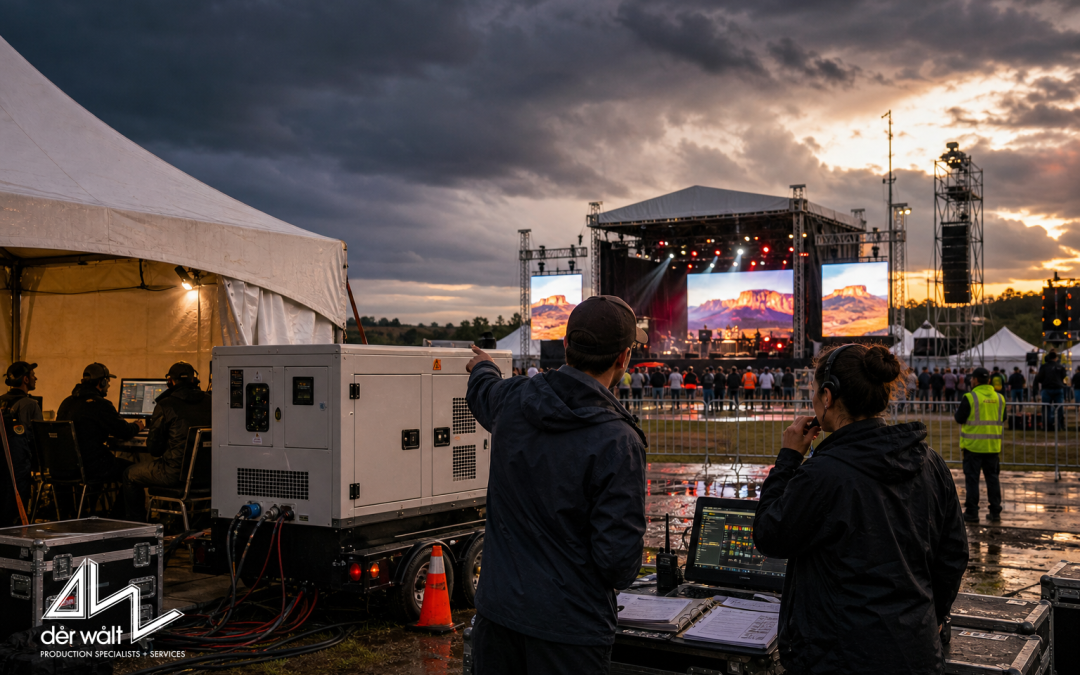
Electricity supply can be unpredictable in some parts of the country, with load shedding affecting schedules, lighting, sound and audience comfort. Power planning should be a core element of every production brief. Consider a staged power strategy that includes:
- Baseline power requirements mapped to critical systems (lighting, PA, video, control surfaces) with explicit priorities.
- On-site power redundancy: a main generator with a standby unit, or connections to a temporary power grid if available.
- Fuel planning, storage, and spill prevention, plus safe refueling procedures and noise management to keep neighbours on side.
- Electrical safety checks, proper earthing, cable management and weather protection for all temporary installations.
Safety and compliance around generators are non-negotiable. Adhere to relevant electrical standards and fire-safety guidance, and ensure your crew knows how to shut down power quickly during an emergency. If possible, work with a licensed electrical contractor for the installation, testing and handover.
Safety, compliance and practical risk management
Event safety in South Africa is guided by national legislation and recognized best practices. A practical approach combines a formal risk assessment with site-specific safety planning. Key elements include:
- A documented site safety plan, including crowd management, access control, emergency egress, medical facilities and incident reporting.
- Appointment of a competent Safety Officer or Safety Team with clear responsibilities during setup, show time and strike.
- Risk assessments and method statements (RAMS) for all temporary structures, rigging, electrical work and generator deployment.
- Compliance with applicable regulations and local by-laws, noise controls and fire safety requirements tied to the venue and city.
In practice, this means regular pre-event safety briefings, live communication channels between control room, stage management and site supervisors, and a clearly communicated incident command structure. ISO 20121 guidance on event sustainability and management systems provides a framework for integrating safety, environmental impact, and stakeholder coordination into a single management system. While ISO 20121 is international, many SA producers adopt its concepts to structure end-to-end event operations.
Budgeting, procurement and local suppliers
Effective budgeting for an outdoor activation must anticipate weather-related contingencies, energy needs, and safety resources. Build a contingency line into your budget and align it with a realistic production schedule. When procuring services and gear in South Africa, consider:
- Engaging with local suppliers early to ensure availability of tents, power distribution, heating/cooling options, and crowd management equipment within your preferred lead times.
- Using a reliable procurement process that aligns with your organisation’s policies and the Central Supplier Database or equivalent local frameworks where applicable (and where you can verify compliant vendors).
- Contracting with suppliers who provide up-to-date risk assessments, insurance cover and emergency contact information.
Transparent communication with procurement teams and venue operators helps mitigate delays during load-in and build. If a project faces substantial weather or energy risks, consider staged procurement milestones aligned to the production schedule, not the other way around.
Venue selection, access and accessibility
Choosing the right venue goes beyond capacity. Consider access for trucks and equipment, proximity to hotels or worker housing, allowances for inclement weather, and the ability to implement your power and safety plans. Accessibility for all attendees, including people with disabilities, should be a non-negotiable criterion in the shortlisting and site inspections.
In SA, you’ll often need to navigate city by-laws and venue-specific restrictions. Early engagement with venue management helps you understand permitting requirements, load-in windows, and any restrictions on temporary structures, noise levels, or after-hours activity. Document these requirements in RAMS and integrate them into your overall timeline.
Transport, parking and crowd flow
Traffic management and pedestrian flow are crucial for outdoor activations. Proactive planning includes mapping access routes for suppliers, riggers and emergency services, and coordinating with local authorities where necessary. Consider alternative transport options for staff and talent to reduce on-site congestion and improve safety. Clear wayfinding signage, secure bus or shuttle parking areas, and a well-marked emergency evacuation route are essential components of a professional production plan.
On-site operations: staging, shelter and weather contingencies
On the day, a well-rehearsed operations plan keeps the show on track when weather or power plays up. Practical on-site priorities:
- Weather contingency zones such as shaded rest areas, misting stations or heated spaces where appropriate to maintain audience comfort and prevent heat-related incidents.
- Staging and rigging safety, including wind load checks, secure anchor points, and escape routes for crew and performers.
- Robust communications between production control, stage managers, and safety personnel. A dedicated incident log helps you capture lessons in real time.
- Accessible and clearly lit egress points and crowd management layouts that adapt to the actual audience footprint on event day.
Documentation is your ally. Record weather deviations, power issues, and incident responses to improve future planning. If you adopt ISO 20121 principles, you’ll be better positioned to demonstrate a cohesive management system across pre-event, on-site and post-event phases.
Post-event debrief and learnings
After-action reviews reveal what worked well and what requires adjustment. Priorities often include refining contingency plans, updating RAMS based on actual site conditions, and improving coordination with venue teams and suppliers. A structured debrief, with input from safety officers, production crews, client stakeholders and venue managers, provides a foundation for continuous improvement and better predictability in future activations.
Sources
- South African Weather Service — South African Weather Service
- Occupational Health and Safety Act, 1993 — South Africa Government
- ISO 20121: Event sustainability management systems — International Organization for Standardization
- NFPA — National Fire Protection Association
- SABS — South African Bureau of Standards
Ready to elevate your next activation? Contact DERWALT
DERWALT offers end-to-end experiential marketing, activation and event-production support, from initial strategy and risk planning to on-site management and post-event debriefs. If you’re planning a South Africa–based outdoor activation, get in touch to discuss how we can help you navigate weather, energy, safety and logistics while delivering a memorable brand experience.
Recent Comments