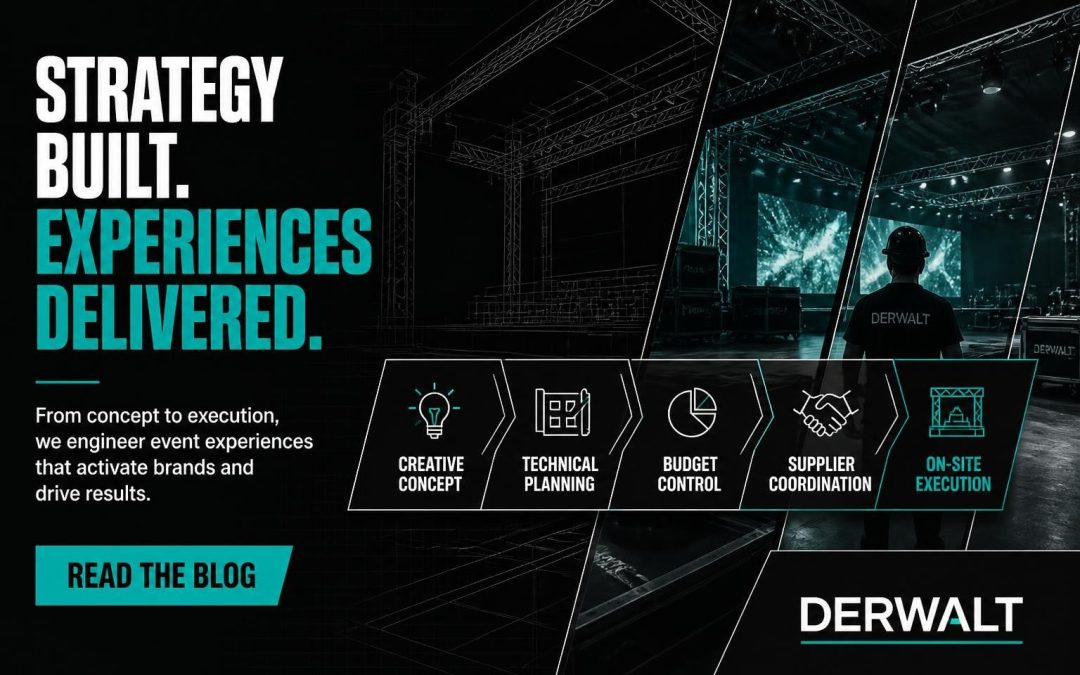
Event experiences have evolved from simple gatherings into strategic brand platforms that demand production intelligence, technical precision, and operational excellence. In 2026, the organizations that succeed in creating memorable event experiences understand that impact comes from the seamless integration of creative vision with execution capability. This integration requires comprehensive planning, risk mitigation, budget discipline, and a command of both strategic objectives and technical delivery.
Strategic Framework for Event Experiences
Building effective event experiences begins with a clear strategic framework that connects brand objectives to measurable outcomes. Too many organizations approach events as isolated activities rather than integrated brand moments with specific business goals.
The foundation of any successful event experience starts with defining what success looks like in concrete terms. These objectives should align with broader business strategy, whether that means generating qualified leads, strengthening client relationships, launching new products, or building brand awareness in targeted markets. Without this strategic clarity, even technically flawless events fail to deliver business value.
Aligning Stakeholder Expectations
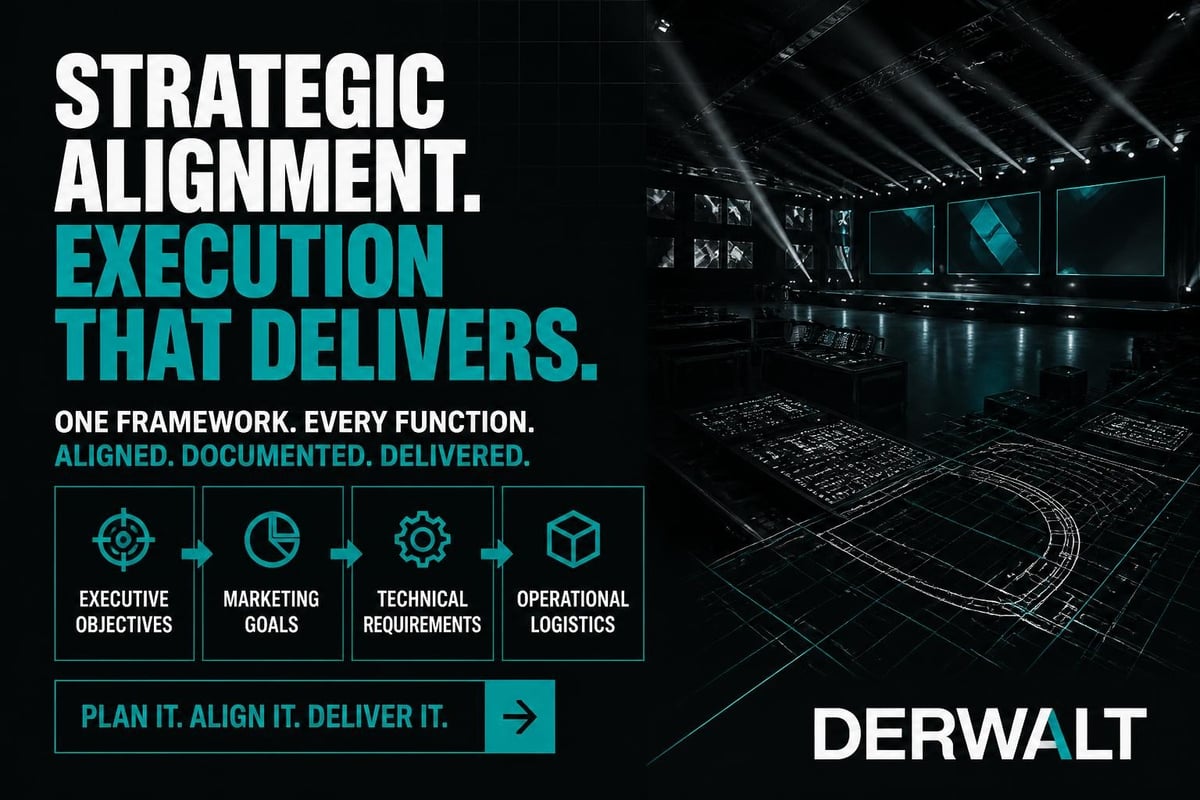
Event experiences involve multiple stakeholders with different priorities and expectations. Executive leadership focuses on return on investment and brand positioning. Marketing teams need engagement metrics and content opportunities. Operations teams require logistical efficiency and risk management. Sales teams want quality interactions with prospects.
Successful event experiences balance these competing priorities through:
- Clear communication protocols established during initial planning phases
- Documented decision-making frameworks that prevent scope creep
- Regular stakeholder updates tied to production milestones
- Realistic timelines that account for approval cycles and technical requirements
This stakeholder alignment process prevents the costly revisions and last-minute changes that undermine both budget control and creative quality. When everyone understands the strategic objectives and their role in achieving them, execution becomes significantly more efficient.
Production Intelligence as Competitive Advantage
Production intelligence separates professional event experiences from amateur attempts. This intelligence encompasses the accumulated knowledge of what works in practice, not just in concept. It includes understanding supplier capabilities, anticipating technical challenges, managing site-specific constraints, and building contingency plans that actually function under pressure.
Organizations often underestimate the technical complexity involved in creating seamless event experiences. A single brand activation might require coordination across audiovisual suppliers, fabrication teams, catering services, security personnel, technology providers, and venue management. Each of these elements presents potential failure points that require proactive management.
| Production Element | Planning Requirement | Risk Factor | Lead Time |
|---|---|---|---|
| Audio/Visual Systems | Technical specifications, power loads, rigging points | High | 4-6 weeks |
| Custom Fabrication | Design approvals, material sourcing, transport logistics | Medium | 6-8 weeks |
| Venue Coordination | Access schedules, load-in restrictions, compliance requirements | High | 2-3 months |
| Technology Integration | Network infrastructure, app development, data security | High | 6-10 weeks |
The table illustrates why professional event experiences require extended planning horizons and integrated project management. Event management best practices emphasize that successful outcomes depend on this detailed technical planning combined with clear communication across all production streams.
Budget Control Through Production Planning
Budget overruns represent one of the most common failures in event production. These overruns rarely result from supplier pricing issues. Instead, they emerge from scope changes, inadequate technical specifications, rushed timelines, and insufficient contingency planning.
Effective budget control requires detailed line-item planning that accounts for every production element. This includes obvious costs like venue rental and catering, but also frequently overlooked expenses such as permits, insurance, load-in labor, equipment transport, and post-event breakdown. Professional production planning builds realistic budgets with appropriate contingencies, then manages those budgets through disciplined change control processes.
DERWALT approaches production management through systematic budget control that gives clients confidence in financial outcomes. This production intelligence for brand experiences ensures resources are allocated strategically rather than reactively, preventing the cost escalation that undermines event ROI.
Technical Planning for Experiential Engagement
Technical planning transforms creative concepts into deliverable event experiences. This planning addresses the practical requirements that determine whether ambitious ideas can actually be executed within available resources, timelines, and site constraints.
Site Assessment and Logistics Coordination
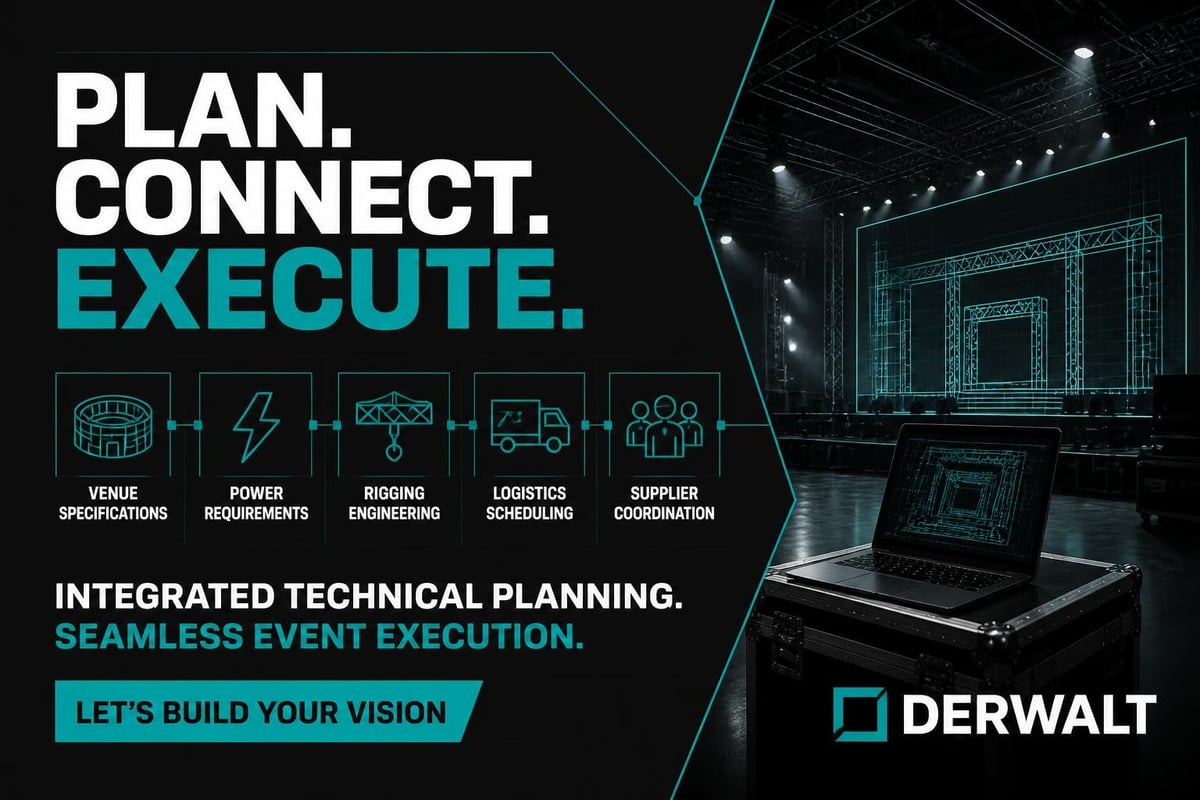
Every venue presents unique challenges that impact production feasibility. Power availability, load-bearing capacity, access restrictions, noise limitations, and existing infrastructure all shape what can realistically be achieved. Professional technical planning begins with comprehensive site assessments that document these constraints before creative development proceeds too far.
Critical site assessment elements include:
- Electrical capacity and distribution points for all technical systems
- Rigging points, weight loads, and structural engineering requirements
- Load-in access including door dimensions, elevator capacity, and timing restrictions
- Environmental factors such as outdoor weather exposure or temperature control
- Compliance requirements including fire safety, emergency egress, and accessibility standards
This technical layout planning foundation ensures that creative ambitions align with practical reality. It prevents the expensive surprises that occur when technical requirements are addressed too late in the planning process.
Creating Authentic Brand Connections
Event experiences succeed when they create authentic connections between brands and audiences. Authenticity in this context means alignment between brand values, event design, and attendee expectations. It requires understanding what audiences actually care about rather than what marketers assume they want.
Creating authentic destination experiences involves deep research into audience preferences and cultural context. For brand activations in South Africa, this might mean incorporating local suppliers, celebrating regional culture, or designing experiences that reflect the diversity and creativity of specific markets.
Audience-Centric Design Methodology
Professional event experiences begin with audience research, not creative brainstorming. This research identifies what attendees need, what challenges they face, and what experiences they find valuable. It examines their content preferences, interaction styles, time constraints, and decision-making processes.
Organizations can gather this intelligence through multiple channels including pre-event surveys, past attendee data analysis, social listening, and stakeholder interviews. The goal is building detailed audience profiles that inform every design decision from content programming to spatial layout to engagement mechanics.
Once audience needs are documented, experiential marketing strategies should map specific touchpoints that deliver value at each stage of the attendee journey. This journey-based approach ensures that event experiences remain focused on attendee outcomes rather than organizational convenience.
Measurement and Continuous Improvement
Event experiences generate vast amounts of data that most organizations fail to capture or analyze systematically. This data represents critical intelligence for optimizing future events and demonstrating business impact to stakeholders who control budgets.
Real-Time Feedback Integration
Real-time feedback mechanisms allow production teams to identify and address issues while events are still in progress. Digital tools enable pulse checks, sentiment tracking, and immediate response collection that provides actionable intelligence during live execution.
Beyond real-time monitoring, comprehensive measurement frameworks should capture:
- Registration and attendance metrics including conversion rates and demographic data
- Engagement indicators such as session attendance, dwell time, and interaction rates
- Content performance measured through downloads, questions asked, and post-event reference
- Lead quality and sales pipeline contribution for business-focused events
- Brand perception shifts documented through pre and post-event surveys
- Social reach and earned media value from attendee sharing and coverage
This measurement discipline transforms event experiences from one-time executions into learning opportunities. Best practices for leveraging event attendee data emphasize that the most valuable insights come from analyzing patterns across multiple events rather than treating each activation in isolation.
| Metric Category | Data Source | Analysis Frequency | Action Trigger |
|---|---|---|---|
| Registration Performance | CRM and event platform | Weekly during campaign | <85% of target |
| Attendee Engagement | App analytics, sensors, staff reports | Real-time during event | <70% participation |
| Content Effectiveness | Session feedback, follow-up surveys | Within 48 hours post-event | <4.0/5.0 rating |
| Business Impact | Sales pipeline, lead scoring | 30-60 days post-event | <15% qualified rate |
Risk Mitigation Through Systematic Planning
Event experiences involve inherent risks that require systematic identification and mitigation strategies. These risks span technical failures, supplier issues, weather disruptions, safety incidents, and reputational challenges. Professional production management doesn't eliminate risk but makes it manageable through structured planning.
Building Effective Contingency Plans
Contingency planning requires identifying potential failure points across every production system and developing response protocols before issues occur. This planning should be documented, communicated to all relevant stakeholders, and tested through scenario exercises when practical.
For outdoor brand activations, weather contingencies might include backup venue options, postponement criteria, and communication plans for attendee notification. For technology-dependent experiences, contingencies should address network failures, power outages, and equipment malfunctions with backup systems and manual alternatives.
Essential contingency planning elements:
- Documented decision trees that specify who makes calls and based on what criteria
- Backup suppliers identified and contracted for critical production elements
- Communication protocols for notifying stakeholders of plan changes
- Financial reserves allocated to contingency activation costs
- Insurance coverage appropriate to event scale and risk profile
Organizations with comprehensive production management capabilities build these contingency frameworks into standard planning processes rather than treating risk management as an afterthought.
Supplier Management and Vendor Coordination
Event experiences typically involve dozens of suppliers whose work must integrate seamlessly. Poor supplier management creates bottlenecks, quality issues, and cost overruns that undermine even well-planned events. Professional coordination ensures that all vendors understand their roles, dependencies, and performance standards.
Effective supplier management begins during vendor selection. This process should evaluate not just pricing and technical capability but also reliability, communication practices, and cultural fit with project requirements. Reference checks and past performance reviews provide critical intelligence that prevents problems later.
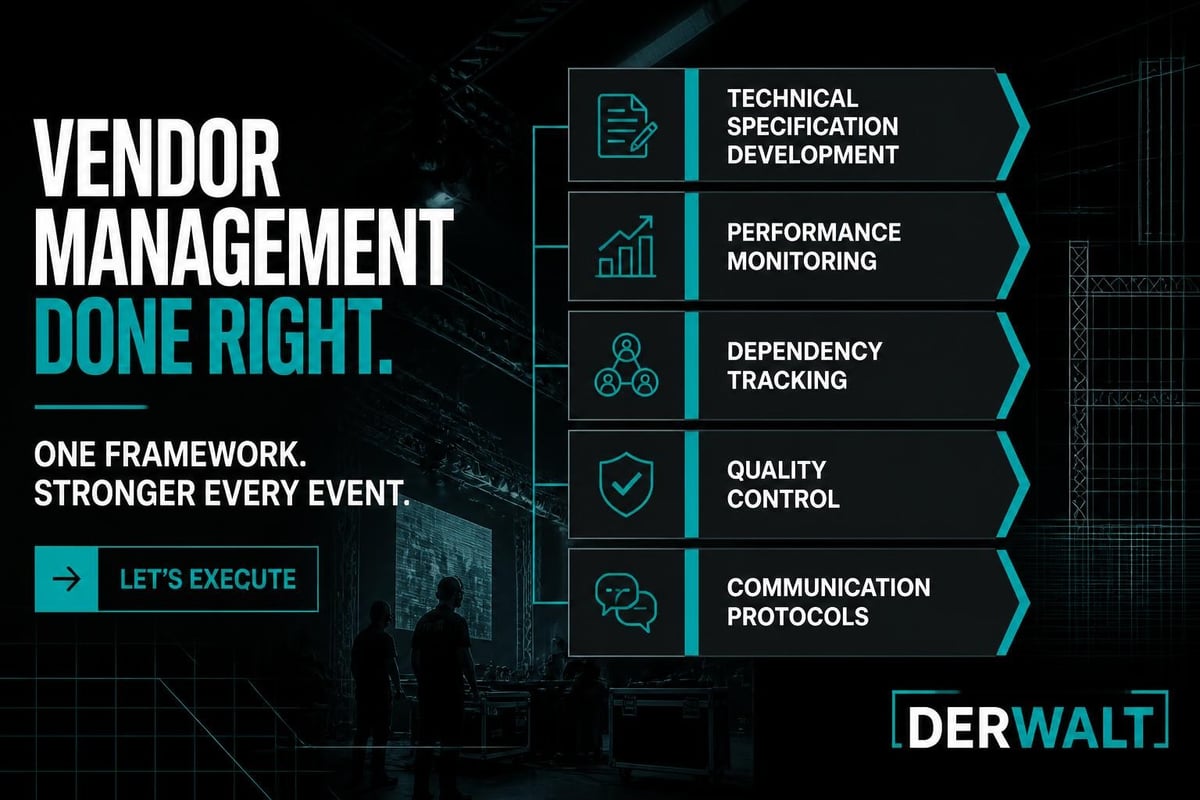
Once suppliers are contracted, coordination requires:
- Detailed technical specifications that eliminate ambiguity about deliverables
- Project schedules that account for dependencies between different vendors
- Regular coordination meetings that address conflicts before they become critical
- Clear escalation procedures for resolving disputes or performance issues
- Performance monitoring against defined quality standards and timeline commitments
This systematic approach to vendor coordination represents a core competency for organizations delivering complex event experiences. It transforms supplier relationships from transactional arrangements into collaborative partnerships focused on shared success.
Content Strategy for Event Experiences
Content represents the substance of event experiences, yet it often receives insufficient strategic attention. Organizations focus on logistics and production while treating content as something that will naturally emerge. This approach results in unfocused programming that fails to deliver attendee value or business outcomes.
Professional content strategy for event experiences begins months before execution. It involves identifying key themes, developing learning objectives, recruiting appropriate speakers or facilitators, and structuring programs that maintain engagement throughout the event duration. B2B event content best practices emphasize that content planning should focus on long-term value creation rather than just filling agenda slots.
Programming Architecture and Flow Design
The sequence and structure of content significantly impacts attendee experience and knowledge retention. Event programming should follow narrative arcs that build momentum, provide variety, and allow for both concentration and social interaction.
Programming architecture considerations include session length optimization, break timing, energy management throughout the day, and transitions between different content formats. Professional experience design recognizes that attendee attention and engagement fluctuate based on physiological and psychological factors that can be anticipated and managed.
On-Site Execution Excellence
All planning and preparation culminate in on-site execution where event experiences come to life. This execution phase demands different capabilities than planning, including real-time problem-solving, team coordination under pressure, and the ability to maintain quality standards while adapting to changing circumstances.
Professional execution teams arrive on-site well before attendees with detailed run-of-show documents, communication systems, and clearly assigned responsibilities. These teams conduct technical rehearsals that test all systems, practice transitions, and identify issues that weren't apparent during planning.
Critical execution phase elements include:
- Command center operation with real-time visibility across all event areas
- Communication networks connecting production teams, venue staff, and suppliers
- Quality control checkpoints at key moments throughout the event timeline
- Issue tracking and resolution protocols with clear escalation paths
- Real-time adaptation capability when circumstances require plan modifications
This execution discipline ensures that the careful planning and substantial investment in event experiences translates into actual attendee impact and business results. Organizations that excel at execution understand that success depends on both preparation and the ability to respond effectively when reality diverges from plans.
The difference between adequate events and exceptional event experiences often comes down to execution quality. This quality emerges from teams with production expertise, systematic processes, and the confidence that comes from having successfully managed complex activations before. DERWALT’s portfolio demonstrates this execution excellence across diverse event types and client requirements.
Post-Event Analysis and Knowledge Capture
Event experiences generate valuable learning that most organizations fail to capture systematically. Post-event analysis should document what worked, what didn't, and why, creating institutional knowledge that improves future performance. This analysis provides the foundation for continuous improvement in production processes, creative approaches, and strategic outcomes.
Effective post-event analysis occurs through structured debriefs with all key stakeholders while details remain fresh. These sessions should review performance against objectives, examine budget variance, assess supplier performance, and identify process improvements. The insights should be documented in formats that make them accessible for future planning teams.
Organizations should also conduct thorough attendee research to understand experience quality from the audience perspective. Attendee survey best practices suggest asking specific, actionable questions rather than generic satisfaction ratings. This research reveals gaps between what organizers think they delivered and what attendees actually experienced.
Event experiences that deliver measurable business impact require strategic planning, production intelligence, and execution excellence across every project phase. Success depends on aligning stakeholder objectives, managing technical complexity, controlling budgets, mitigating risks, and maintaining quality standards from concept through completion. Organizations ready to elevate their brand activation capabilities need partners with comprehensive production expertise and proven delivery capability. DERWALT brings 360º production intelligence to every client engagement, transforming strategic objectives into memorable experiences that drive business results.
Recent Comments