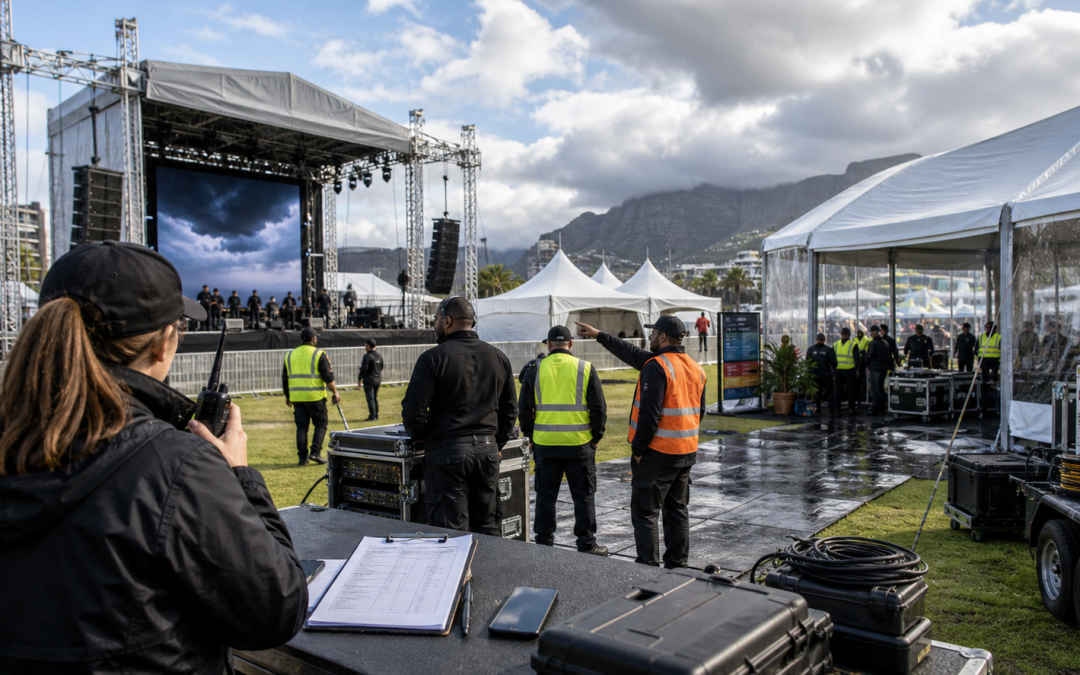
Weather-Ready: Practical Contingency Planning for South African Outdoor Activations
Outdoor activations in South Africa demand weather-aware planning. This guide provides a practical, field-tested contingency framework for stage setup, power, safety, and guest experience, ensuring events stay on track despite rain, heat, or wind.
The short answer: begin with a formal weather risk assessment and embed a layered contingency plan into every phase of production. This includes shelter, power redundancy, crowd management, flexible scheduling, and clear go/no-go criteria, all tied to supplier contracts and authorities.
Why weather contingency matters in South Africa
South Africa’s climate is diverse and seasonal. Coastal cities can experience sudden wind shifts, afternoon thunderstorms, and heat waves, while inland venues may face rapid changes in temperature and rainfall. Outdoor activations are particularly vulnerable to weather because audience comfort, sound and lighting performance, and power reliability all hinge on stable conditions. A robust contingency plan reduces risk to guests and staff, minimizes reputational damage, and preserves your production timeline and budget.
Building a practical contingency plan
Start with a repeatable framework that can be applied to any outdoor activation, from a pop-up brand experiential to a multi-day festival. The framework below is designed to be actionable, scalable and accentual to SA workflows, procurement cycles and permission processes.
1) Conduct a formal weather risk assessment
- Identify likely weather scenarios for your venue and season (rain, wind, heat, lightning, cold fronts).
- Assign likelihood and impact scores, and map them to decision points (e.g., stage closure, evacuation, or delay).
- Establish triggers and thresholds for action (e.g., wind speed, rainfall intensity, lightning distance).
2) Define shelter, stage, and infrastructure requirements
- Secure weather-rated tents, canopies, and cover for gear and audience, with wind-load calculations for SA sites.
- Plan for rapid enclosure of critical equipment (sound, lighting, control rooms) and safe egress routes for guests.
- Pre-arrange on-site drainage and clear ground cover to mitigate muddy or flooded areas.
3) Establish power redundancy and fuel planning
- Include backup generators, fuel storage, and a plan to switch loads between main and backup sources if grid reliability is uncertain.
- Account for load-shedding risk by staggering critical systems and carrying surge protection and spare cables.
- Test power distribution under load before showtime and have a rapid shutdown protocol for hazardous weather.
4) Integrate climate control and guest comfort
- Provide shade and cooling options during heat events; ensure hydration stations and first-aid access are clearly signposted.
- Implement wind and dust mitigation measures for audience areas and equipment.
5) Develop a clear communications and decision protocol
- Define who can declare delays, postponements, or cancellations and how announcements will be communicated (PA, screens, digital channels).
- Establish regular weather briefings for the production team and on-site leadership during the event.
6) Plan for safety and crowd management under weather stress
- Design crowd flow with alternate egress routes and safe havens if open-air conditions worsen.
- Coordinate with security and medical teams on how to respond to weather-related injuries or heat illness.
7) Build a legal, permit, and contractual framework
- Incorporate weather clauses in vendor and venue contracts, including go/no-go criteria and weather-related refunds or rescheduling terms.
- Confirm permissions for temporary structures, night-time operations, and any required weather-related safety waivers.
8) Create a practical budget reserve
- Set aside a contingency (commonly 5–15% of total production budget) specifically for weather-related changes, equipment rental, and last-minute staffing changes.
- Plan for additional transport and accommodation costs if schedules shift due to weather.
Key components of the contingency toolkit
Equip your team with ready-to-deploy resources that align with SA realities.
Shelter and environment
- Wind-rated structures, waterproofing, and thermal management for equipment rooms.
- Ground protection, drainage, and slip-resistant surfaces in all weather conditions.
Stage, rigging, and lighting
- Rigging designed to withstand anticipated wind loads; secure all rigging points and implement automatic safety cutouts.
- Accessible canopy coverings for critical lights to protect from rain and hail.
Power, fuels, and logistics
- Multiple power feeds with automatic transfer switches; on-site battery or generator backups for critical systems.
- Clear fuel-frequency and refill plan; dedicated safety measures for fuel storage near the venue.
Safety, medical, and operations
- On-site medical team with rapid access to weather-related care; weather briefing for staff and volunteers.
- Emergency lighting, signaling equipment, and clearly marked shelter areas.
Communication and guest experience
- Weather alerts pushed through loudspeakers, mobile apps, and digital signage; multilingual messaging where needed.
- Clear signage for shelter locations, restricted areas, and exit routes in all weather conditions.
Staffing, permits, and procurement considerations
Weather planning touches every stakeholder. Align procurement, venue, and agency partners early, with explicit weather-based clauses and time-bound decision points.
- Engage primary suppliers with weather-clauses for delivery windows, setup flexibility, and contingency reallocations.
- Coordinate with the venue on permitted operating hours during weather events and required shelter capacities.
- Train staff and volunteers on weather protocols, safety routes, and communication flows before doors open.
Operational playbooks and decision points
Operational playbooks translate theory into action. They define who decides, when to delay or cancel, and how to execute a seamless transition to contingency modes.
- Publish a go/no-go decision matrix tied to objective weather metrics (e.g., wind speed thresholds, lightning distance).
- Schedule built-in buffers in load-in and load-out to accommodate weather delays.
- Maintain real-time weather monitoring with local forecasts and on-site sensors.
Checklist: Weather-ready production quick reference
- Weather risk assessment completed and stored with the project file.
- Go/no-go criteria defined and legally integrated into vendor contracts.
- Backup power plan tested and documented.
- Shelter and crowd-control measures installed and inspected.
- Communication plan tested with rehearsals and PA systems.
- Budget reserve allocated for weather contingencies.
FAQ
What weather scenarios should I plan for?
Plan for rain, strong winds, heat and sun exposure, lightning, and cold fronts common to SA regions; tailor responses to venue and season.
How do I communicate weather plans to attendees?
Use a multi-channel approach: PA announcements, digital screens, venue signage, and push notifications through event apps or SMS where available.
What should be in a weather contingency budget?
Include shelter rental, power redundancy, additional staffing, overtime, transport changes, and potential postponement or rescheduling costs.
What legal considerations accompany weather changes?
Contracts should include weather-related go/no-go criteria, liability reminders, force majeure where appropriate, and explicit supplier obligations for delays or cancellations.
How can we rehearse weather scenarios effectively?
Run a controlled drill simulating a weather event, with all stakeholders present to validate decision points, communications, and transition to contingency operations.
Sources
- Event safety guidelines — HSE
- ISO 20121: Event sustainability management systems — ISO
- Event Safety Alliance — ESA
- OSHA — U.S. Department of Labour
- IAVM — International Association of Venue Managers
Ready to plan a weather-ready activation?
For brands and agencies seeking end-to-end experiential marketing, activation or event-production support with weather-smart planning, DERWALT delivers practical, safety‑driven production leadership from concept through execution.
Recent Comments