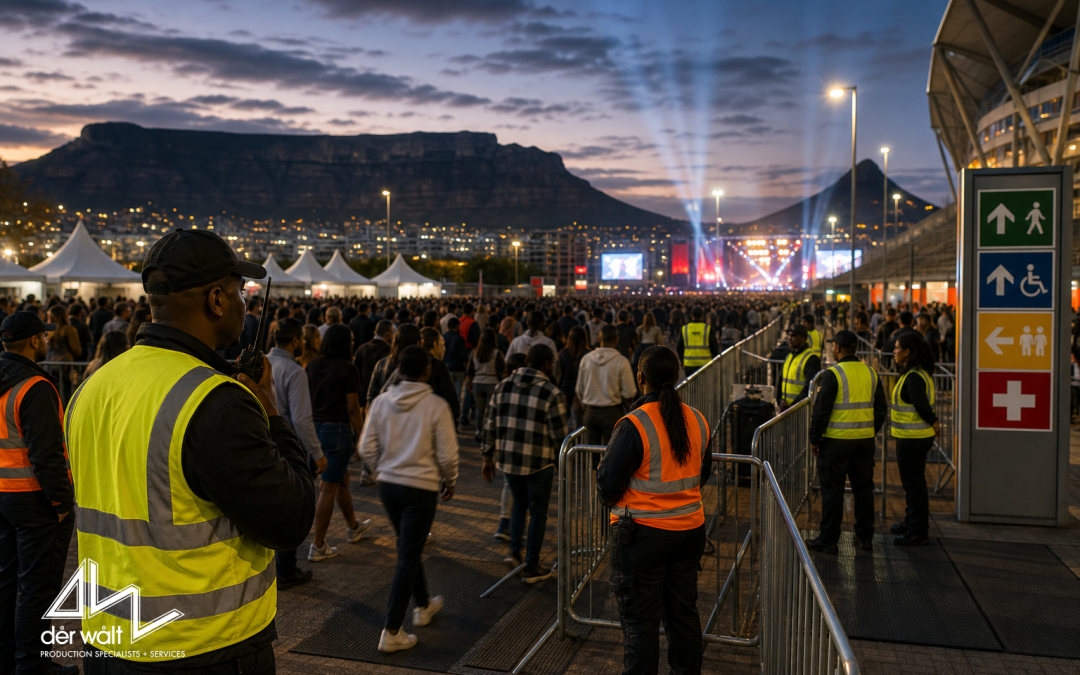
Mastering Crowd Safety and Flow for Large-Scale South African Events
A practical, step-by-step guide to planning crowd management, safe egress, and smooth pedestrian flow for experiential activations in South Africa. Learn how to structure risk assessments, staffing, and logistics that meet local regulations and deliver an exceptional audience experience.
Begin with a formal risk assessment aligned to ISO 20121 and HSG195, map pedestrian flows, and assign staffing roles before finalising the venue or schedule.
Why crowd safety and flow matter for experiential events
Experiential activations rely on dynamic interaction, rapid movement between zones, and high spectator anticipation. Poor crowd management can erode safety, damage brand perception, and complicate logistics. In South Africa, where venues range from city arenas to open-air festivals, a robust plan must account for climate, transport access, and local permitting realities. A strong crowd-safety strategy protects people, preserves experience, and keeps production on schedule.
Core elements of a robust plan
Effective crowd management blends safety, experience design, and operational discipline. The following elements form a practical baseline for large-scale activations:
- Risk assessment and control measures: identify hazards, likelihood, and consequences; implement mitigations with clear ownership.
- Pedestrian flow and space planning: define ingress/egress routes, queuing areas, and transition points to minimise pinch points.
- Staging, barriers, and traffic management: select barrier types and placement that balance visibility with safety and accessibility.
- Communication and signage: ensure multilingual, visible instructions for directions, safety messages, and emergency procedures.
- Staffing and training: assign roles (marshals, stewards, security, medical) and run site-wide briefings and drills.
- Emergency planning and access: coordinate with local emergency services, establish muster points, and maintain clear access for responders.
- Accessibility and inclusive design: provide provisions for people with mobility needs, hearing/visual impairment, and family-friendly viewing zones.
- Weather and climate readiness: have contingencies for heat, rain, wind, and air quality affecting comfort and safety.
- Vendor coordination and supply chain: align external partners with safety standards, access controls, and timing windows.
- Measurement and learning: collect data on flows, dwell times, wait times, and incident rates to refine future plans.
A practical planning framework for South Africa
Applying a structured framework helps align safety, experience, and local realities. The steps below offer a repeatable approach for major activations across South Africa’s diverse markets.
- Define objectives and constraints: establish attendance targets, show duration, and spatial footprint. List regulatory requirements, permits, and venue-specific rules early.
- Site and weather intelligence: study the venue’s layout, surrounding transport options, and typical weather patterns. Build contingency timelines for heat waves, sudden rain, or load-in disruptions.
- Risk assessment alignment: conduct a formal risk assessment following ISO 20121 guidelines for sustainable events, and apply HSG195 crowd-management principles to identify crowd-related hazards and controls.
- Layout and circulation design: map all ingress, egress, queuing, retail fronts, and activation touchpoints. Create separate zones for VIPs, media, families, and general admission to minimise cross-traffic.
- Staffing plan and training: define marshal locations, shift patterns, and handover points. Run pre-event briefings and scenario-based drills with all teams.
- Traffic, transport, and parking: coordinate with local authorities, set clear vehicle access routes, and plan a phased arrival/egress to reduce congestion.
- Medical and safety services: position first-aid posts with rapid access for responders and have a clear escalation protocol to hospitals when needed.
- Accessibility and inclusivity: design pathways that are navigable for wheelchairs, strollers, and people with limited mobility. Provide accessible viewing zones and assistive services.
- Communications and signage: deploy multilingual signage and active PA systems. Use radio channels for staff coordination and real-time updates.
- Rehearsals and run-of-show: simulate crowd movements during load-in and show time. Build a run-of-show that includes moment-by-moment crowd-management actions.
- Measurement and debrief: track dwell times, queue lengths, incident counts, and response times. Use findings to improve future activations and safety cultures.
Practical guidance for controllable risk and better experience
Practical risk controls are about clarity, redundancy, and speed of response. Here are concrete recommendations that work well in South African contexts:
- Limit density in high-traffic zones: avoid overcrowding by regulating attendee flow with timed entry windows and staggered activations.
- Design for visibility: ensure marshals and security staff have sightlines to congestion points and can communicate quickly with attendees and each other.
- Use staged ingress/egress points: multiple controlled entry points reduce bottlenecks and improve emergency access.
- Provide dedicated staff for critical zones: medical, VIP, loading bays, and stage access should have clearly defined duties and separate communications channels.
- Plan for weather contingencies: shade, hydration stations, mist or cooling zones, and covered walkways help manage heat stress during SA summers.
- Engage local suppliers and venues early: ensure equipment, barriers, and communication systems meet local standards and delivery windows align with load-in schedules.
Safety, sustainability, and stakeholder coordination
Good practice extends beyond safety to sustainability and stakeholder alignment. ISO 20121 emphasizes responsible event management, including environmental and social considerations. In practice, this means selecting reusable barriers, reducing single-use materials, planning efficient transport routes to minimise emissions, and communicating safety and accessibility commitments to communities and partners. Working with agencies, venues, sponsors, and service providers in a coordinated way reduces risk and enhances the overall experience for attendees.
Checklist: 10 essential actions before doors open
- Complete the risk assessment and circulate it to all project leads.
- Confirm venue access, barrier layout, and marshal locations with the venue management.
- Train marshals and security on crowd flow protocols and emergency procedures.
- Verify signage, wayfinding, and multilingual communications are in place.
- Establish medical posts and emergency routes with responders on standby.
- Run a full rehearsal focusing on crowd movement between activation zones.
- Test access routes for vehicles and pedestrians, adjusting for anticipated volume.
- Confirm transport and parking plans with local authorities and partners.
- Prepare weather contingencies and cooling/ hydration stations.
- Review sustainability measures and waste management plans with suppliers.
Common mistakes and things to consider
- Underestimating crowd density in peak moments; overloading a single ingress can cause delays and incidents.
- Inadequate signage or multilingual information leading to confusion and crowding.
- Poor coordination with local emergency services or last-minute changes to routes.
- Failing to plan for accessibility; exemptions and last-minute accommodations can cause delays and reputational risk.
- Neglecting weather contingencies; heat or rain can alter comfort and safety requirements suddenly.
FAQ
What is the first step in planning crowd safety for a large SA event?
Conduct a formal risk assessment aligned to ISO 20121 and HSG195, then map pedestrian flow and assign staffing clearly.
How can we ensure accessibility without compromising safety?
Design dedicated accessible routes and viewing areas, provide assistive services, and ensure staff are trained to assist attendees with mobility or sensory needs.
What role do signage and communications play in crowd management?
Clear, multilingual signage and real-time communications prevent confusion, reduce bottlenecks, and enable swift responses during incidents.
How do we handle weather-related risks for outdoor SA events?
Plan shaded areas, hydration points, cooling solutions, and contingency rain plans; adjust timings and space allocations as necessary.
What should a post-event review include?
Capture data on flows, queue times, incident reports, and staff feedback to refine future activations and raise overall safety standards.
Sources
- ISO 20121: Sustainable Events Management — International Organization for Standardization
- HSG195: Managing crowds at events — UK Health and Safety Executive
- GSTC: Sustainable Events — Global Sustainable Tourism Council
- Event Safety Alliance: Resources — Event safety guidelines and checklists
Ready to plan your next activation with DERWALT?
DERWALT offers end-to-end event delivery, including production management, logistics coordination, safety planning, and immersive experiential design. Reach out to discuss how we can help you deliver a safe, scalable, and unforgettable live experience in South Africa.
Recent Comments