Practical Risk Planning for Outdoor Brand Activations in South Africa
A practical framework for brands, agencies and venues planning outdoor activations in South Africa. Learn to manage weather, safety, procurement, transport, labour, budgets and timelines to minimise disruption and deliver successful experiential campaigns.
Why a structured approach matters
Outdoor activations sit at the intersection of creativity and complex logistics. A structured approach helps ensure the activation meets brand objectives while remaining safe, compliant and financially controlled. In South Africa, where weather can shift quickly, transport networks vary by region, and local permitting processes differ from town to town, a repeatable planning framework reduces surprises and accelerates decision-making. Importantly, this guidance is practical and directional; it highlights steps that are typically applicable across SA markets, but verification with local authorities, venues and service providers is essential for each event.
Adopting a risk-informed planning process also supports faster approvals and smoother on-site execution. By aligning production schedules with safety and weather contingencies, brands can protect reputation, protect staff and participants, and deliver experiences that feel seamless even when conditions shift. The aim is not to eliminate risk, but to control it through preparation, clear roles, and documented responses.
Key considerations for South African outdoor activations
Weather and climate planning
South Africa’s climate is highly regional. Outdoor activations should include a weather contingency from the outset. Practical steps include: building a weather risk matrix that maps probability against impact (e.g., high winds, lightning, heavy rain) and defining trigger thresholds for delays or shutdowns; ensuring shade, hydration and cooling measures are available, especially in hotter regions; and having a plan for rapid sheltering or evacuation if storms develop. The South African Weather Service (SAWS) provides forecasts and advisories that should be monitored in the weeks leading up to the event and on-site, with updates at least every few hours during the activation window.
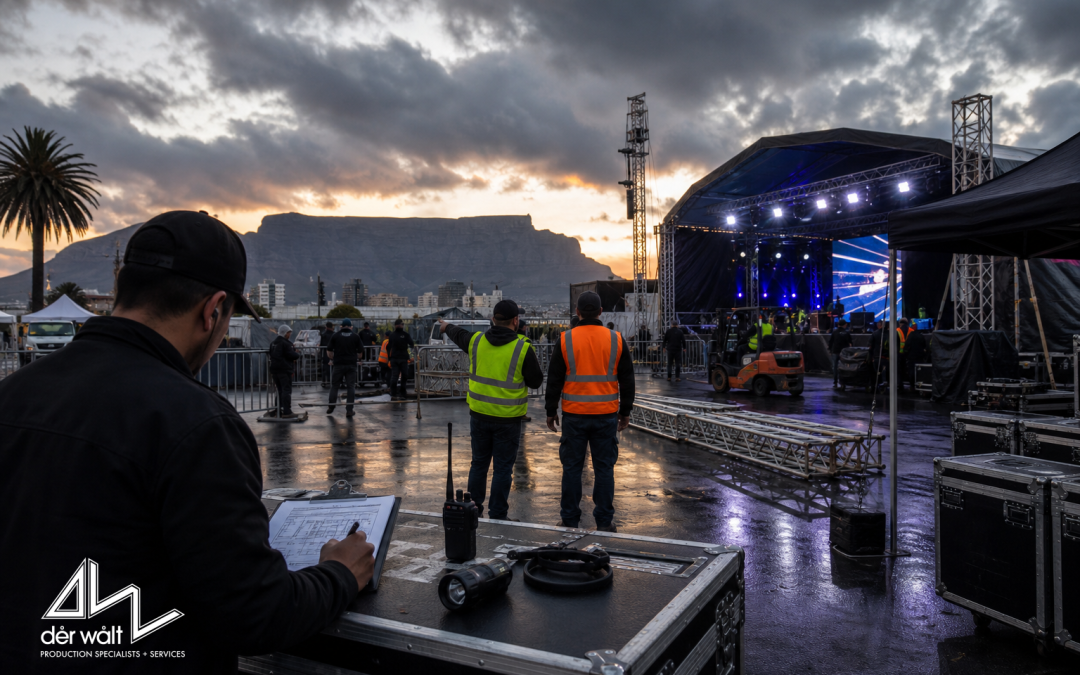
In practice, this means identifying alternate venues or rain dates, pre-arranging weatherproofing (tents, canopies, wind-rated structures), and staging equipment in wind-resilient configurations. For coastal cities like Cape Town or Durban, plan for higher wind loads and humidity, and ensure that rigging and stage elements comply with safety standards. A proactive weather strategy reduces the likelihood of last-minute changes that can derail production timelines and inflate budgets.
Permits, safety and labour compliance
Permitting varies by municipality in South Africa, and it often governs road closures, street closures, noise levels, and occupancy limits. A practical rule is to engage the local authority early, map the permit timeline into the production schedule, and secure written approvals before committing significant spend. Safety frameworks should align with international best practices and local requirements; in practice, this means implementing an Occupational Health and Safety (OHS) approach, securing appropriate insurance and permits for equipment, and appointing competent safety stewards on-site. Working with accredited security providers, licensed electrical display teams, and trained crowd management personnel reduces risk and supports smoother operations.
While global safety resources offer guidance, verify applicability to South African contexts with local authorities and safety professionals. It’s also prudent to maintain a safety plan that documents hazard assessments, control measures, emergency procedures, and communication flows. Clear roles and responsibilities—from production management to on-site safety supervisors—help ensure every team member knows how to respond if conditions change or an incident occurs.
Procurement and local suppliers
Local procurement brings benefits in lead times, currency stability, and supplier accountability. A practical approach is to pre-qualify a shortlist of local suppliers for key categories (rigging, power distribution, AV, staging, catering, and general consumables), verify insurance and safety records, and secure preferred pricing through short-term contracts or MOUs. When feasible, stagger procurement milestones to align with the production timeline and create contingency buffers for supply shortages or lead-time extensions. Prioritise suppliers with demonstrable compliance to safety standards and a track record of reliable performance on events.
In budgeting and procurement, consider the total cost of ownership, including delivery, on-site labour, power generation, and weather-related contingencies. Local procurement also supports the broader South African economy and helps with resource planning for larger activations that involve numerous vendors and subcontractors.
Logistics and transport
Logistical planning in SA often involves coordinating multiple transport modes, site access constraints, and potential traffic or road closures. A practical plan includes: creating a site access map for trucks and crew, coordinating delivery windows with the venue and local authorities, securing appropriate permits for heavy vehicles if needed, and planning for parking, staging, and on-site circulation routes. Consider wind and weather when transporting large or fragile elements; pre-rigging and securing equipment off-site where possible reduces on-site handling and risk. On-site power planning—whether grid-fed, generator-based, or hybrid—should include fuel management, refuelling safety, and fire suppression readiness.
Partnering with a production team that understands South Africa’s transport lanes and regional constraints helps keep timelines intact. Clear cargo manifests, packaging that withstands weather exposure, and a robust on-site logistics lead reduce delays and miscommunication during build and strike phases.
Budgeting and timelines
Budgeting for outdoor activations requires careful accounting for weather contingencies, permit fees, security, insurance, and contingency staffing. A practical guideline is to build a core budget with a 10–20% contingency for weather-related delays, last-minute changes, or supplier substitutions. Timelines should factor permitting windows, vendor lead times, and the reality that certain venues or municipalities require longer approval periods. Create a master production schedule that includes pre-production milestones, on-site build days, the activation window, and a clearly defined strike plan. Communicate these timelines to all stakeholders and maintain a rolling forecast to accommodate changes without derailing the overall program.
Site risk assessment and contingency planning
Site risk assessment is an ongoing process. A practical approach includes a walk-through with the venue and key suppliers to identify tripping hazards, electrical hazards, noise considerations, crowd flow challenges, and emergency egress routes. Maintain a risk register that documents hazards, likelihood, impact, and control measures, and assign responsibility to a named person for each item. Develop contingency plans for power failures, bad weather, or vendor delays, and rehearse emergency procedures with staff and on-site teams. Regular safety briefings during build and event days keep everyone aligned and prepared to respond if something changes.
How DERWALT supports end-to-end activation programs
DERWALT specialises in experiential marketing, brand activations, and end-to-end event production. Our approach combines strategic planning with practical execution to deliver impactful live experiences while maintaining safety, schedule discipline, and budget control. We help with:
– Production management and on-site supervision to keep builds on track and ensure seamless handoffs between pre-production, build, show, and strike.
– Technical planning and stage/show production, including sound, lighting, AV, rigging, and power distribution designed for outdoor environments and variable weather.
– Logistics and supplier coordination, leveraging local networks to secure equipment, catering, security, and transport that meet safety and insurance standards.
– Content creation and activation execution, aligning creative concepts with practical feasibility, safety, and regulatory considerations.
– Compliance, permits, risk assessment, and safety planning, with a focus on transparency and documentation to support governance needs.
While the guidance above outlines practical steps, every activation is unique. DERWALT works closely with brands, agencies and venues to translate these principles into a tailored plan, aligning with procurement processes, production timelines, and on-the-ground realities in South Africa. We emphasise collaboration with local suppliers and authorities to ensure that activation formats meet both brand objectives and community safety expectations.
Sources
- South African Weather Service — Official meteorological service with forecasts, warnings and climate data for SA
- IOSH — The Institution of Occupational Safety and Health, guidance on safety planning
- International Live Events Association (ILEA) — Best practices and professional standards for live events
- Event Safety Alliance — Event safety guidelines and planning resources
- South African Bureau of Standards (SABS) — Standards and safety compliance resources
Ready to partner with DERWALT for experiential marketing and event production?
If you’re planning a high-impact outdoor activation in South Africa, DERWALT offers end-to-end support—from strategy and procurement through on-site production and post-event enablement. Contact us to discuss your brief, timeline and objectives, and we’ll tailor a plan that balances creativity, safety, and practical delivery.
Recent Comments