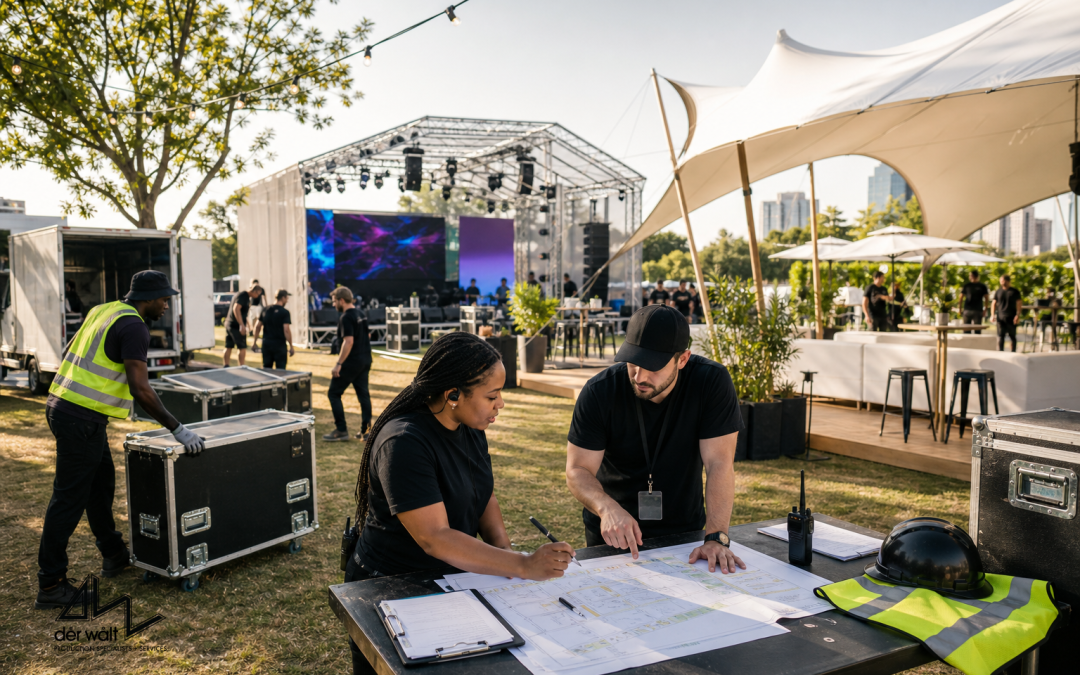
A Practical Guide to Safe, Budget-Smart Brand Activations in South Africa
A practical, supplier-aware playbook for planning, budgeting and delivering experiential activations in South Africa—from permits and weather planning to local procurement and on-site safety—without overpromising results.
South Africa’s experiential marketing landscape rewards bold ideas and local collaboration, but it also demands pragmatism. Procurement cycles, venue access, weather variability, labour laws and safety frameworks all shape how an activation unfolds from concept to clear takeaways for attendees. This guide offers a practical framework for brands, agencies, venues and production teams to plan activations that are engaging, compliant and deliverable within SA’s context. It is not a promise of outcomes; it is a tested approach to reduce risk, align stakeholders and keep production timelines on track.
Pre-production basics in a South African context
A successful activation starts with disciplined pre-production. In South Africa, you’ll typically need to align with venue requirements, secure permits where required, confirm local supplier availability, and build a flexible budget that allows for contingency without compromising quality. Early scoping with the venue and, where applicable, city or district authorities helps avoid delays that derail timelines.
Sourcing local suppliers and labour
Local procurement is not only a cost consideration; it supports the broader economy and helps with BBBEE and supplier diversity objectives. Key practical steps include:
- Establish a short list of vetted local suppliers for decor, sound, lighting, power, staging and catering. Prioritise those with proven SA-based operations and safety records.
- Request references, confirm insurance coverage and ensure licences or permits are current for any equipment or services you contract.
- Engage with labour providers who understand local regulations and can supply trained crew with appropriate PPE and safety briefings.
- With DERWALT’s capabilities in experiential marketing and production management, you can coordinate end-to-end supplier teams to maintain consistency across all components of the activation.
Permits and safety compliance
Permit requirements vary by city and venue, and some venues may require a comprehensive risk assessment and crowd-management plan. Practical steps include:
- Contact the venue early to understand permit needs, load-in times, truck routes and health and safety standards.
- Prepare a basic risk assessment and method statement (RAMS) that identifies potential hazards (slip/trip, electrical, crowding, fire and structural loads) and controls.
- Coordinate with security and emergency services to align on access control, evacuation routes, first-aid points, and communications during the event.
Production planning: weather, power, transport and venues
South Africa’s diverse climate means weather can become a central variable for outdoor or semi-outdoor activations. Power reliability varies by region and can affect technical runtimes and content delivery. Good planning translates to fewer surprises on show day.
Weather contingency planning in SA
Outdoor activations demand a weather plan that covers heat, rain, wind and dust. Consider:
- Multiple tenting or shade options and misting systems for heat mitigation in inland areas during summer.
- Rain plans with covered spaces, water-resistant covers for electronics, and a defined rain-out protocol.
- Wind considerations for stage rigging or hanging elements; secure all structures and reinforce points with local engineering guidance.
Power and generator safety
Reliable power is often a limiting factor. Practical practices include:
- Determine total load early and design a distribution plan that uses certified electrical equipment, weatherproof enclosures and proper cable management.
- Place generators in well-ventilated, secure areas away from crowds, with spill containment and fuel storage in compliance with safety guidelines.
- Plan for redundancy where critical systems (sound, lighting, video) rely on power continuity. Consider on-site UPS for essential components and a tested generator ramp-up procedure.
Transport, access and venue selection in major SA markets
Urban mobility, parking constraints and traffic can influence show flow and crew arrival times. Practical considerations include:
- Choosing venues with reliable loading zones, reasonable access for trucks and crew buses, and clear crowd-flow architecture.
- Developing a transport management plan that anticipates peak traffic periods and provides clear, communicated shifts for crews and talent.
- Coordinating with venues on delivery windows, waste removal schedules and any coordinated city services required (e.g., road closures, noise restrictions).
On-site execution: safety, risk assessment and crowd management
On the day, a disciplined, safety-first mindset helps protect attendees, staff and partners while preserving the activation’s experiential integrity. Clear roles and robust communication reduce last-minute chaos.
Crowd management and accessibility
Plan for safe ingress/egress, visible wayfinding, and accessible options for all guests. Practical actions include:
- Dedicated entry points with visible signage and trained stewards to guide attendees and manage queue lines.
- A clearly marked evacuation route and assembly area, tested in rehearsals and communicated to staff and emergency services.
- Accessible features (ramp access, seating, restrooms) and quiet zones to accommodate guests with diverse needs.
Vendor coordination and call times
Operational clarity helps avoid bottlenecks during setup, show-time and load-out. Best practices:
- Pre-show briefs with all suppliers and production teams to review timelines, responsibilities and contingency plans.
- A single point of contact per vendor on site for rapid decision-making and issue resolution.
- Realistic rehearsals and walk-throughs to confirm load-in sequences, power distribution, video playback, sound checks and stage cues.
Post-event: debrief, sustainability and cost control
Wrap-up activities should capture learnings, measure what matters and set foundations for future activations. A practical post-event routine includes debriefs, asset recovery, and sustainability practices that align with SA guidelines and client expectations.
Sustainability and waste management
Minimise environmental impact by planning for waste reduction, recycling streams and responsible disposal. Practical steps:
- Source reusable or recyclable materials where possible and establish separation streams on-site.
- Coordinate with local waste-service providers for timely removal and post-event clean-up.
- Document energy use and, where appropriate, quantify opportunities for greener choices in future activations.
Cost control and knowledge transfer
Documented post-event reviews help improve budgeting accuracy and supplier performance for subsequent activations. Capture learnings on vendor performance, schedule adherence and risk-management effectiveness, and share insights with internal teams and key partners.
In all of the above, practical execution hinges on robust collaboration between brand teams, agencies, venues and production partners. DERWALT offers end-to-end capabilities in experiential marketing, activation strategy, production management, content creation and on-site delivery. By coordinating these components with a clear risk and procurement framework, you increase the likelihood that your South African activation meets its creative intent while staying on time and within budget.
Sources
- Business Events South Africa (BESA) — BESA
- South African Weather Service — SAWS
- Event safety — Health and Safety Executive (UK)
- International Association of Venue Managers — IAVM
Ready to plan your next activation?
If you’re preparing a brand activation, experiential marketing program or full event production in South Africa, contact DERWALT to discuss end-to-end support—from strategic planning and supplier coordination to on-site execution and post-event debriefs.
Recent Comments