Weatherproofing South Africa Outdoor Events: A Practical Risk-Management Guide
A 25–40 word excerpt describing the article: Weatherproofing SA outdoor events demands robust contingency planning. Learn practical weather, safety, transport and procurement strategies tailored to South Africa’s unique context, with actionable steps for brands, agencies and venues.
Assessing Your Risk Landscape for South African Outdoor Events
Outdoor activations in South Africa sit at the intersection of climate, geography and local logistics. The risk profile varies by city, season and venue type. For brands, agencies and venues, a structured risk assessment early in the planning process reduces surprises later. Start with a simple framework: identify weather risks, safety obligations, access and transport constraints, and procurement dependencies that could impact schedule or budget.
Practical steps you can take now include mapping the venue’s exposure to sun, wind and rainfall, noting drainage and ground stability, and clarifying access routes for deliveries and emergency services. Consider seasonality — coastal regions may face humidity and afternoon storms, while inland venues can experience sharp temperature swings. Use a formal risk register that assigns owners and clear remediation actions to each risk.
In South Africa, compliance and local realities matter. Ensure your plan accounts for labour laws, health and safety requirements, and the realities of local procurement. This is not just a safety exercise; it’s a cost-control and timeline-management exercise as well.
Key questions to guide your initial assessment
- Is the venue capable of sheltering attendees and staff in rain or strong sun without compromising egress or sightlines?
- What weather patterns are most likely in the event window (season, time of day, regional microclimates)?
- Are electrical and staging installations rated for outdoor use in variable weather, and are wind loads considered for temporary structures?
- What are the local transport routes, parking constraints and expected pedestrian flows, including accessibility for emergency services?
- Do you have reliable local suppliers, insurance coverage, and proof of safety compliance (insurances, permits, etc.)?
Weather-Driven Contingencies: Forecasting, Shelters and Drainage
Weather is the most dynamic risk factor for outdoor events. Your contingency plan should integrate reliable forecasts, on-site weather monitoring and clearly defined triggers for action. South Africa’s weather can be unpredictable, with localized thunderstorms and sudden wind shifts, particularly in coastal and highveld regions. Leverage reputable forecast sources to inform decisions about start times, load-in/load-out windows, and break schedules.
- Forecasting cadence: establish a daily weather briefing with the production team, increasing frequency as conditions deteriorate.
- Shelters and shading: select weather-rated marquees and covered spaces with appropriate wind ratings. Ensure materials are flame-retardant and anchored to withstand gusts. Have an alternate, weatherproof shelter plan for key activity zones (stages, redemption zones, media areas).
- Drainage and ground protection: assess ground conditions and provide sufficient matting or decking to prevent mud and slip hazards. Plan for drainage in case of heavy rain to avoid water pooling near electrical installations.
- Equipment protection: protect audio-visual gear, generators and control consoles with weatherproof housings or tents designed for outdoor use. Secure cables with cable ramps and gaffer tape, and maintain clear walkways to reduce trip hazards.
Power, Water and Infrastructure Reliability
Power reliability is a critical constraint for SA events, particularly where load shedding remains a reality and on-site power needs are high. Build a robust power strategy that prioritises safety, reliability and noise management. Always plan for redundancy and consider the environmental impact and fuel logistics of generators.
- Power plan: determine essential loads (lighting, PA, vital show cues, media servers) and size a backup capacity two to three times your non-critical load to manage contingencies.
- Fuel and maintenance: secure a trusted local generator supplier, arrange refueling logistics, and implement a fuel-safety plan to reduce fire risk.
- Energy efficiency: use LED lighting and energy-efficient production gear to reduce generator load and fuel consumption.
- Water and sanitation: ensure adequate water supply for attendees and staff, together with functional, clearly marked sanitation facilities that meet local health requirements.
Access, Mobility and Crowd Safety
Managing movement efficiently reduces risk and enhances attendee experience. This includes parking, pedestrian routes, entry control, queuing and emergency egress. In SA, coordination with local authorities and venue management is essential to align safety staffing, crowd management plans and transport logistics.
- Crowd routing: model entry, circulation, and exit flows to avoid bottlenecks, considering peak entry times and VIP/press access needs.
- Transport and parking: secure shuttle services where possible, designate accessible parking, and coordinate with local authorities on road closures or temporary traffic measures.
- Safety signage and communication: place clear, multilingual signage and provide a robust on-site comms plan (radios, PA announcements, mobile messaging) to coordinate responses.
Procurement, Labour and Local Compliance
Procurement in South Africa often hinges on local supplier networks, insurance, safety records and BBBEE considerations. Build procurement into your project plan with a clear vendor vetting process, and ensure every supplier carries appropriate liability and safety documentation. Vaccure of labour standards ensures a safer, more reliable production.
- Vetting and onboarding: request safety records, insurance certificates, relevant permits and proof of compliance from all suppliers and contractors.
- Local sourcing: prioritise nearby suppliers to reduce transport lead times and support local businesses, while ensuring they meet your safety and quality standards.
- Contracts and permits: align with venue requirements, city by-laws and event-specific permits, including temporary structures, stage installations and sound systems.
- Labour considerations: ensure labour practices conform to SA labour laws, including wage standards, working hours and safety training for crew members.
Timelines and Budget: Building Realistic Plans
A practical production timeline recognises weather windows, permit lead times, supplier lead times and potential delays. Build a contingency budget (commonly 5–15% of total budget, depending on risk profile) to cover weather-related changes, expedited logistics or last-minute safety requirements. In South Africa, permit timelines, insurance renewals and transport coordination can influence every milestone from creative sign-off to load-out.
On-Site Execution: Roles, Communication and Safety Drills
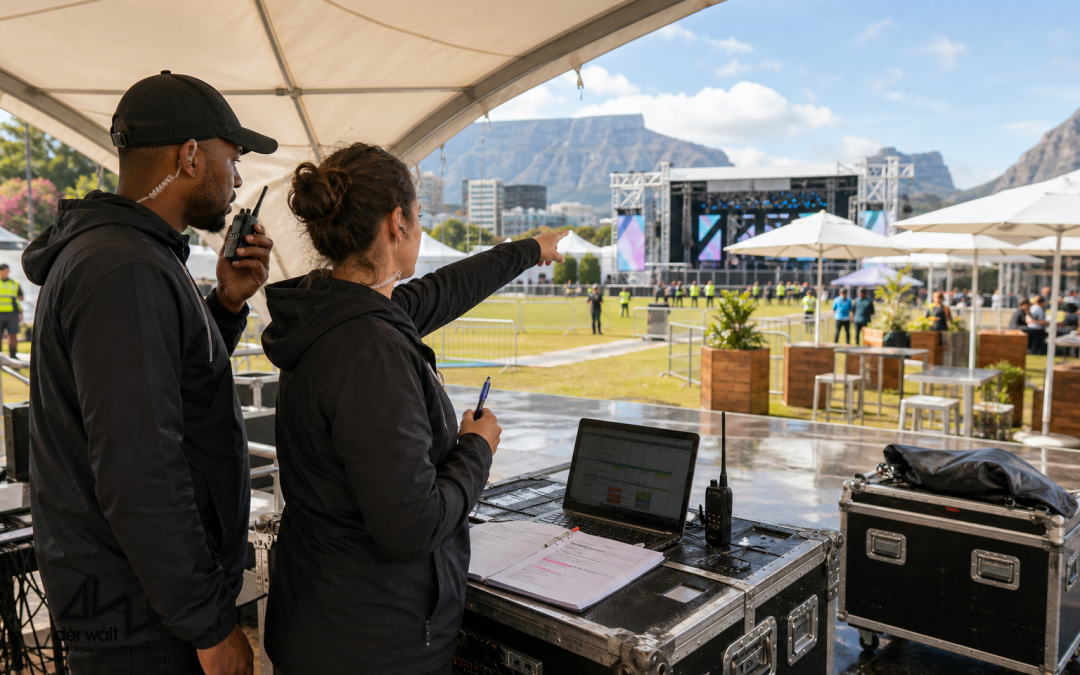
On the day, clear roles, established communication protocols and rehearsed safety procedures are non-negotiable. A dedicated safety lead, incident log and daily briefings help teams respond quickly to changing conditions. Consider mini-drills for common scenarios (rain, blackout, medical emergency) to validate readiness and ensure staff understand evacuation routes and muster points.
Practical on-site tips include:
- Pre-briefs at the start of each shift to align crew roles and safety expectations.
- Battery backups for critical devices, with tested fast-charging plans for scene transitions.
- Real-time weather checks and a clearly documented escalation path for adjustments to show cues, lighting or sound during adverse conditions.
DERWALT’s Role in End-to-End Event Delivery
DERWALT can support end-to-end experiential marketing, activation and event-production delivery across South Africa. Our capabilities commonly include production planning, technical planning, stage and show production, logistics, supplier coordination and on-site management. We help brands and agencies translate risk assessments into practical, logistics-driven plans that keep audiences safe while delivering engaging experiences. By aligning production timelines, vendor procurement and on-site execution, we aim to reduce friction and keep your activation on track even when weather or disruptions occur.
Sources
- South African Weather Service — South African Weather Service
- Occupational Health and Safety Act, 1993 — Government of South Africa
- Eskom — Eskom
- SABS – South African Bureau of Standards — SABS
Ready to weatherproof your next activation? Contact DERWALT
Our team offers end-to-end experiential marketing and event-production services across South Africa, including risk planning, procurement, on-site management and production readiness. Get in touch to discuss your brief and build a robust, safe and memorable activation.
Recent Comments