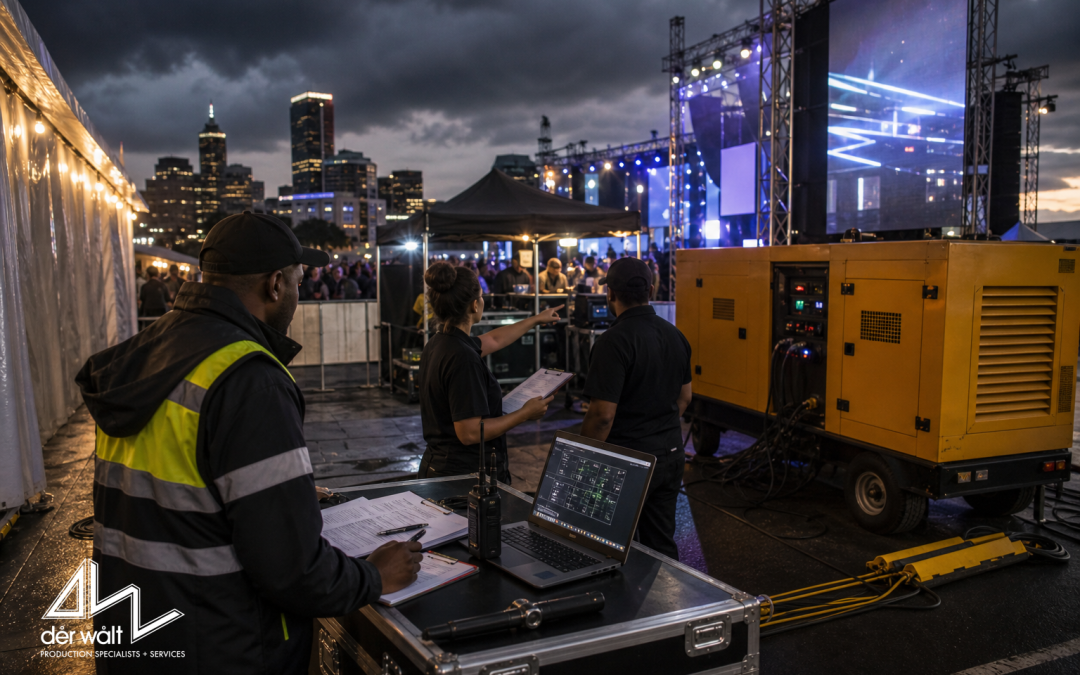
Resilient South African Event Planning: Safety, Power, and Permits for Live Activations
In South Africa, successful live activations require a practical, locally grounded approach to safety, power management, weather contingency, and permit compliance. This guide offers actionable steps for brands, agencies, and venues planning complex events.
Most brands want immersive experiences that resonate with audiences while staying within budgets and timelines. In SA, that means planning with local realities in mind: energy reliability, procurement practices, transport, climate, and regulatory requirements across provinces. The following approach blends industry best practice with South African context, so teams can reduce risk and stay on track from concept to show.
Why a localized approach matters
While global event standards exist, local conditions — from municipal permit processes to power supply reliability — vary significantly. A one-size-fits-all plan often leads to delays and unforeseen costs. By grounding planning in South African realities, you align safety, logistics and stakeholder expectations with actual operating conditions. Key practical implications include deliberate vendor selection with local capacity, labour agreements that comply with OHSA requirements, and site-specific risk assessments that incorporate climate and terrain.
Build safety into your planning from day one
A robust safety framework starts at concept, not on-site. Create a Site Safety Plan that covers hazard identification, emergency response, and clear roles for staff and suppliers. Practical steps:
- Appoint a dedicated Safety Officer and a small safety team visible to all contractors on site.
- Conduct a site-specific risk assessment early, updating it as layouts change.
- Develop an Emergency Evacuation Plan with muster points and a communication protocol.
- Ensure first aid stations, trained responders, and incident reporting workflows are in place before doors open.
Note: The exact requirements depend on venue type and local authority expectations. Align your plan with international frameworks such as ISO 20121, which provides a structured approach to sustainable events while maintaining safety and compliance.
Power planning in a country with load shedding
Energy reliability is a recurrent challenge in South Africa. A practical power plan minimizes disruption to critical systems — lighting, sound, video, and emergency systems — while managing costs. Practical guidance:
Sizing and location of power sources
- Map estimated loads for all critical systems and identify non-essential loads to shed during outages.
- Layer power sources: primary utility supply, on-site generators, and battery storage for essential operations.
- Institute a fuel and maintenance plan for generators and ensure refueling logistics do not interrupt the event.
- Coordinate with venue facilities and local utility providers to schedule power where possible and communicate contingency protocols to crews and talent.
In South Africa, many productions run with generators as a practical safeguard. Always test power continuity in rehearsal and pre-event checks to avoid last-minute failures. For broader governance, align with national energy guidelines and safe electrical practices outlined by standard bodies and energy regulators.
Weather, transport, and site readiness
South Africa’s climate means contingency planning must account for heat, rain, wind, and dust, especially for outdoor activations. Practical measures:
Site infrastructure and logistics readiness
- Monitor forecasts in the week leading to the event, with a dedicated logistics window for weather-related changes.
- Have weatherproofing for sensitive gear and a sheltered area for performers and crew.
- Plan transport routes and parking with authorities to minimize congestion and ensure accessible ingress/egress for staff and guests.
- Maintain a communications plan that keeps all teams informed about weather-driven changes and safety advisories.
Weather data and planning should be treated as a live risk input, updated as conditions evolve. Reputable sources such as the South African Weather Service can provide location-specific forecasts to feed your pre-event checks and on-day decisions.
Permits, risk assessments, and local compliance
Permitting and compliance are non-negotiable. The exact forms and approvals depend on the venue, city, and event type. General guidance:
Documentation and audits
- Consult the local authority early for permits related to public gatherings, temporary structures, amplified sound, and road closures.
- Prepare a site-specific risk assessment that addresses crowd management, fire safety, and emergency access. Keep it accessible to all stakeholders on site.
- Adopt fire safety practices, including available extinguishers, clear evacuation routes, and smoke/heat detector readiness when required by the venue.
- Maintain updated contact lists for safety, security, venue management, and emergency services.
Practical note: The process and documentation vary by region and venue. Use a structured framework such as ISO 20121 to organize compliance tasks and maintain audit-ready records, while consulting the OHSA guidelines for workplace safety expectations.
Procurement and working with South African suppliers
Local procurement matters go beyond price. They influence lead times, support for local jobs, and the reliability of supply chains during volatile periods. Practical actions:
Supplier due diligence and local capacity
- Map a preferred supplier list prioritising South African manufacturers and service providers with proven capacity to scale for event demands.
- Validate suppliers for compliance with safety standards, insurance, and “fit-for-purpose” equipment related to your event scope.
- Incorporate supply chain diversity to mitigate single points of failure (for example, multiple tent providers or lighting specialists).
- Coordinate with procurement teams to align on payment terms and adherence to local procurement policies and deadlines.
Note: BBBEE and local-content considerations vary by client and contracting entity. DERWALT supports end-to-end production management, including supplier coordination, content creation and logistics, to help you navigate local procurement successfully.
Budgeting, timelines, and contingency
A practical project plan provides a realistic timeline with milestones and built-in buffers for weather, supply delays, and regulatory approvals. Key considerations:
Scheduling and buffers
- Develop a stage-gate schedule with clear handoffs between concept, design, build, run, and strike phases.
- Engage stakeholders early to secure buy-in and align expectations on deliverables and risk controls.
- Incorporate contingency funds for line items with potential price volatility or supply uncertainty, and to cover unforeseen safety needs.
- Plan for transport and access constraints, especially in urban areas with traffic management requirements.
To keep on track, build a lightweight, modular plan that can be scaled up or down as the scope changes. Realistic lead times for equipment rental, venue services, and licensed content should be factored into the calendar from the start.
Practical checklists you can adapt
Use these starter checklists as a living document that your team can adapt for each event:
- Safety: on-site medical plan, first aid provisions, clearly marked exits, and a communication protocol for incidents.
- Power: cabling standards, GFCI protection, weatherproof enclosures, generator staging area, fuel logistics.
- Logistics: access control, crowd management plans, signage, and wayfinding for attendees and crew.
- Environment: waste management, recycling stations, and post-event clean-up plans that align with local regulations.
- Compliance: permit status tracker, risk assessment version control, and audit-ready documentation.
These lists are starting points. Verify requirements with the client, venue, and local authorities and update as plans evolve. A formal certification or audit can be pursued as needed to demonstrate compliance and professionalism.
DERWALT capabilities and how we help
DERWALT specialises in experiential marketing, brand activations, and end-to-end event production. Our services include strategic planning, production management, technical planning, stage and show production, logistics, supplier coordination, content creation and full event delivery. When you need reliable on-site management, we bring a pragmatic, locally informed approach that considers South Africa’s energy, labour, and regulatory realities.
Sources
- ISO 20121: Sustainable events management — International Organization for Standardization
- Occupational Health and Safety Act — Government of South Africa
- South African Weather Service — Government of South Africa
- Eskom — Eskom
- South African Bureau of Standards (SABS) — SABS
Contact DERWALT for experiential marketing and event production support
Ready to bring your next activation to life with a pragmatic, South Africa-aware approach? Reach out to DERWALT to discuss your needs in experiential marketing, activation, or end-to-end event production.
Recent Comments