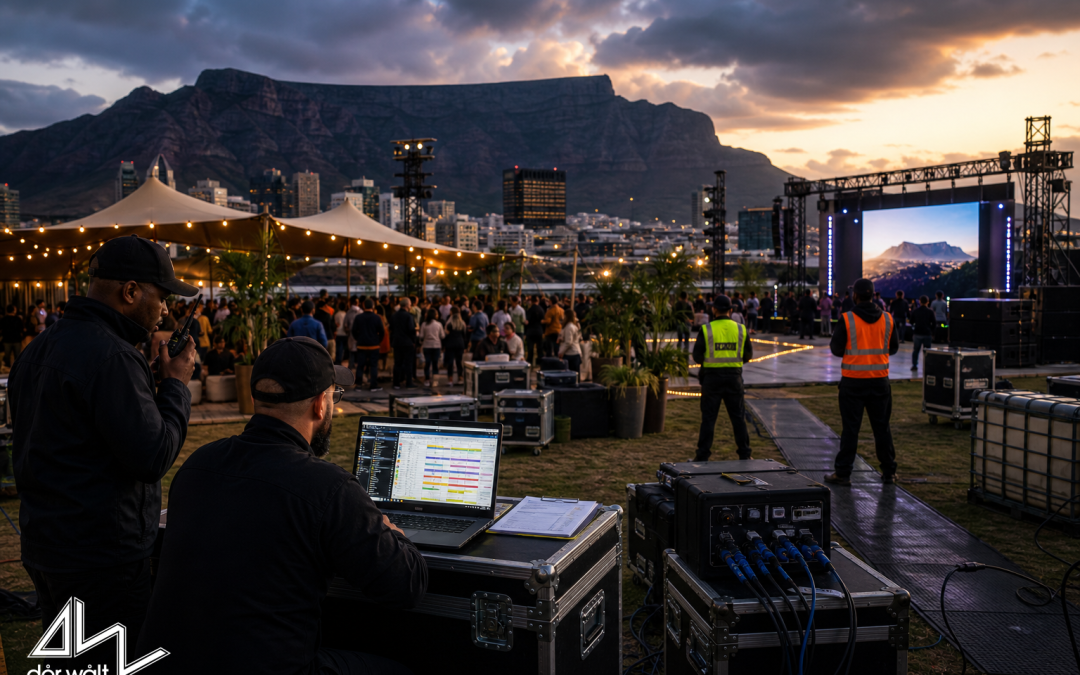
Planning Outdoor Experiential Activations in South Africa: A Practical Guide
From weather contingencies to local sourcing and safety, this guide outlines practical steps for brands, agencies and venues to deliver successful outdoor experiential activations in South Africa, with production timelines, procurement tips and risk management.
Understanding the South African landscape for outdoor activations
Outdoor activations in South Africa require a realistic read of regional realities, including climate variability, transport routes, and local supplier ecosystems. A well-structured plan recognises that weather can be as influential as a script. In SA, you’ll typically face hot, dry spells in the interior summer and sudden rain or thunderstorms along coastlines and inland venues. Wind, dust, and power reliability are common production considerations. Build your plan around flexibility: modular structures, scalable power, and adaptable schedules that keep audiences engaged even when conditions shift.
Weather, seasons and contingency planning
Design the activation with a layered weather strategy. Use shade structures, misting fans, and mobile cooling options for heat, plus sturdy tents with wind ratings for storms. Always have a rain plan that preserves key audience interactions and content capture opportunities. A practical rule is to budget for a modest contingency fund dedicated to weather-proofing elements—such as additional canopies or flooring—without compromising essential experiences.
Permits, road closures and local regulations
Outdoor sites may require municipal permits, noise waivers, or temporary occupancy approvals. If your activation involves road access, street closures, or elevated structures, engage authorities early. In practice, build a permit timeline into the project plan and prepare requests with site sketches, crowd-flow diagrams, and safety measures. Always validate that your chosen venue aligns with the activation’s footprint and audience capacity.
Designing a robust production plan
A successful activation blends creative concept with production discipline. A clear plan reduces last-minute surprises and keeps teams aligned across procurement, logistics, and on-site execution. Start with a thorough production calendar that coordinates venue booking, equipment rental, crew scheduling and content capture windows. Time is the currency of complex activations, especially when multiple elements—staging, lighting, AV, branding, and interactive installations—must operate in concert.
Timeline and procurement
Break projects into phases: concept freeze, design sign-off, vendor RSVPs, site visits, and build/strike windows. For medium-to-large activations, aim to lock critical suppliers eight to twelve weeks ahead, with venue confirmation even earlier. Build in lead times for heavy equipment like stages, rigging, power distribution, and large-format branding. Maintain a living procurement log that tracks lead times, delivery windows and contingency options for each vendor.
Budgeting and risk allowances
Create a realistic budget with line items for venue, permits, power, staging, AV, lighting, branding, transport, labour, safety, and catering. Include a risk allowance—commonly 10–20% of the total budget—to cover weather-related fortifications, supplier substitutions, or additional security needs. In South Africa, be mindful of payment terms with suppliers and potential VAT considerations; pre-agree all terms and secure written confirmations to avoid cash-flow gaps as timelines tighten.
Local suppliers and logistics
Leveraging local suppliers can reduce lead times and support B-BBEE objectives while offering regional knowledge on transport routes, weather patterns, and crowd behaviour. Vet vendors on safety records, insurance coverage, and compliance with electrical and rigging standards. Beyond price, assess reliability, communication responsiveness and after-sales support, which are critical during build and on-site shifts when quick decisions matter.
Sourcing and vetting vendors
Create a shortlisting framework: verify a supplier’s insurance, safety practices, and proof of compliance with SA health and safety regulations. Request references and a portfolio of similar activations, and require method statements, risk assessments, and emergency procedures for high-impact elements such as large-scale lighting rigs or elevated stages. A practical approach is to run a pre-activation site walk with key vendors to confirm access, loading zones, and equipment compatibility with your venue’s infrastructure.
Transport, storage and on-site operations
Plan transport routes and timing to minimise traffic disruption and ensure equipment arrives in sequence. Secure on-site storage for branding assets, cables, and batteries, and designate a dedicated dock or loading zone to avoid clashes with public areas. Establish a simple, portable power strategy—prioritising redundancy—so a generator or battery backup can cover critical systems if main power fluctuates. In SA, where power reliability can vary, this redundancy is not optional—it’s a practical safeguard for continuity.
Safety, security and crowd management
Public events demand rigorous safety planning. Develop a site-specific health and safety plan that includes crowd management, access control, first aid provisions, and clear communications. Consider the presence of diverse audiences and ensure ADA-equivalent accessibility where applicable. Security should focus on controlled perimeters, lighting for visibility after dark, and trained marshals who can guide attendees and coordinate with local emergency services.
Health and safety planning
Engage a qualified safety professional to conduct a risk assessment, produce method statements for all high-risk elements, and review emergency evacuation procedures. Document all safety processes and share them with your crew well before build day. In South Africa, labour regulations and safety compliance carry weight; ensure that all on-site personnel are briefed on their roles and equipped with appropriate PPE.
Emergency planning and incident response
Prepare a concise incident response plan, including muster points, communication hierarchies, and alarm procedures. Have backup water, shade, and cooling solutions ready for heat-related incidents, and keep a mobile medical kit accessible. Practically, rehearse a 15-minute drill with key team members to validate coordination between security, production staff, and event leadership.
On-site activation and content creation
On the day, the focus shifts to flawless delivery of the activation, precise show production, and timely content capture. Align the stage layout, branding zones, and interactive stations so guests experience a cohesive narrative. Coordination between lighting, sound and AV should be tested in pre-dawn rehearsals, with a belt-and-braces approach to contingency scenarios such as equipment failure or last-minute guest flow changes.
Venue setup, staging and power management
Stage design should reflect the activation’s concept while ensuring safe egress and smooth sightlines. Prioritise redundant power feeds for critical elements and verify all cables are secured to prevent trip hazards. For outdoor SA activations, wind can affect rigging; use conservative load estimates and secure all high-profile elements with weight-based anchors or ballast systems. Establish a quick-change workflow for branding assets to adapt to weather or lighting conditions.
Content capture and live activation
Blend professional content capture with real-time social moments. Coordinate with photographers and videographers to document key interactions, while also delivering shareable clips for post-event amplification. Ensure media rights, consent forms, and usage policies are in place to avoid delays during post-production. Content should align with the activation’s narrative and deliver value for both the brand and the audience.
Working with DERWALT
DERWALT specializes in experiential marketing, brand activations, and end-to-end event delivery. Our approach combines production management, logistics coordination, and content creation to deliver cohesive, on-time experiences. We prioritise practical planning, robust vendor partnerships, and clear communication across all stages—from pre-production through on-site execution to post-event wrap. While every activation is unique, the core discipline remains the same: align creative intent with safe, efficient production and measurable audience engagement.
How DERWALT can support end-to-end delivery
We bring structured processes to production management, enabling efficient procurement timelines, risk-aware budgeting, and streamlined on-site operations. Our capabilities cover supplier coordination, stage and show production, power management, transport planning, safety planning, and content creation. By integrating these elements, brands and agencies can maintain control over timelines and quality while adapting to local realities in South Africa. Every recommendation here is practical and grounded in operational realities rather than theoretical ideals.
Final checklist and practical templates
To translate the guidance into action, use concise checklists and templates. Below are suggested starting points you can adapt for your activation.
Pre-production checklist
- Site assessment completed with a formal risk assessment and site plan.
- Permits, road-use approvals and noise waivers secured where required.
- Vendor shortlist with insured suppliers and signed MOUs or contracts.
- Production calendar updated, with lead times for venue, power, AV and staging.
- Weather contingency plan and budget contingency established.
On-site day-of-playbook
- Pre-build safety briefing for all crew; site induction completed.
- Rigging and power checklists completed; all high-risk elements inspected.
- Briefings with security, medical, and crowd-management leads; clear communication channels.
- Branding, choreography, and interactive stations tested in sequence before public access.
- Real-time content capture plan executed alongside guest experiences.
Partner with DERWALT for SA experiential marketing and event production
If you’re planning a brand activation, experiential marketing campaign or end-to-end event delivery in South Africa, DERWALT can provide integrated support—from strategy and logistics to on-site execution and content creation. Reach out to discuss how we can tailor a production plan to your goals, venue realities, and budget.
Recent Comments